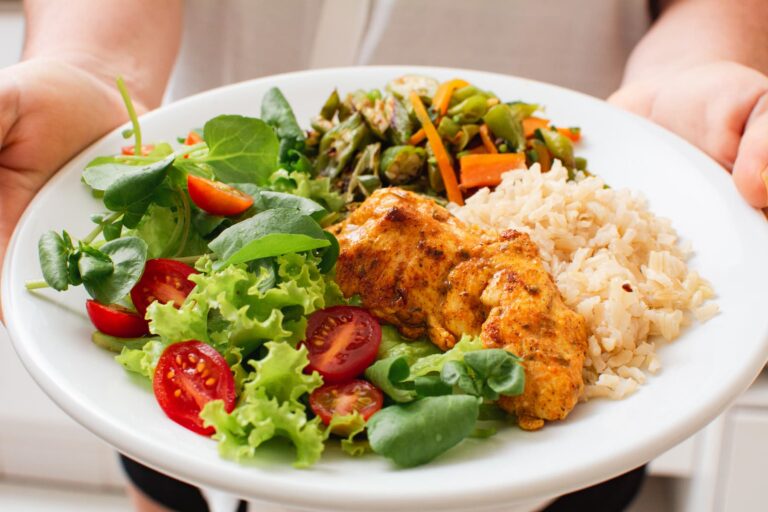
The Complete Guide to Healthy Eating: Nourish Your Body for Life

This post contains affiliate links, which means we may earn a commission if you purchase through our links—at no extra cost to you. As an Amazon Associate we earn from qualifying purchases. We only recommend products we use or trust. Learn more about affiliate marketing or read our full disclosure.
At its core, healthy eating is about feeling better. It’s not about perfection or restriction—it’s about making food choices that support your energy, your mood, and your long-term health.
Sure, if you’re used to fast food or takeout, healthier options might take some getting used to.
But with small, gradual shifts, you’ll be amazed at how your preferences start to change. Real food can be so satisfying—you just have to give your body a little time to notice.
And here’s the best part: you don’t have to give up your favorite treats. Healthy eating isn’t about saying no—it’s about balance, flexibility, and making room for joy at every meal.
This guide is here to help you embrace healthy eating in a way that feels doable, sustainable, and—yes—actually enjoyable.
So if you’re ready for practical tips, simple swaps, and a fresh perspective that takes the stress out of food, you’re in the right place.
Let’s begin!
Why Healthy Eating Matters
Let’s face it—healthy eating isn’t always the easiest choice, especially when ultra-processed foods are everywhere these days.
They’re quick, cheap, and made to taste really good. And when life gets busy or stressful, it’s tempting to grab something ready-to-eat instead of spending time cooking.
We’ve all been there, right?
But here’s the part we don’t always think about: that convenience comes at a cost.

And we’re not just talking about gaining a few extra pounds—we’re talking about how you feel, day in and day out.
A lot of processed foods are stripped of real nutrition and packed with added sugars, artificial ingredients, and chemicals our bodies don’t quite know how to handle.
Over time, that can take a toll.
Maybe it starts with low energy or feeling foggy and run-down. Maybe your mood’s all over the place, or your digestion just feels off. You might not even connect it to food at first—it just becomes your “normal.”
How Real Food Changes Everything
But once you start shifting toward more nourishing choices—real, whole foods that truly support your body—you begin to feel the difference.
Your energy steadies. The brain fog lifts. Your mood evens out. Digestion gets easier—less bloating, less discomfort. You sleep more deeply.
Little by little, things just start to click. It’s not magic—it’s simply your body getting what it’s been asking for all along.
That’s the power of healthy eating.
And once you notice that shift, it’s hard to ignore. When your body gets a taste of what it feels like to have more energy, more clarity, smoother digestion, and more ease, you don’t really want to go back.
Because the truth is, those less nourishing foods might feel comforting in the moment—but they rarely leave you feeling your best.
Healthy Eating Isn’t Always Easy—But It’s Worth It
Healthy eating is a beautiful thing—but let’s be honest, it does take some effort.
It means cooking more often, planning ahead, and making intentional choices that don’t always match the fast, convenient options everywhere around us.
And I get it. Life is full. Between work, family, and everything else on your plate, grabbing something quick can feel like the only option.
But here’s the thing: when ultra-processed foods become the norm, they start to wear you down. You feel it in your energy, your mood, your focus—even your motivation.
You deserve more than that.
We all do. We deserve food that helps us stay healthy—not food that increases our risk for chronic disease. We deserve meals that support our well-being, uplift our energy, and help us feel grounded and strong.
The processed food industry might not have your well-being in mind—but you do. And every time you choose to fuel yourself with intention, you’re reclaiming that power.
That’s why I created this guide—not to tell you what you can’t eat, but to show you what’s possible when you start giving your body the nourishment it truly needs.
What Ultra-Processed Foods Are Really Doing to Your Body
We all reach for convenience sometimes. A quick snack here, a frozen dinner there—it’s just part of modern life.
But when those quick fixes become daily habits, they can start working against you.
Ultra-processed foods aren’t just low in nutrients—they’re packed with added sugars, artificial ingredients, and chemicals your body doesn’t quite know how to process. And more and more research is linking them to serious health concerns.
We’re not talking about one-off headlines. These are consistent, science-backed findings that are hard to ignore.
Studies have connected high consumption of ultra-processed foods to:
- High blood pressure and heart disease
- Digestive issues like bloating, IBS, and chronic discomfort
- Increased asthma risk—especially in kids and teens
- Low mood, irritability, and symptoms of depression
- Unwanted weight gain or obesity
- Pregnancy complications and reduced vitality with age
It’s a lot, I know—but knowledge is power. And once you understand how these foods affect your body, making better choices becomes a whole lot easier.
You Don’t Have to Give It All Up
You don’t have to cut out every treat or swear off your favorite foods. That’s not what healthy eating is about.
But when you understand the risks, you’re better equipped to choose foods that fuel you, protect you, and help you feel your best—now and in the years ahead.
Healthy eating isn’t about restriction. It’s about making nourishing choices most of the time.
When your diet is balanced and nutrient-rich regularly, you not only feel better and support your long-term health—you also get to enjoy your favorite foods without guilt.
That’s the kind of relationship with food that lasts.
If you cut out everything you love, one of two things usually happens: either you’re miserable all the time, or you end up falling back into old habits.
That’s exactly why so many popular diets fail—they focus on cutting calories and labeling foods as “bad” instead of teaching what healthy eating really means.
Food isn’t the enemy. When most of your meals are packed with the nutrients your body needs, your body is stronger, more resilient—and totally capable of handling the occasional indulgence.
Healthy eating is not about being perfect. It’s about being consistent. That’s how you build a healthy, happy relationship with food that truly sticks.
How to Cut Back on Ultra-Processed Foods Without Feeling Deprived
Let’s be honest—going cold turkey on your favorite snacks can feel like a drag. Nobody wants to be stuck on some joyless, flavorless “health kick.”
But here’s the secret: cutting back on ultra-processed foods doesn’t mean giving up flavor, comfort, or fun. It just means getting a little more intentional—swapping out the things that aren’t serving you for choices that actually fuel you and still taste amazing.
Trust me—your body (and taste buds) will catch on fast.
Here are a few simple, doable ways to start easing off the UPFs—without feeling like you’re missing out:
1. Start Small, Not Sweeping
You don’t have to overhaul your entire diet overnight. Start with one small swap a day—like trading a store-bought granola bar for a piece of fruit or a handful of nuts.
Small shifts lead to big wins.
Here’s a quick side-by-side estimate to show how a simple swap stacks up:
|
Nutrient |
Granola Bar |
1 Apple + 10 Almonds |
|---|---|---|
|
Calories |
140 |
180 |
|
Total Sugars |
8g |
15g (all natural) |
|
Added Sugars |
||
|
Fiber |
2g |
|
|
Protein |
3g |
2g |
|
Fat |
5g |
7g (healthy fats) |
|
Ingredients |
It’s easy to get stuck counting calories alone — but the bigger picture matters more. Where those calories come from makes all the difference.
A typical granola bar might have fewer calories, but it often comes with added sugars, oils, and processed ingredients you don’t need. These can impact your energy, mood, and long-term health in ways calories don’t show.
On the other hand, a simple combo of an apple and almonds delivers whole, natural nutrients — vitamins, minerals, fiber, and healthy fats — that truly fuel your body and keep you satisfied longer.
2. Keep It Simple
Healthy eating doesn’t need to be fancy. You don’t have to give up the foods you love—you just need to make a few smarter swaps.
The key? Stick to simple, familiar meals you already enjoy, but use better ingredients.
When you trade ultra-processed options for more wholesome versions, you’ll still get the comfort and flavor—but with way more nutrition.
Here are a few easy upgrades you can try:
|
Instead of This… |
Try This Instead |
|---|---|
These simple swaps are a great place to start. Once you feel comfortable, you might find yourself ready to explore even more nourishing options—like trying new whole grains, experimenting with plant-based proteins, or adding fermented foods to support gut health.
Healthy eating is a journey. Start simple, build habits that stick, and watch how good your body can feel.
3. Make Water Your Go-To
Water isn’t just something you drink—it’s a key ingredient in healthy eating.
From supporting digestion to keeping your energy levels steady, staying well-hydrated plays a huge role in how you feel day to day.
And while there’s no shortage of drink options today—sodas, juices, teas, energy drinks—many of them come with hidden health risks.
|
Drink |
What’s Inside |
Cons |
Tip |
|---|---|---|---|
|
Water |
Pure hydration, zero sugar, zero calories |
None |
Drink every day |
|
Soda |
Lots of added sugar (30–50g per can), artificial flavors |
Weight gain, blood sugar spikes, low satiety, tooth decay |
Limit—save for special occasions |
|
Fruit Juice |
Natural sugars, some vitamins—but low in fiber |
Energy crashes, excess calories, not as filling as whole fruit |
Eat fresh fruit instead |
|
Energy Drinks |
Caffeine, sugar, stimulants like guarana and taurine |
Jitters, heart strain, poor sleep, insulin resistance |
Avoid altogether |
|
Sweetened Iced Tea |
Sugar, caffeine, often marketed as healthy |
Can contain as much sugar as soda, especially bottled versions |
Make your own with less or no added sugar |
If you’re used to drinking two energy drinks a day, try replacing just one of them with water to start. Once that feels natural, switch out the second.
You don’t have to change everything at once—just make one better choice at a time.
4. Meal Prep = Lifesaver
A little prep can save you from a lot of stress.
Keeping just a few staples on hand—like chopped veggies, cooked grains, or ready-to-go proteins—can make all the difference when life gets busy.
And meal prep doesn’t have to be complicated. With a few smart strategies, you can make healthy eating way easier (and way less time-consuming).
Here are some practical ways to get started:
|
Strategy |
How It Helps |
Example |
|---|---|---|
|
Batch Cooking |
Make a big batch once, and you’ve got easy dinners ready to go on busy days |
Cook a large batch of meatballs and freeze in portions for quick meals |
|
Leftovers for Lunch |
Cook once, eat twice—save time and cut down on takeout |
Roast extra chicken at dinner to use in wraps or salads the next day |
|
Chop Ahead |
Prepped veggies make healthy cooking faster and snack time easier |
Chop carrots, bell peppers, and cucumbers and store in airtight containers |
|
Grab-and-Go Staples |
Have ready-to-eat options when you’re short on time |
Keep overnight oats, boiled eggs, or hummus with veggie sticks in the fridge |
|
Plan Your Menu |
Reduces decision fatigue and helps you shop smarter |
Write out meals for the week and prep what you can in advance |
Once you find what works for you, it becomes second nature—and cutting out UPFs gets a whole lot easier when healthy meals are always ready to go.
5. Tune Into How You Feel
The best way to understand what your body needs? Pay attention to how you feel after you eat.
Food isn’t just fuel—it affects your energy, mood, digestion, and even cravings.
Here’s a quick guide to help you spot the difference between how real, nourishing food makes you feel versus ultra-processed meals:
|
After Eating… |
How You Want to Feel |
How You Don’t Want to Feel |
|---|---|---|
|
Energy levels |
||
|
Digestion |
||
|
Mood |
||
|
Hunger cues |
||
|
Cravings |
When you start making small changes to reduce ultra-processed foods, you might notice these positive shifts sooner than you think.
6. Ditch Perfection, Embrace Balance
When it comes to healthy eating, the goal isn’t perfection—it’s consistency. You don’t need to eat “clean” 100% of the time to feel good and take care of your body.
In fact, being too restrictive can backfire, leaving you stressed, frustrated, and more likely to give up. Balance means making mostly nutritious choices while still enjoying your favorite foods—guilt-free.
Here’s what that looks like in practice:
|
Restrictive Approach |
Balanced, Sustainable Approach |
|---|---|
Healthy eating isn’t built on restriction—it’s built on habits you can actually maintain.
Now that you’ve got some simple strategies for cutting back on ultra-processed foods, let’s shift gears and talk about what to eat more of.
Eat the Rainbow: Why Variety Matters
When it comes to healthy eating, variety really is the name of the game. No single food can give your body everything it needs, so mixing things up is essential.
Eating a wide range of foods ensures you’re getting a full spectrum of nutrients—vitamins, minerals, fiber, antioxidants—you name it.
And bonus: it keeps your meals exciting. Because let’s be honest…eating the same salad every day gets old fast.
Think of your plate like a canvas. Aim for a rainbow of colors—leafy greens, vibrant berries, orange sweet potatoes, deep purple cabbage, bright red tomatoes.
So, what should you be eating more of?
1. Fruits and Vegetables
One of the easiest (and most delicious) ways to level up your healthy eating game?
Load up on fruits and veggies—and make it colorful.
Each color brings something unique to the table. Red and orange produce like bell peppers, sweet potatoes, and carrots are bursting with flavor and natural goodness.
Dark leafy greens like spinach, kale, and broccoli are packed with the kind of nutrients your body thrives on.
Here’s the cool part: the more variety you eat, the more benefits you unlock.
A review in The European Journal of Nutrition found that diets rich in fruits and vegetables are linked to a lower risk of chronic diseases like heart disease, type 2 diabetes, stroke, and even some cancers.
Want a simple trick to boost your health game?
Try adding a new color to every meal. Whether it’s purple cabbage, green zucchini, or a handful of blueberries—each one adds flavor and fuel for your body.
How to Eat More Fruits and Vegetables
Don’t overthink it—just start adding more color to your plate.
Here are some easy ways to include more fruits and veggies in your meals:
|
Food Group |
Simple Ways to Add It |
|---|---|
|
Leafy greens |
Add to smoothies, sandwiches, or salads |
|
Berries |
Top yogurt, oatmeal, or blend into smoothies |
|
Cruciferous veggies (e.g. broccoli, cauliflower) |
Roast, steam, or stir-fry as a side |
|
Bell peppers |
Slice for snacks, stir-fries, or fajitas |
|
Carrots |
Snack raw, roast, or shred into salads |
|
Apples & pears |
Snack with nut butter or slice into salads |
|
Bananas |
Add to cereal, toast, or smoothies |
|
Zucchini & squash |
Grill, roast, or spiralize into noodles |
Eating the rainbow isn’t just pretty. It’s powerful.
2. Whole Grains
Whole grains are one of those quiet heroes in your healthy eating toolkit. Think quinoa, brown rice, oats, farro, and whole wheat bread or pasta.
Unlike refined grains (like white bread or regular pasta), whole grains haven’t been stripped of their nutrients. That means they digest more slowly, giving you steady energy, helping balance your blood sugar, and keeping you full longer.
Science backs it up, too.
A large review published in BMJ found that people who ate the most whole grains had:
- 21% lower risk of heart disease
- 15% lower risk of total cancer
- 17% lower risk of early death
- Lower risks of diabetes, stroke, and even respiratory disease
And you don’t need to eat a mountain of grains to benefit—even just one or two servings a day made a difference.
In other words, swapping refined grains for whole ones is a smart, heart-healthy move.
How to Add More Whole Grains to Your Diet
The great thing about whole grains?
You don’t have to change everything overnight. Just start with one or two easy swaps and build from there.
Here are some tips to help you get started:
|
Whole Grains |
Easy Ways to Enjoy Them |
|---|---|
|
Oats |
Overnight oats, oatmeal, added to smoothies |
|
Brown rice |
Side dish, stir-fries, grain bowls |
|
Quinoa |
Salads, grain bowls, mixed with roasted veggies |
|
Whole wheat bread |
Sandwiches, toast, breakfast with nut butter |
|
Whole grain pasta |
Swap into any pasta dish |
|
Farro or barley |
Soups, stews, hearty salads |
|
Popcorn (air-popped) |
Healthy snack alternative |
Adding whole grains to your meals can be as simple as choosing whole wheat bread instead of white, or mixing in some quinoa with your usual rice.
These small changes add up fast—and they can make a big difference in how you feel.
3. Lean Proteins
Protein isn’t just for athletes or bodybuilders—it’s essential for everyone.
It helps build and repair tissues, supports your immune system, and keeps your muscles strong and active as you age.
To get the most out of your healthy eating routine, include a variety of protein sources.
Lean meats like chicken and turkey, fish, and eggs are great options. But don’t forget the plant-based powerhouses—beans, lentils, tofu, quinoa, nuts, and seeds are all loaded with protein and bring extra nutrients and fiber to the table.
Here’s something worth noting: plant-based proteins tend to be lower in saturated fat and come with some impressive health perks.
In a large study of over 48,000 women followed for decades, researchers found that those who ate more plant-based protein in midlife had better odds of aging well—with fewer chronic diseases, better physical function, and stronger mental health later in life.
Even small shifts—like swapping a portion of meat or refined carbs for plant protein—were linked with a noticeable boost in long-term health.
How to Add More Lean Protein to Your Diet
Not sure where to start?
Here are some great sources of protein and simple ways to enjoy them:
|
Protein Source |
Easy Ways to Use It |
|---|---|
|
Chicken or turkey |
Grilled, roasted, stir-fry, soups |
|
Eggs |
Scrambled, boiled, omelets, frittatas |
|
Fish (salmon, tuna) |
Baked, grilled, in grain bowls or salads |
|
Greek yogurt |
Breakfast bowls, snacks, smoothies |
|
Tofu or tempeh |
Stir-fries, curries, grilled skewers |
|
Lentils & beans |
Soups, salads, tacos, stews |
|
Quinoa |
Grain bowls, stuffed peppers, mixed salads |
|
Nuts & seeds |
On oatmeal, in smoothies, as snacks |
|
Edamame |
Snack, salad topper, or side dish |
So whether you’re grilling salmon, adding chickpeas to a salad, or tossing tofu into a stir-fry, you’re not just feeding your body—you’re supporting long-term health in a big way.
4. Healthy Fats
Let’s bust an old myth: fat isn’t the enemy.
Your body actually needs fat—it’s essential for brain health, hormone production, and absorbing key vitamins like A, D, E, and K. The key is focusing on quality, not fear.
Healthy unsaturated fats—like those in avocados, extra virgin olive oil, nuts, seeds, and fatty fish (salmon, sardines, mackerel)—support heart health, reduce inflammation, and keep you feeling full and satisfied.
But what about saturated fat?
For years, it was labeled the villain of heart health. However, newer research is challenging that narrative.
While the American Heart Association still recommends limiting saturated fat, recent reviews and meta-analyses show that the evidence linking saturated fat intake directly to heart disease is inconsistent and may have been overstated.
That doesn’t mean saturated fats are “good” or should be consumed without thought—but it does mean we need to take a more nuanced approach.
It’s the overall diet pattern that matters most.
How to add more healthy fats to your diet
Including healthy fats in your meals can boost flavor, help you absorb key nutrients, and keep you feeling fuller longer.
Here are some tips to get more healthy fats in your diet:
|
Instead of This… |
Try This Instead |
|---|---|
5. Dairy or Dairy Alternatives
When it comes to dairy, there’s a lot of noise out there—and a whole aisle of plant-based options that can leave you wondering what’s actually best.
Here’s the real talk: dairy products like full-fat milk, cheese, and yogurt are nutrient-dense staples that have stood the test of time.
They’re naturally rich in calcium, vitamin D, high-quality protein, and healthy fats that support bone health, muscle maintenance, and hormone balance.

What Does Research Say?
Full-fat dairy, in particular, is often misunderstood. While older guidelines pushed for low-fat versions, newer research suggests that full-fat dairy may actually support heart health and help with satiety—meaning you feel fuller for longer.
Despite its saturated fat content, studies suggest dairy fat has a neutral or beneficial impact on cardiovascular health, possibly due to its unique fatty acids and nutrient matrix.
Now, about those plant-based alternatives: yes, they can work well for people who are lactose intolerant, vegan, or allergic to dairy—but not all are created equal.
Here’s a quick comparison:
|
Beverage |
Protein (g/cup) |
Calcium (mg/cup) |
Fortified? |
Common Additives |
Nutrients |
|---|---|---|---|---|---|
|
Whole Milk |
8 |
300 |
Natural |
None |
Nutrient-dense; supports bone health |
|
Almond Milk |
1 |
Varies (often 300) |
Often |
Thickeners, sugar |
Low in protein; nutrient content depends on brand |
|
Oat Milk |
2–4 |
Often 350+ |
Often |
Sugar, emulsifiers |
Higher in carbs; may spike blood sugar |
|
Soy Milk |
7–9 |
300–400 |
Usually |
Some brands use sugar |
Most nutritionally similar to dairy |
|
Coconut Milk |
<1 |
Low (unless fortified) |
Sometimes |
Additives, sugar |
Very low in protein and calcium |
Should you choose dairy or plant-based?
While some plant-based milks are fortified and convenient, they’re not nutritionally equivalent to dairy—especially when it comes to protein and essential micronutrients.
And the lack of long-term research on many alternatives means the health claims aren’t always backed by strong evidence—except for soy milk, which is better studied.
Ultimately, the choice is up to you. If you tolerate dairy, full-fat options can absolutely be part of a healthy, balanced diet.
However, if you want to go plant-based, be sure to choose fortified options with no added sugar and simple ingredients.
The Role of Micronutrients: Vitamins and Minerals
We talk a lot about macronutrients—carbs, protein, and fat—because they give us energy and help build our bodies. But just as important are micronutrients—the vitamins and minerals your body depends on to keep everything running smoothly.
These tiny nutrients support everything from your immune system and brain function to bone strength, metabolism, and energy levels.
Here’s the important part: your body can’t produce most of them on its own. You have to get them through food.
That’s why eating a wide range of whole, minimally processed foods is so essential—it gives your body the raw materials it needs to thrive.
Let’s break it down:
1. Vitamins: The Body’s Essential Helpers
Think of vitamins as your body’s behind-the-scenes crew. You might not always notice them working, but they’re absolutely essential for keeping everything running smoothly—from your immune system and skin to your energy levels and bones.
Here’s a quick breakdown of the key vitamins you want on your team—and where to find them:
Vitamin A
Vitamin A is crucial for healthy vision, glowing skin, and a strong immune system.
It comes in two main forms—preformed vitamin A from animal-based sources and provitamin A carotenoids from plants.
|
Type of Vitamin A |
Foods |
|
Preformed Vitamin A |
Eggs, dairy products, liver, fatty fish (like salmon) |
|
Provitamin A Carotenoids |
Carrots, sweet potatoes, spinach, mangoes |
Source: USDA FoodData Central
Did You Know? A study in The American Journal of Clinical Nutrition found that vitamin A deficiency can impair vision—especially the ability to adjust to darkness after exposure to bright light.
Vitamin B12
Vitamin B12 (aka cobalamin) is key for making red blood cells, supporting your nerves, and keeping your energy levels up.
You can find it in:
|
Vitamin B12 Food Sources |
|---|
|
Eggs |
|
Dairy products (milk, cheese, yogurt) |
|
Fish (salmon, tuna, sardines) |
|
Fortified plant-based milks |
Source: USDA FoodData Central
Did You Know? Low levels of vitamin B12 have been linked to fatigue, memory issues, mood swings, difficulty concentrating, and a higher risk of cognitive decline for older adults.
Vitamin C
Vitamin C helps your body heal wounds, produce collagen for healthy skin, and fight oxidative stress.
You can find it in:
|
Vitamin C Food Sources |
|---|
|
Oranges and other citrus fruits |
|
Strawberries |
|
Bell peppers (red, yellow, green) |
|
Kiwi |
|
Pineapple |
|
Broccoli |
|
Brussels sprouts |
|
Tomatoes |
|
Cantaloupe |
Source: USDA FoodData Central
Did You Know? Research shows that vitamin C may shorten the duration and intensity of colds.
Vitamin D
Vitamin D, the “sunshine vitamin”, is key for strong bones and a healthy immune system.
Your body makes it from sunlight, but you can also get it from certain foods, such as:
|
Vitamin D Food Sources |
|---|
|
Fatty fish (salmon, mackerel, sardines) |
|
Fortified dairy products (milk, yogurt) |
|
Fortified plant-based milks (soy, almond) |
|
Egg yolks |
Source: USDA FoodData Central
Did You Know? Not getting enough vitamin D can lead to weaker bones and may raise your risk for infections and other illnesses.
Vitamin E
Vitamin E is a powerful antioxidant that protects your cells from damage and supports overall health.
You can find it in:
|
Vitamin E Food Sources |
|---|
|
Nuts (almonds, hazelnuts, peanuts) |
|
Seeds (sunflower, pumpkin) |
|
Avocados |
|
Olive oil |
|
Spinach |
|
Broccoli |
Source: USDA FoodData Central
Did You Know? Vitamin E plays a key role in reducing oxidative stress—a major player in aging and chronic disease.
Vitamin K
Vitamin K helps your blood clot properly and keeps your bones strong.
You can find it in:
|
Vitamin K Food Sources |
|---|
|
Kale |
|
Spinach |
|
Broccoli |
|
Brussels sprouts |
|
Cabbage |
|
Eggs |
|
Cheese |
Source: USDA FoodData Central
Did You Know? Studies show that vitamin K helps improve bone density and lowers fracture risk.
2. Minerals: The Building Blocks of Health
Minerals are like the foundation of a strong house—they keep everything sturdy and running smoothly.
From supporting bone strength and nerve function to balancing fluids in your body, these little powerhouses are essential for your overall health.
Here are some of the most important minerals to keep on your radar:
Calcium
Calcium is essential for strong bones and teeth.
You can get it from:
|
Calcium-Rich Foods |
|---|
|
Dairy products (milk, yogurt, cheese) |
|
Leafy greens (kale, collard greens, bok choy) |
|
Fortified plant-based milks (soy, almond) |
|
Tofu (made with calcium sulfate) |
|
Sardines (with bones) |
Source: USDA FoodData Central
Did You Know? A meta-analysis in Osteoporosis International shows that getting enough calcium and vitamin D helps reduce the risk of fractures.
Iron
Iron is vital for making red blood cells and carrying oxygen throughout your body.
You can get it from:
|
Iron-Rich Foods |
|---|
|
Red meat (beef, lamb) |
|
Beans and lentils |
|
Fortified cereals |
|
Spinach and other leafy greens |
|
Organ meats |
Source: USDA FoodData Central
Did You Know? Iron deficiency is the most common nutrient deficiency worldwide and a major cause of anemia, especially for women.
Magnesium
Magnesium supports muscle and nerve function, helps produce energy, and keeps your heart healthy.
You can get it from:
|
Magnesium-Rich Foods |
|---|
|
Nuts (almonds, cashews) |
|
Seeds (pumpkin, chia, flax) |
|
Whole grains (brown rice, oats) |
|
Leafy greens (spinach, Swiss chard) |
|
Beans |
Source: USDA FoodData Central
Did You Know? Studies suggest magnesium can reduce the risk of heart disease.
Zinc
Zinc helps your immune system fight off illness, heal wounds, and keep your skin healthy.
You can get it from:
|
Zinc-Rich Foods |
|---|
|
Meat (beef, pork, lamb) |
|
Shellfish (oysters, crab) |
|
Nuts and seeds (pumpkin seeds, cashews) |
|
Legumes (chickpeas, lentils) |
|
Dairy products |
Source: USDA FoodData Central
Did You Know? Zinc deficiency can make you more prone to infections.
Potassium
Potassium is key for regulating blood pressure, balancing fluids, and supporting muscle contractions.
You can get it from:
|
Potassium-Rich Foods |
|---|
|
Bananas |
|
Beans |
|
Nuts and seeds (peanuts, cashews, hazel nuts, Brazil nuts) |
|
Avocados |
|
Mushrooms |
Source: USDA FoodData Central
Did You Know? A diet rich in potassium is linked to a lower risk of stroke and heart disease.
3. Hydration: The Overlooked Essential
Okay, water might not be a vitamin or mineral, but don’t let that fool you—it’s just as crucial for your health.
Water helps everything run smoothly, from digestion and nutrient absorption to keeping your body temperature just right and making sure every single cell in your body can do its job.
So, how much water do you actually need?
The classic recommendation is about 8 cups, or 2 liters, a day. But honestly, it depends on you—your activity level, the climate you live in, and your metabolism all play a role.
Here’s a little wake-up call: according to a randomized control trial, even mild dehydration can mess with your brain power, your mood, and your ability to focus.
Bottom line?
Keep a water bottle nearby and listen to your body—it knows when it needs a refill.
Practical Tips for Healthy Eating
Let’s be real—healthy eating sounds straightforward on paper, but in real life? It can get messy.
Life’s busy, cravings sneak up on you, and let’s be honest, sometimes that bag of chips looks way more tempting than a bowl of salad. And you know what? That’s totally okay.
Healthy eating isn’t about perfection. It’s about making small, consistent choices that feel doable and actually stick with you over time.
Forget the all-or-nothing mindset. You don’t have to ditch entire food groups, obsess over every calorie, or feel bad for enjoying your favorite treats now and then.
The real goal?
Balance, being mindful, and creating habits that fit your life—not the other way around.
So, how do you make this work in your everyday?
Here are some simple, proven strategies to help you eat well without stress or overwhelm.
1. Plan and Prep Your Meals
Raise your hand if you’ve ever stood in front of the fridge, hungry and totally clueless about what to eat.
Yup, been there, done that.
That’s exactly why meal planning is a total game-changer. It helps you dodge those last-minute, not-so-healthy choices, saves time, and takes the stress out of mealtime.
Here are some tips to get started:
- Start Small – Start by just planning your lunches for the week. You’ll be surprised at how much easier healthy eating becomes!
- Keep It Simple – No need for an elaborate meal plan. Just having a rough idea of what you’ll eat for the week can make a huge difference.
- Try Batch Cooking Staples – Make a big batch of grains, proteins, and chopped veggies so you can quickly throw together healthy meals when you’re short on time.
- Stock up on Healthy Snacks – Stock up on healthy snacks—keep easy, nutritious options likenuts, fruit, yogurt, or hummus with veggies within arm’s reach.
Did You Know? Research shows people who plan their meals tend to eat more varied diets and consume fewer processed foods.
2. Cook More at Home
I get it—cooking can sometimes feel like a chore, especially after a long day.
But here’s the thing: the more you cook at home, the more control you have over what goes into your meals, how much you eat, and how healthy your food really is.
Plus, it’s easier on your wallet!
Here’s how to make cooking more enjoyable:
- Experiment With New Recipes – Healthy eating doesn’t have to be boring! Play around with different cuisines and flavors to keep things exciting.
- Turn On Some Music or a Podcast – A great playlist or an interesting podcast can make cooking feel less like a task and more like a fun ritual.
- Make It Social – Invite family, friends, or your partner to join you in the kitchen. Cooking together is a fantastic way to bond while eating better.
Did You Know? Research shows that home-cooked meals tend to be lower in calories, sugar, and unhealthy fats compared to restaurant or takeout options.
3. Snack Smart
Snacking isn’t the enemy—it’s what you snack on that really matters.
Instead of reaching for chips or sugary treats that leave you feeling sluggish, choose snacks that give you steady energy and keep you full longer.
Try these tasty, nutrient-packed options:
- Apple slices with almond butter
- Greek yogurt with berries and nuts
- Whole-grain toast topped with mashed avocado and a sprinkle of sea salt
- Carrot sticks dipped in hummus
- A small piece of dark chocolate
Research shows that snacks containing protein, fiber, and whole grains help control hunger and stop overeating later in the day.
💡 Personal Tip: Keep healthy snacks in your bag or car so you’re never caught off guard by vending machines or fast food cravings!

4. Eat Mindfully
Picture this: You’re eating dinner while watching TV, and before you know it—your plate is empty, but you barely remember tasting the food.
Sound familiar?
When we eat distracted, it’s easy to overeat because your brain doesn’t catch up with your stomach’s fullness signals.
Try these simple mindful eating tips:
- Slow Down – If you find yourself eating too fast, try putting your fork down between bites or chewing each bite a bit longer. It helps you tune in to your body and enjoy your food more!
- Put Away Screens – No phones, TV, or laptops—just you and your meal. When you eat without distractions, you’re more likely to slow down, enjoy your food, and notice when you’re full.
- Listen to Your Body – Eat when you’re truly hungry, and stop when you’re comfortably satisfied—not stuffed.
Did You Know? Research shows that mindful eating may reduce binge eating and emotional eating.
Common Pitfalls in Healthy Eating and How to Avoid Them
Eating healthy sounds straightforward—just pick nutritious foods, right?
But let’s be real: life doesn’t always go according to plan. One day, you’re rocking meal prep like a champ, and the next, you’re surrounded by takeout containers, wondering how you got off track.
If that sounds like you, don’t worry—you’re definitely not alone!
Most people stumble not because they don’t know what’s healthy, but because everyday challenges get in the way.
Whether it’s a lack of time, stress-driven cravings, food guilt, or confusing nutrition advice, these hurdles can feel overwhelming.
Here’s the best part: you don’t have to be perfect to eat well.
Let’s dive into the most common pitfalls—and, even better, how you can navigate them with ease, without any stress or guilt.
1. Overcomplicating Nutrition—Keep It Simple
If you’ve ever searched for “healthy eating,” you know how overwhelming it can get. Low-carb, keto, paleo, intermittent fasting, plant-based—the list goes on.
With so many conflicting opinions, it’s easy to feel stuck and unsure where to start.
Here’s the good news: healthy eating doesn’t have to be complicated. You don’t need fancy superfoods or a dozen strict rules.
Instead, stick to simple, time-tested basics:
- Focus On Real, Whole Foods – Fruits, veggies, whole grains, lean proteins, and healthy fats should fill most of your plate.
- Aim for Balance, Not Elimination – You don’t have to cut out carbs or sweets forever—just enjoy them in moderation. I try to eat foods that make me feel good—lots of veggies, but also an occasional dessert. It’s all about balance!
- Trust Your Body – It knows what it needs better than any diet fad.
Did You Know? Non-restrictive diets may have a positive effect on managing weight and on eating behaviors.
2. Food Guilt—One Treat Won’t Ruin Everything
It’s so easy to get caught up in food guilt—thinking that one indulgence means you’ve “failed” and might as well give up on healthy eating for the day.
This all-or-nothing mindset is one of the biggest hurdles to maintaining good habits long term.
The truth is one slice of pizza, a piece of cake, or some fries doesn’t undo all your healthy choices. Your body doesn’t work like that! It’s your overall habits over time that count—not any single meal.
So drop the guilt. Treats are part of a balanced life.
Instead focus on consistency, not perfection. Eating well most of the time is what really matters. Practice mindful indulgence. Enjoy your favorite treats in moderation—and savor every bite without shame.
Research suggest people who allow themselves flexibility in their diet are more likely to maintain weight loss and stick with healthy eating over the long haul.
💡 Personal Tip: I never restrict anything from my diet. I focus on eating healthy most of the time and make room for indulgences. When I do treat myself, I really enjoy it—no guilt at all because it’s all about balance.
3. Emotional Eating—Recognizing Triggers
Ever find yourself eating not because you’re hungry, but because you’re stressed, sad, or bored?
Welcome to emotional eating—it’s something almost everyone experiences at some point.
Food can be comforting, but when we use it as our main coping mechanism, it can lead to overeating and unhealthy eating habits.
Here are some tips:
- Pause Before Eating – Ask yourself,“Am I actually hungry, or am I just looking for comfort?”
- Find Other Ways to Cope – Walk, journal, meditate, or call a friend instead of automatically reaching for food.
- Keep Healthy Snacks on Hand – If you do need something, opt for nutrient-rich options like fruit, nuts, or Greek yogurt.
💡 Personal Tip: When I feel stressed, I take a 10-minute break before reaching for food. Most of the time, I realize I wasn’t actually hungry—I just needed to relax!
4. Lack of Time—Healthy Eating for Busy Schedules
“I just don’t have time to cook!” If you’ve ever said this, you’re not alone. Busy schedules often lead to fast food, skipped meals, and last-minute unhealthy choices.
But the good news?
You don’t need hours in the kitchen to eat healthy.
Here are some tips:
- Plan Ahead – Even basic meal planning can help you avoid last-minute unhealthy decisions.
- Batch Cook – Prep ingredients in advance so meals come together quickly. I use my slow cooker to batch cook meals and then freeze portions for days when I just don’t feel like cooking. Always assume there will be days when you don’t want to cook. Having something ready to warm up makes it easier to stick with healthy eating.
- Keep Healthy Convenience Foods – Pre-washed greens, rotisserie chicken, Greek yogurt, and frozen veggies make healthy eating way easier.
Did You Know? According to research, people who meal prep regularly tend to eat healthier and consume fewer processed foods.
Creating a Healthy Eating Mindset: Long-Term Success
When most people think about healthy eating, they focus on what to eat. But just as important—if not more so—is how you think about food.
Developing a healthy mindset around eating is what transforms good habits into a sustainable lifestyle rather than a short-term fix.
If you’ve ever felt stuck in the cycle of starting a new diet, following strict rules, and then giving up because it wasn’t realistic, you’re not alone.
The key to long-term success isn’t about willpower or discipline—it’s about building a mindset that makes healthy eating feel natural, enjoyable, and flexible.
Let’s explore some key ways to shift your thinking for lasting success.
1. Focus on Health, Not Just Weight
Many people begin their healthy eating journey with a single goal: to lose weight.
While managing weight can absolutely be part of a healthy lifestyle, it shouldn’t be the only focus.
When the number on the scale becomes the sole measure of success, it’s easy to fall into unhealthy patterns—restricting foods, feeling discouraged by slow progress, or giving up altogether.
Instead, try shifting your perspective to how healthy eating makes you feel.
- Do you have more energy throughout the day?
- Are you sleeping better?
- Is your digestion improving?
- Are you feeling stronger and more confident?
When you start connecting healthy eating with how it enhances your daily life, it becomes easier to stick with—it’s no longer about deprivation but about feeling your best.
A systematic review and meta-analysis found that people who focus on health and well-being rather than just weight loss had improved body satisfaction and restrained eating behavior.
How to Apply This Mindset Shift:
- Set non-scale goals like improving your energy, reducing bloating, or cooking more meals at home.
- Notice and appreciate the positive impacts healthy eating has beyond weight.
- Remind yourself that lasting health is about long-term habits—not quick fixes.
2. Practice Flexibility—There’s No “Perfect” Diet
One of the biggest mindset shifts in healthy eating is learning to be flexible. Too often, people believe they have to follow a perfect diet—never eat sugar, always cook from scratch, avoid eating out.
But the truth is, perfection isn’t sustainable.
A flexible approach means allowing yourself to enjoy all foods in moderation without guilt. It’s about making nutrient-dense choices most of the time, while also leaving room for enjoyment.
For example:
- Going out with friends? Enjoy your meal without stressing over every ingredient.
- Craving dessert? Have it, savor it, and move on.
- Busy day? A quick, healthy frozen meal is better than skipping food altogether.
Healthy eating should support your life, not control it. When it starts feeling like a chore, it’s time to reassess and bring back balance.
Studies on intuitive eating show that people who allow themselves flexibility with food choices may better control impulsive eating.
How to Apply This Mindset Shift:
- Instead of thinking, “I can’t have that,” ask, “How can I include this food in a balanced way?”
- Give yourself permission to enjoy all foods in moderation.
- Drop the idea that one “unhealthy” meal ruins your progress—it doesn’t!
3. Celebrate Progress, Not Perfection
Healthy eating is a journey, not a destination.
And the reality?
You won’t always get it right—and that’s totally okay. What truly matters is progress, not perfection.
Instead of trying to overhaul your entire diet overnight, focus on small, consistent steps that move you in the right direction:
- Cooked at home instead of grabbing takeout? That’s progress.
- Added an extra serving of veggies to your meal? That’s progress.
- Drank more water today than yesterday? That’s progress.
Celebrating these everyday wins makes healthy eating feel doable and motivating. It shifts the focus from what you “should” be doing to what you’re actually doing—and that’s empowering.
How to Apply This Mindset Shift:
- Ditch the idea of “perfect” eating—aim to improve a little each day.
- Keep a simple journal or mental note of your daily wins.
- Remember: One “off” meal doesn’t erase your progress. Just pick up where you left off and keep going.
Final Thoughts
Healthy eating isn’t about strict rules or chasing perfection—it’s about building habits that nourish your body and feel good for the long haul.
There’s no one-size-fits-all formula. What matters most is finding what works for you—what gives you energy, keeps you feeling good, and fits your life in a sustainable way.
Some days that might look like a balanced, home-cooked meal. Other days, it’s pizza with friends or dessert just because you feel like it. And that’s okay. One meal doesn’t define your health—your everyday choices do.
Learning to tune into your body—how food makes you feel, what fuels you, what drains you—is one of the most powerful things you can do.
At the heart of it, eating well is an act of self-care. It’s about showing up for yourself in small, meaningful ways that add up over time.
So if you’ve been waiting for a place to start, this is it. Make one small change today—and trust that it counts.
Your body will thank you, now and in the years to come.
*This article is for informational purposes only and is not intended as medical advice. It should not be used to diagnose, treat, or prevent any health condition. Always consult a qualified healthcare professional before making any changes to your diet, exercise, or health routine.
Ardisson Korat, Andres V et al. “Dietary protein intake in midlife in relation to healthy aging - results from the prospective Nurses' Health Study cohort.” The American journal of clinical nutrition vol. 119,2 (2024): 271-282. doi:10.1016/j.ajcnut.2023.11.010. Abstract only.
Armstrong, Lawrence E et al. “Mild dehydration affects mood in healthy young women.” The Journal of nutrition vol. 142,2 (2012): 382-8. doi:10.3945/jn.111.142000. Abstracy only.
Aune, Dagfinn et al. “Whole grain consumption and risk of cardiovascular disease, cancer, and all cause and cause specific mortality: systematic review and dose-response meta-analysis of prospective studies.” BMJ (Clinical research ed.) vol. 353 i2716. 14 Jun. 2016, doi:10.1136/bmj.i2716. Adapted and used under the terms of the Creative Commons Attribution 3.0 Unported License.
Boeing, Heiner et al. “Critical review: vegetables and fruit in the prevention of chronic diseases.” European journal of nutrition vol. 51,6 (2012): 637-63. doi:10.1007/s00394-012-0380-y. Adapted and used under the terms of the Creative Commons Attribution 4.0 International License.
Cardoso, A., et al. "Negative and positive affect and disordered eating: The adaptive role of intuitive eating and body image flexibility." Clinical Psychologist, 24(2), 176–185, 2020, https://doi.org/10.1111/cp.12224. Abstract only.
Chen, X., Zhang, Z., Yang, H. et al. "Consumption of ultra-processed foods and health outcomes: a systematic review of epidemiological studies." Nutr J, 19, 86 (2020). https://doi.org/10.1186/s12937-020-00604-1. Adapted and used under the terms of the Creative Commons Attribution 4.0 International License.
Chow, C K. “Vitamin E and oxidative stress.” Free radical biology & medicine vol. 11,2 (1991): 215-32. doi:10.1016/0891-5849(91)90174-2. Abstract only.
D'Elia, Lanfranco et al. “Potassium intake, stroke, and cardiovascular disease a meta-analysis of prospective studies.” Journal of the American College of Cardiology vol. 57,10 (2011): 1210-9. doi:10.1016/j.jacc.2010.09.070. Abstract only.
Ducrot, P., et al. "Meal planning is associated with food variety, diet quality and body weight status in a large sample of French adults." Int J Behav Nutr Phys Act 14, 12, 2017, https://doi.org/10.1186/s12966-017-0461-7. Adapted and used under the terms of the Creative Commons Attribution 4.0 International License.
Elizabeth, Leonie et al. “Ultra-Processed Foods and Health Outcomes: A Narrative Review.” Nutrients vol. 12,7 1955. 30 Jun. 2020, doi:10.3390/nu12071955. Adapted and used under the terms of the Creative Commons Attribution 4.0 International License.
Gammoh, Nour Zahi, and Lothar Rink. “Zinc in Infection and Inflammation.” Nutrients vol. 9,6 624. 17 Jun. 2017, doi:10.3390/nu9060624. Adapted and used under the terms of the Creative Commons Attribution 4.0 International License.
Heileson, Jeffery L. “Dietary saturated fat and heart disease: a narrative review.” Nutrition reviews vol. 78,6 (2020): 474-485. doi:10.1093/nutrit/nuz091. Abstract only.
Hemilä, Harri, and Elizabeth Chalker. “Vitamin C reduces the severity of common colds: a meta-analysis.” BMC public health vol. 23,1 2468. 11 Dec. 2023, doi:10.1186/s12889-023-17229-8. Adapted and used under the terms of the Creative Commons Attribution 4.0 International License.
Holick, Michael F, and Tai C Chen. “Vitamin D deficiency: a worldwide problem with health consequences.” The American journal of clinical nutrition vol. 87,4 (2008): 1080S-6S. doi:10.1093/ajcn/87.4.1080S. Abstract only.
Iceta, Sylvain et al. “The Impact of Restrictive and Non-restrictive Dietary Weight Loss Interventions on Neurobehavioral Factors Related to Body Weight Control: the Gaps and Challenges.” Current obesity reports vol. 10,3 (2021): 385-395. doi:10.1007/s13679-021-00452-y. Abstract only.
Khasteganan, Nazanin et al. “Health, not weight loss, focused programmes versus conventional weight loss programmes for cardiovascular risk factors: a systematic review and meta-analysis.” Systematic reviews vol. 8,1 200. 10 Aug. 2019, doi:10.1186/s13643-019-1083-8. Adapted and used under the terms of the Creative Commons Attribution 4.0 International License.
Lordan, Ronan et al. “Dairy Fats and Cardiovascular Disease: Do We Really Need to be Concerned?.” Foods (Basel, Switzerland) vol. 7,3 29. 1 Mar. 2018, doi:10.3390/foods7030029. Adapted and used under the terms of the Creative Commons Attribution 4.0 International License.
MacLean, Beth et al. “Identification of women and girls with iron deficiency in the reproductive years.” International journal of gynaecology and obstetrics: the official organ of the International Federation of Gynaecology and Obstetrics vol. 162 Suppl 2 (2023): 58-67. doi:10.1002/ijgo.14948. Adapted and used under the terms of the Creative Commons Attribution 4.0 International License.
Monsivais, Pablo et al. “Time spent on home food preparation and indicators of healthy eating.” American journal of preventive medicine vol. 47,6 (2014): 796-802. doi:10.1016/j.amepre.2014.07.033. Abstract only.
Morillo-Sarto, Héctor et al. “'Mindful eating' for reducing emotional eating in patients with overweight or obesity in primary care settings: A randomized controlled trial.” European eating disorders review : the journal of the Eating Disorders Association vol. 31,2 (2023): 303-319. doi:10.1002/erv.2958. Adapted and used under the terms of the Creative Commons Attribution 4.0 International License.
Njike, Valentine Yanchou et al. “Snack Food, Satiety, and Weight.” Advances in nutrition (Bethesda, Md.) vol. 7,5 866-78. 15 Sep. 2016, doi:10.3945/an.115.009340. Abstract only.
Rosique-Esteban, Nuria et al. “Dietary Magnesium and Cardiovascular Disease: A Review with Emphasis in Epidemiological Studies.” Nutrients vol. 10,2 168. 1 Feb. 2018, doi:10.3390/nu10020168. Adapted and used under the terms of the Creative Commons Attribution 4.0 International License.
Sahu, Prashant et al. “Neuropsychiatric manifestations in vitamin B12 deficiency.” Vitamins and hormones vol. 119 (2022): 457-470. doi:10.1016/bs.vh.2022.01.001. Abstract only.
Salma et al. “Effect of Vitamin K on Bone Mineral Density and Fracture Risk in Adults: Systematic Review and Meta-Analysis.” Biomedicines vol. 10,5 1048. 1 May. 2022, doi:10.3390/biomedicines10051048. Adapted and used under the terms of the Creative Commons Attribution 4.0 International License.
Sairanen, Essi et al. “Flexibility in weight management.” Eating behaviors vol. 15,2 (2014): 218-24. doi:10.1016/j.eatbeh.2014.01.008. Abstract only.
Tanumihardjo, Sherry A. “Vitamin A: biomarkers of nutrition for development.” The American journal of clinical nutrition vol. 94,2 (2011): 658S-65S. doi:10.3945/ajcn.110.005777. Abstract only.
U.S. Department of Agriculture, FoodData Central. Accessed 25 May 2025.
Weaver, C M et al. “Calcium plus vitamin D supplementation and risk of fractures: an updated meta-analysis from the National Osteoporosis Foundation.” Osteoporosis international : a journal established as result of cooperation between the European Foundation for Osteoporosis and the National Osteoporosis Foundation of the USA vol. 27,1 (2016): 367-76. doi:10.1007/s00198-015-3386-5. Abstract only.
Wolfson, Julia A, and Sara N Bleich. “Is cooking at home associated with better diet quality or weight-loss intention?.” Public health nutrition vol. 18,8 (2015): 1397-406. doi:10.1017/S1368980014001943. Abstract only.

Linda is the co-founder of Courier Wellness and holds a Diploma in Natural Health Nutrition & Diet. Her passions include photography, food, and travel, where she derives inspiration from diverse cultures and their holistic approaches to well-being. She is committed to helping others make informed, nourishing choices for a healthier life.