Why ‘Calories In, Calories Out’ Doesn’t Work – And What Actually Does

This post contains affiliate links, which means we may earn a commission if you purchase through our links—at no extra cost to you. As an Amazon Associate we earn from qualifying purchases. We only recommend products we use or trust. Learn more about affiliate marketing or read our full disclosure.
For decades, the dominant message about weight loss and health has been simple: eat fewer calories than you burn, and you’ll lose weight.
This idea, often called “calories in and out” (CICO), pops up everywhere—from gyms and doctor’s offices to diet books and social media feeds.
On paper, it seems logical: our bodies need energy (calories) to function, so eating more than we burn should, in theory, lead to weight gain.
But if you’ve ever tried to reduce calories, hit the gym hard, and still felt stuck—or watched the weight creep back on—you already know that CICO doesn’t tell the full story.
So why does “calories in and out” often fail? And what really works when it comes to lasting health and weight balance?
Let’s dive in and break it down!
What Exactly Is a Calorie?
Before we dig into why the “calories in and out” model often falls short, let’s clear up what a calorie actually is.
At its core, a calorie is just a unit of energy. Technically, it’s the amount of energy needed to raise the temperature of one gram of water by one degree Celsius.
In the world of nutrition, though, calories measure how much energy your food gives your body.
Here’s a quick breakdown:
- Proteins and carbohydrates: roughly 4 calories per gram
- Fats: about 9 calories per gram
- Alcohol: around 7 calories per gram
On paper, it seems straightforward. Eat more calories than you burn, you gain weight. Eat fewer, you lose weight.
Simple math, right?
But here’s the catch: your body isn’t a simple calculator. It’s a complex, living system, influenced by hormones, metabolism, gut health, stress, and sleep.
That’s why just counting calories rarely leads to long-term success—and why a deeper approach is so much more effective.
RELATED POST: Can You Really Lose Weight with 1500 Calories Per Day?
The Flaws of the Calories In, Calories Out Model
So, why doesn’t the “calories in and out” approach actually work for most people?
Let’s break it down:
1. Not All Calories Are Equal
Here’s something that trips up a lot of people: a 100-calorie apple and a 100-calorie cookie are not created equal. Sure, they technically provide the same amount of energy, but your body treats them very differently.
The apple?
It’s packed with fiber, vitamins, and antioxidants. It slows digestion, keeps you fuller longer, and even feeds your gut microbiome.
The cookie?
Not so much. It spikes your blood sugar, triggers an insulin response, and often leaves you feeling hungrier just an hour later.
Why?
Because calories are not simply interchangeable units. Different foods require different amounts of energy to digest, absorb, and metabolize—a process called thermogenesis.
For example, your body burns more energy processing protein than carbs or fats. That means a calorie from protein is partially “lost” as heat, while a calorie from a cookie is largely stored.
On top of that, your metabolism isn’t perfectly efficient.
Hormones, enzyme activity, and the biochemical pathways your body uses all affect how much energy you actually extract from food.
In short: a calorie isn’t just a calorie—the type of food and how your body processes it matter just as much as the number on the label, if not more.
RELATED POST: Eat Better, Not Less: The Quality-Over-Quantity Approach to Lasting Weight Loss
2. Metabolism Isn’t Static
One big flaw in the “calories in and out” model?
It assumes your body burns calories at a fixed rate.
In reality, your metabolism is anything but static. When you drastically cut calories, your body adapts—and often not in the way you want.
A study of severely obese people found that after losing over a third of their body weight through diet and exercise, most of their muscle was preserved—but their resting metabolism slowed much more than expected. Even with muscle intact, the body cut back on energy use to conserve resources.
This process, sometimes called “starvation mode,” is actually a survival mechanism.
Your body doesn’t want to lose weight too quickly, so it conserves energy by lowering your resting metabolic rate, dialing down everyday movements (like fidgeting or pacing), and even tweaking hunger hormones to make you crave more food.
In short, your metabolism fights back—and CICO doesn’t account for it.
RELATED POST: Is Metabolism Genetic? Here’s What You Need To Know
3. Hormones Drive Weight Gain and Loss
Weight isn’t just a numbers game—it’s biology in action. Hormones like insulin, cortisol, leptin, ghrelin, and thyroid all play key roles in how your body stores and burns fat.
Insulin is a hormone that tells your body what to do with sugar from the food you eat. It helps your cells use sugar for energy, and any extra sugar goes to the liver first, which stores some as glycogen.
Once the liver is full, insulin signals your body to store the rest as fat.
Eating a lot of sugary or refined foods can cause insulin to spike, encouraging fat storage—even if you’re not eating more calories overall.
Did You Know?
Insulin helps your body turn sugar into energy. If it can’t do its job properly, blood sugar stays high—and over time, that can lead to diabetes.
Is your “fullness hormone.” Overeat consistently or rely on processed foods, and you can develop leptin resistance, meaning your brain doesn’t get the signal that you’re full, leaving you constantly hungry.
Research confirms that highly processed foods (rich in sugar, fat, and salt) play a role in leptin resistance, which is why they can feel so addictive.
This is the “hunger hormone.” It rises when your body thinks it needs fuel, making you crave food—even if you technically don’t need more calories.
Did you know?
Eating lots of ultra-processed foods may increase ghrelin levels, which can trigger more cravings and override your body’s natural hunger cues.
The stress hormone that encourages belly fat storage and triggers cravings for salty, fatty, or sugary foods.
Research shows that children with a stronger cortisol awakening response (CAR) may be especially prone to gaining belly fat when facing stress — similar to how adults under job stress often store more abdominal fat.
Your thyroid hormones act like the thermostat for your metabolism, controlling how your body burns calories.
They don’t just influence weight—they affect how your liver, fat, and muscles process energy, regulate cholesterol and carbs, and even respond to nutritional signals like leptin.
If your thyroid is off, your body may burn calories more slowly, making weight loss harder.
The takeaway?
When your hormones are out of balance, calorie counting alone won’t get you the results you want. Your body is running a complex system—and that’s why most diets fall short.
RELATED POST: How to Reduce Hormonal Belly Fat: Everything You Need to Know
4. Gut Health Influences Weight
Did you know your gut microbiome—those trillions of bacteria living in your digestive system—plays a major role in how you process food, store fat, and even control hunger?
It’s true, and it’s one reason why CICO doesn’t always add up.
Your gut bacteria are shaped by what you eat. Prebiotic foods (fruits, vegetables, legumes, whole grains) feed the good bacteria, while fermented foods (yogurt, kefir, sauerkraut) add helpful microbes that support digestion and balance.
One of my favorite ways to boost gut health is by making my own yogurt at home. I use the Luvele yogurt maker and I’ve noticed a huge difference—better digestion, a flatter stomach, and even healthier-looking skin.
Plus, homemade yogurt is fresher, tastier, and free of unnecessary additives.
editor’s choice
Luvele Pure Yogurt Maker

This simple and high-quality yogurt maker has advanced water-bath technology, which ensures even and consistent temperatures for thick, probiotic-rich yogurt.
Key features:
*We may earn a commission at no extra cost to you.
RELATED POST: Luvele: Why It’s The Best Yogurt Maker For Gut Health
And of course, when you make your own yogurt, you’ll need a good starter culture.
The one I personally use is the Yogourmet Yogurt Starter (available on Amazon), and I absolutely love it. It’s reliable, easy to use, and makes consistently delicious yogurt every time.

Yogourmet Yogurt Starter (16 Pack Bulk Version) – Make Yogurt at Home – Starter Culture – All Natural, Gluten Free, Kosher, Halal – 3 g Sachets
On the other hand, ultra-processed foods with lots of sugar, fat, and additives can reduce microbial diversity and starve the good bacteria.
Some gut bacteria are better at turning fiber and carbs into usable calories, and they also influence metabolism, hormones, and inflammation.
That means two people eating the same meal can absorb different amounts of energy and store fat differently.
Supporting your gut with fiber-rich and fermented foods can help your metabolism, but it also shows why weight isn’t just about calories in versus calories out—your body is far more complex than that.
RELATED POST: A Complete Guide To Gut Health: Everything You Need To Know To Stay Healthy
5. Stress and Sleep Matter
Chronic stress raises cortisol, which not only promotes fat storage—especially around your belly—but also drives cravings for salty, fatty, or sugary foods.
When you’re stressed all the time, making healthy choices feels a lot harder.
One of the practices that’s helped me manage stress and feel more centered is yoga. I’ve been practicing for a few years now, and honestly, my only regret is not starting sooner—it’s made a huge difference in my calmness, focus, and overall well-being.
If you’re new to yoga and looking for a great mat to get started, the Liforme Yoga Mat is a popular, highly rated choice on Amazon. It’s known for its comfort, grip, and durability, making it a favorite among beginners and experienced yogis alike.
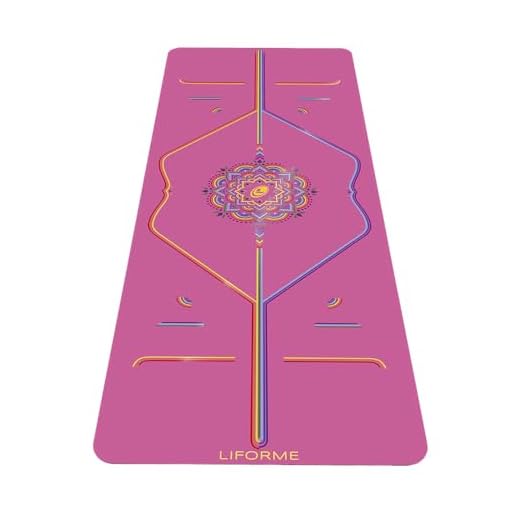
Liforme Printed Yoga Mat – Free Yoga Bag Included – Patented Alignment System, Warrior-like Grip, Non-slip, Eco-friendly, Sweat-Resistant, Long, Wide, 4.2mm…
Poor sleep doesn’t help either. It boosts ghrelin (the “hunger hormone”) and lowers leptin (the “fullness hormone”), leaving you hungrier and less satisfied after eating.
People who are sleep-deprived often end up consuming hundreds of extra calories a day, usually from junk food.
Real-world studies back this up. In one study of over 2,100 Greek university students, those with higher stress or poor sleep were more than twice as likely to be overweight or obese.
Sleep also matters for keeping weight off.
In a weight-maintenance study of adults with obesity, participants with short sleep (<6 hours) or poor sleep quality regained significantly more weight over a year than those who slept well—even though everyone started with the same diet-induced weight loss.
The takeaway?
Focusing only on calories in and calories out misses a huge piece of the puzzle. Managing stress and getting good sleep are just as important if you want lasting results.
The Psychological Downside of CICO
Beyond just biology, the calorie-counting mindset can actually do more harm than good—especially when it comes to your mental and emotional well-being.
Constantly tracking and limiting food can turn eating into a stressful, obsessive act.
When you’re focused solely on calories, you stop listening to your body’s natural hunger and fullness cues, making you less in tune with what your body really needs.
“Cheating” on your calorie budget often leads to feelings of failure, shame, and even binge eating—fueling that vicious cycle of yo-yo dieting.
The truth is, long-term health isn’t about obsessing over numbers.
A more compassionate, holistic approach—one that respects your body and encourages mindful eating—works far better for lasting health and balance.
So, What Actually Works?
If “eat less, move more” isn’t the whole story, then what does work? What’s the real secret to achieving and maintaining a healthy weight?
Here’s the good news: research, along with the real-world experiences of countless people, points to a more holistic, balanced approach.
It’s about nourishing your body rather than restricting it, and focusing on the bigger picture of health, not just numbers.
1. Prioritize Food Quality Over Quantity
Instead of obsessing over cutting calories, shift your focus to eating nutrient-dense, whole foods.
These foods naturally regulate your appetite, boost your metabolism, and support long-term health.
Here are some of the best foods for satiety and metabolic health:
When you fill your plate with these nutrient-packed options, your body gets what it needs—and naturally stops craving excess.
One of my personal staples in the kitchen is extra virgin olive oil. Not only is it delicious, but it’s also packed with antioxidants and healthy fats that support heart and metabolic health.
If you’re looking to try high-quality olive oils, here are three fantastic options from Olive Oil Lovers:


It’s not about restriction, but about nourishing yourself in a way that keeps you satisfied and energized.
2. Balance Blood Sugar
Keeping your blood sugar stable is key to preventing energy crashes, cravings, and unnecessary fat storage.
To keep things steady, try these simple strategies:
These can cause blood sugar spikes and crashes, leaving you feeling tired and hungry.
This helps slow down glucose absorption, keeping your energy steady.
Vegetables, fruits, and whole grains help slow the absorption of glucose, keeping blood sugar levels stable.
Some of my favorite pantry staples that make it easy to get more fiber are from Bob’s Red Mill:
- Buckwheat – Naturally gluten-free, rich in fiber, and great for hearty breakfasts or side dishes.
- Tri-Color Quinoa – A complete plant protein with fiber that’s perfect for salads, bowls, or as a rice alternative.
- Steel Cut Oats – A slow-digesting, fiber-packed breakfast that keeps you full and energized for hours.
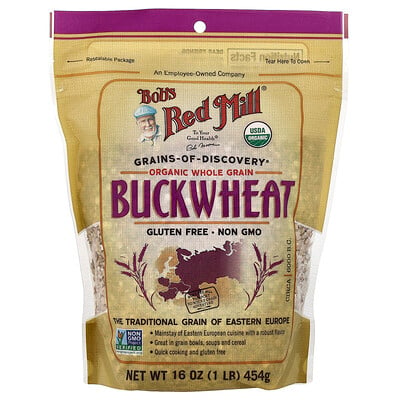
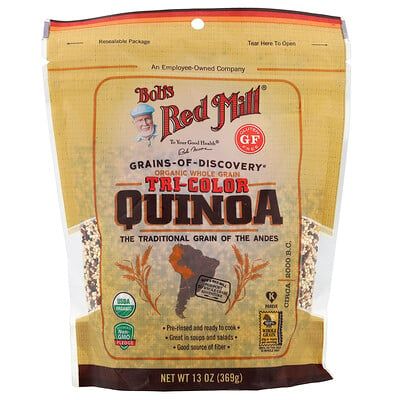
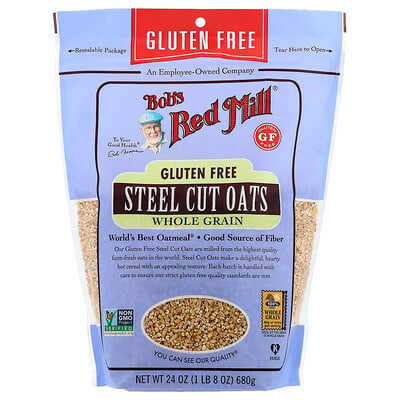
Skipping meals or going too long without eating can cause blood sugar to drop, triggering hunger and cravings. Regular meals help keep your energy and blood sugar steady.
By balancing your blood sugar and eating consistently, you can reduce insulin spikes and maintain steady energy throughout the day.
It’s about fueling your body in a way that keeps things running smoothly—without the highs and lows.
RELATED POST: How to Make Healthy Food Choices That Help You Lose Weight
3. Heal Your Gut
A healthy gut microbiome is essential for proper digestion, nutrient absorption, and maintaining a healthy weight.
To support your gut health, try these strategies:
Foods like onions, garlic, asparagus, and apples help feed the good bacteria in your gut, keeping things in balance.
Foods like yogurt, kefir, kimchi, and sauerkraut introduce beneficial bacteria that support digestion and gut health.
Every fall, I make a batch of homemade sauerkraut—not because it’s my favorite thing to do, but because I know how good it is for my gut health.
I use the Kilner Fermentation Set (available on Amazon), which makes the process simple and reliable. The result is fresh, probiotic-rich sauerkraut that’s much healthier (and tastier) than any store-bought versions.

Kilner Create & Make Fermentation Set | 3L
These can disrupt your gut microbiome and lead to imbalances that affect digestion and metabolism.
By healing and supporting your gut, you’re creating a foundation for better digestion, improved metabolism, and a healthier relationship with food.
It’s a key step to long-term wellness.
4. Manage Stress
Stress doesn’t just mess with your mood—it can directly impact your hormones and eating habits. That’s why managing stress is key to maintaining a healthy weight.
Here are a few simple ways to keep stress in check:
These practices help calm your mind and reduce stress hormones, keeping your body in balance.
book tip
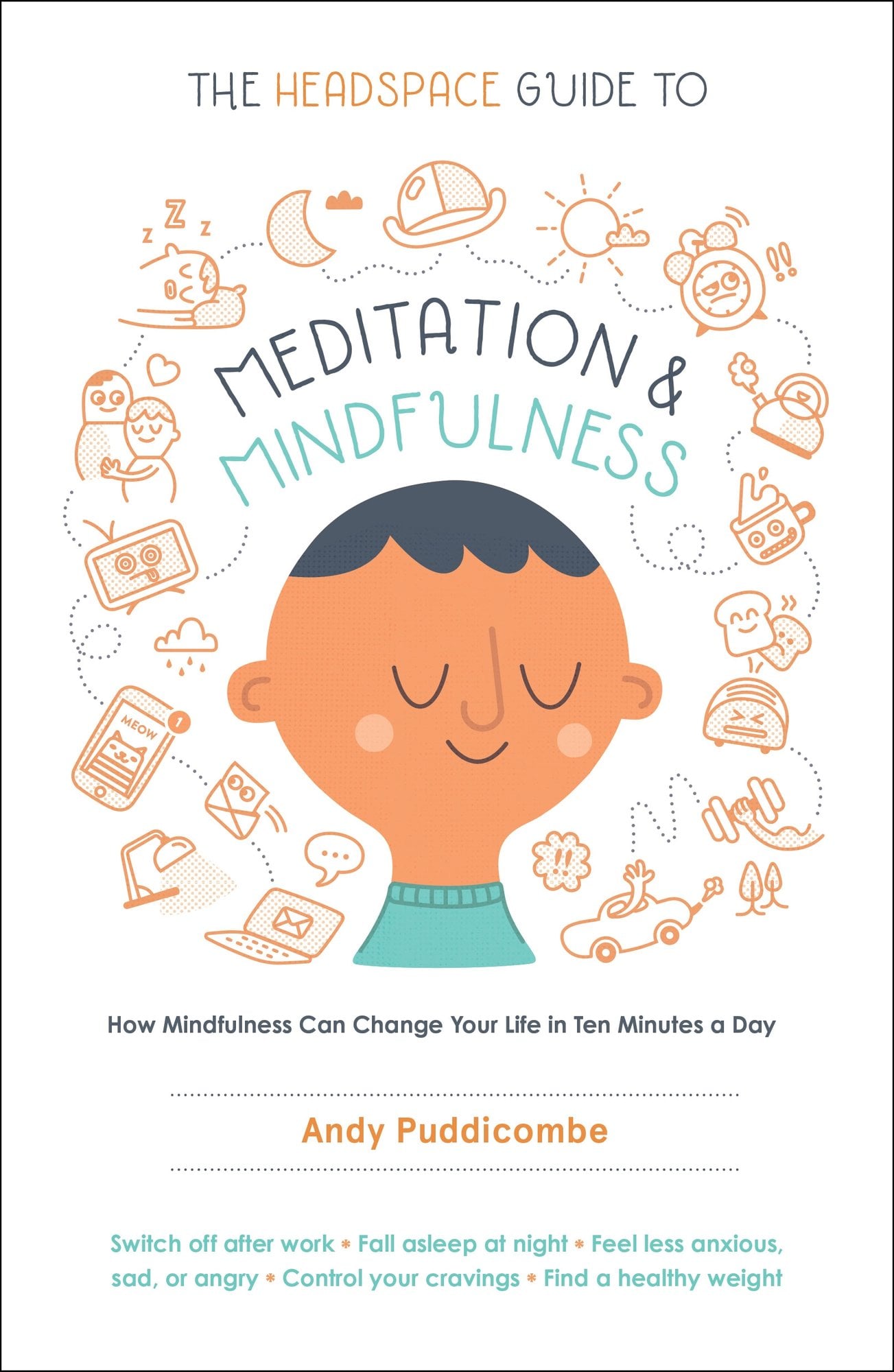
The Headspace Guide to Meditation & Mindfulness
By Andy Puddicombe
What if 10 minutes a day could make your life less stressful and more fulfilling?
*We may earn a commission at no extra cost to you.
RELATED POST: 15 Amazing Benefits of Yoga for Your Mind and Body
Whether it’s a walk in the park or a hike in the woods, nature has a calming effect on your nervous system.
Make time for activities that recharge you, whether it’s reading, taking a warm bath, or simply relaxing.
For example, a warm bath can be incredibly relaxing and help melt away tension.
Many people love using Kai Bathing Bubbles (available on Dermstore) for this purpose—it’s a simple, luxurious way to carve out a little time for yourself and unwind from the daily stresses of life.
Even a short soak can help calm the mind, reduce stress, and support overall well-being.

kai Bathing Bubbles (12 oz.)
5. Improve Sleep Quality
Quality sleep is just as important as eating well when it comes to maintaining a healthy weight. Without enough rest, your hormones and metabolism can go haywire.
Aim for 7–9 hours of sleep each night by:
Going to bed and waking up at the same time each day helps regulate your internal clock and supports better sleep quality.
If you have trouble falling asleep, you might consider trying the Deep Sleep Pillow Spray (available on Dermstore).
Many people find that a light mist on their pillow can help create a calming bedtime environment, making it easier to relax and drift off.
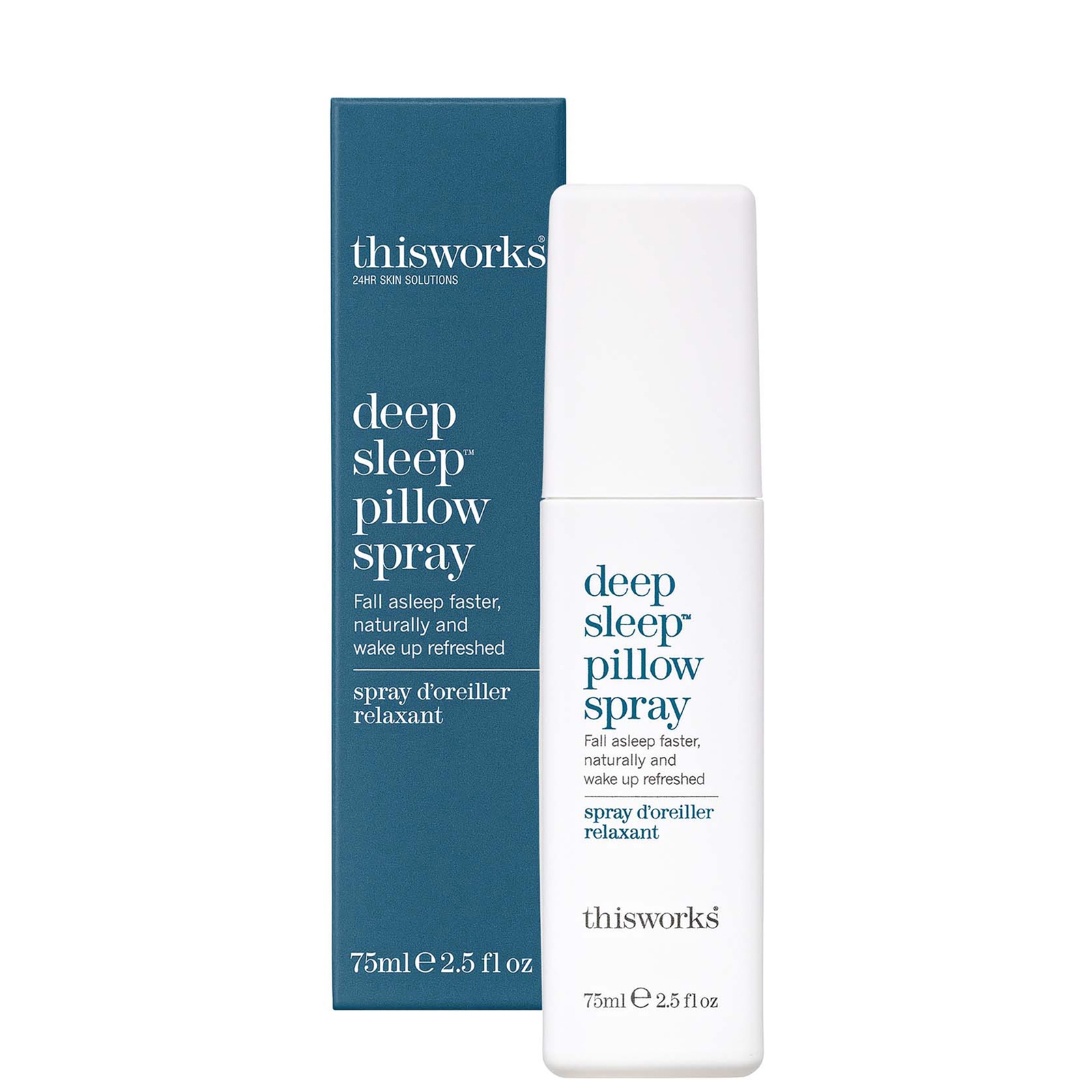
this works Deep Sleep Pillow Spray (2.5 fl. oz.)
The blue light from phones and computers can mess with your body’s ability to fall asleep. Try reading a book or meditating instead.
A calm, comfortable environment helps promote deeper, more restorative sleep.
If you’re sensitive to noise, you might consider using a SNOOZ Smart White Noise Machine (available on Amazon). It masks environmental noise, creating a consistent, soothing sound that makes it easier to fall asleep and stay asleep throughout the night.
Pairing this with a cool, dark room can significantly improve your sleep quality.

SNOOZ Smart White Noise Sound Machine – Real Fan Inside for Non-Looping White Noise, Sleep Aid for Adults, Travel, Sleeping, Bedroom, Portable, Baby Registry…
6. Strength Training and Movement
Instead of obsessing over burning calories, shift your focus to building strength and moving your body more.
Here’s why it works:
If hitting the gym isn’t your thing and you prefer working out at home, Vergali Resistance Bands (available on Amazon) are a great option.
They’re versatile, easy to use, and perfect for strength training exercises that build muscle and improve mobility without heavy equipment.

Resistance Bands for Working Out with Workout Bands Guide. 4 Booty Bands for Women Men Fabric Elastic Bands for Exercise Bands Resistance Bands for Legs…
Building strength and staying active isn’t just about weight loss—it’s about improving overall health and supporting your metabolism for the long run.
RELATED POST: Exercise for Healthy Lifestyle: Easy Workouts for Everyday Wellness
7. Listen to Your Body
Instead of fixating on calories and numbers, embrace intuitive eating—trusting your body to tell you what it needs.
Here’s how:
book tip
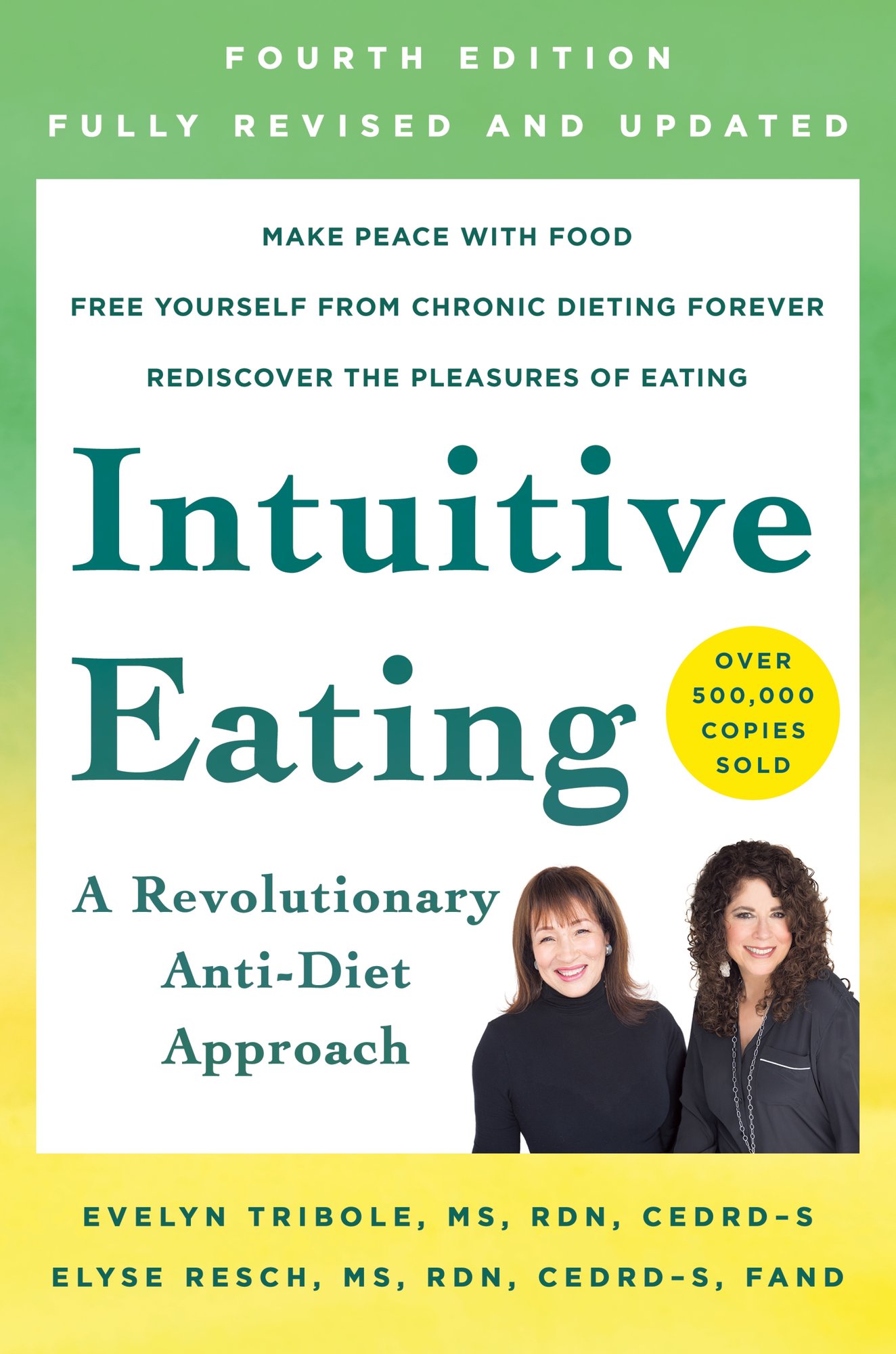
Intuitive Eating, 4th Edition
By Evelyn Tribole, Elyse Resch
Frustrated by diets that never seem to stick? In this book you’ll learn how to break free from the diet cycle, stop emotional eating, and finally enjoy food without guilt.
*We may earn a commission at no extra cost to you.
When you listen to your body, eating becomes a more natural, enjoyable experience—and it’s far more sustainable than counting every bite.
RELATED POST: How to Make Intuitive Eating Work For You and Support Weight Loss
8. Think Long-Term, Not Short-Term
Crash diets and extreme calorie-cutting might show quick results, but they’re rarely sustainable.
The real secret to lasting health is building habits that work long-term—habits that balance nutrition, movement, rest, and mental well-being.
My sister and I have embraced the approach I’ve shared in this article, and not only are we healthier than ever, but we’ve maintained the same weight for over a decade.
People often ask us how we stay in such great shape. The answer is simple: we focus on our health, not on weight loss.
We don’t count calories. Instead, we focus on the quality of the foods we eat.
The only thing we’re mindful of is how much fat we’re using when cooking. We always measure oils and fats instead of pouring freely, just to keep things balanced.
But other than that, we don’t track calories.
If you want to become more aware of your eating habits without obsessing over numbers, the Clever Fox Food Journal (available on Amazon) can be a helpful tool. Use it to track patterns, reflect on your choices, and make healthier decisions—not to stress about every bite.
If journaling feels like it would create anxiety or obsession, it may not be the right tool for you, and I would suggest you skip it.
But for many people, it can be a great way to cultivate awareness and mindful eating habits.

Clever Fox Food Journal – Daily Food Diary, Meal Planner to Track Calories & Nutrients, Weight Tracker Notebook, A5 (Rose Gold)
When you prioritize overall health, weight loss becomes a natural byproduct.
My sister and I don’t restrict any food. Instead, we focus on eating more healthy foods and less unhealthy foods.
This approach keeps us from ever feeling deprived, which is why we’ve avoided the cycle of yo-yo dieting and managed to stay at the same weight for so long.
Sustainable health isn’t about quick fixes; it’s about long-term habits that nourish your body, mind, and soul.
RELATED POST: 9 Sustainable Weight Loss Habits That Will Change Your Life
Final Thoughts
The “calories in, calories out” model oversimplifies the complexity of human health. While calorie balance does play a role, it’s only one piece of the puzzle.
Your weight, energy, and overall well-being are influenced by a variety of factors—hormones, gut health, food quality, stress, sleep, and lifestyle habits.
True, lasting health doesn’t come from restriction—it comes from nourishment.
When you focus on eating whole foods, stabilizing blood sugar, supporting gut health, managing stress, and getting enough sleep, you create the kind of environment where your body naturally finds its balance.
And this all happens without the need for endless calorie counting.
It’s time to move beyond outdated diet dogma and embrace a more holistic, sustainable approach to health—one that supports your body’s needs, not just numbers on a scale.
*This article is for informational purposes only and is not intended as medical advice. It should not be used to diagnose, treat, or prevent any health condition. Always consult a qualified healthcare professional before making any changes to your diet, exercise, or health routine.
Dakanalis, Antonios et al. “Overweight and Obesity Is Associated with Higher Risk of Perceived Stress and Poor Sleep Quality in Young Adults.” Medicina (Kaunas, Lithuania) vol. 60,6 983. 14 Jun. 2024, doi:10.3390/medicina60060983. Adapted and used under the terms of the Creative Commons Attribution 4.0 International License.
Donoho, Carrie J et al. “Stress and abdominal fat: preliminary evidence of moderation by the cortisol awakening response in Hispanic peripubertal girls.” Obesity (Silver Spring, Md.) vol. 19,5 (2011): 946-52. doi:10.1038/oby.2010.287. Abstract only.
Feinman, Richard D, and Eugene J Fine. “"A calorie is a calorie" violates the second law of thermodynamics.” Nutrition journal vol. 3 9. 28 Jul. 2004, doi:10.1186/1475-2891-3-9. Adapted and used under the terms of the Creative Commons Attribution 2.0 Generic License.
Fernandes, Ariana E et al. “Differences in the gut microbiota of women according to ultra-processed food consumption.” Nutrition, metabolism, and cardiovascular diseases : NMCD vol. 33,1 (2023): 84-89. doi:10.1016/j.numecd.2022.09.025.
Johannsen, Darcy L., et al. "Metabolic Slowing with Massive Weight Loss despite Preservation of Fat-Free Mass." The Journal of Clinical Endocrinology & Metabolism, vol. 97, no. 7, 1 July 2012, pp. 2489–2496, https://doi.org/10.1210/jc.2012-1444. Abstract only.
Mullur, Rashmi et al. “Thyroid hormone regulation of metabolism.” Physiological reviews vol. 94,2 (2014): 355-82. doi:10.1152/physrev.00030.2013. Abstract only.
Noor, Jawad et al. “Exploring the Impact of the Gut Microbiome on Obesity and Weight Loss: A Review Article.” Cureus vol. 15,6 e40948. 25 Jun. 2023, doi:10.7759/cureus.40948. Adapted and used under the terms of the Creative Commons Attribution 4.0 International License.
Rahman, Md Saidur et al. “Role of Insulin in Health and Disease: An Update.” International journal of molecular sciences vol. 22,12 6403. 15 Jun. 2021, doi:10.3390/ijms22126403. Adapted and used under the terms of the Creative Commons Attribution 4.0 International License.
Tarman, Vera Ingrid. "One Size Does Not Fit All: Understanding the Five Stages of Ultra-Processed Food Addiction." Journal of Metabolic Health, vol. 7, no. 1, 2024, a90. Crossref, https://doi.org/10.4102/jmh.v7i1.90. Adapted and used under the terms of the Creative Commons Attribution 4.0 International License.

Linda is the co-founder of Courier Wellness and holds a Diploma in Natural Health Nutrition & Diet. Her passions include photography, food, and travel, where she derives inspiration from diverse cultures and their holistic approaches to well-being. She is committed to helping others make informed, nourishing choices for a healthier life.