15 Amazing Benefits of Yoga for Your Mind and Body

This post contains affiliate links, which means we may earn a commission if you purchase through our links—at no extra cost to you. As an Amazon Associate we earn from qualifying purchases. We only recommend products we use or trust. Learn more about affiliate marketing or read our full disclosure.
Ever feel like you’re being pulled in a million directions at once? If so, you’re not alone—and that’s where yoga comes in.
Practiced for thousands of years, yoga is so much more than fancy poses or touching your toes.
It’s a full mind-body experience that helps you feel more grounded, centered, and energized in today’s fast-paced world.
Whether you’re brand new to yoga or have been flowing for years, there’s always something new to discover.
Now let’s dive into 15 amazing benefits of yoga for your mind and body—and why having the right gear can make your practice feel even better.
Important Note: Before starting any new yoga practice, especially if you have a medical condition, injury, or have been inactive, consult a qualified healthcare professional. Always listen to your body and move at a safe, comfortable pace. Yoga should challenge you gently — not cause pain.
Let’s get started!
Understanding Yoga
Before we dive into the benefits of yoga, let’s take a moment to understand what yoga actually is—because it’s so much more than just stretching or striking a pose.

At its core, yoga is an ancient practice rooted in Indian philosophy that brings your mind, body, and breath into harmony.
It combines physical poses or postures (asanas), breathing techniques (pranayama), and meditation (dyana) to help you feel more connected—to yourself and the world around you.
Yoga comes in many forms, from slow and restorative practices like Yin or Hatha, to sweat-inducing flows like Vinyasa or Power Yoga.
The beauty is that there’s no “right” way to do yoga.
It’s not about being the most flexible person in the room or holding a pose perfectly. It’s about showing up, being present, and tuning into what your body needs in that moment.
Whether you’re seeking strength, stress relief, or simply a moment of calm in your busy day, yoga meets you where you are.
It’s a practice, not a performance—and the more you do it, the more you’ll start to feel the deep, lasting benefits of yoga in your everyday life.
Now let’s take a closer look at the amazing benefits of yoga:
1. Increases Flexibility
If you’ve ever wished you could touch your toes without feeling like a rusty robot, yoga’s got your back—literally.
One of the most talked-about benefits of yoga is how it helps you become more flexible.
With regular practice, you’ll notice your muscles loosening up, your joints moving more freely, and those tight spots starting to melt away.
One study examining yoga practice found that participants experienced significant improvements in flexibility after just a few sessions, helping their muscles and joints move more freely.
Pro Tip: If you’re just starting out or need a little extra support, consider using yoga props. A Gaiam Yoga Block, a Gaiam Yoga Strap, and a Yogikuti Yoga Blanket (all available on Amazon) can make stretches more accessible and comfortable.
The block provides stability, the strap helps you reach your feet in seated forward folds, and the blanket adds extra cushioning for joints during deep stretches or floor poses. These simple tools make it easier to progress safely and confidently.
Why it Matters:
Being more flexible doesn’t just make your body feel better—it actually helps prevent injuries, improves your posture, and eases pain caused by tight muscles.
So, those everyday tasks like bending down or reaching for something won’t feel like a struggle anymore.
2. Builds Strength
Think yoga is just gentle stretching?
Think again.
For example, holding a plank pose fires up your core and arms, while Warrior poses strengthen your legs and glutes.
Yoga is a powerful way to build strength, too. Many poses ask you to hold your own body weight, which works muscles you might not even realize you have. It’s like a full-body workout disguised as a calming flow.
Plus, these moves help you feel grounded and steady.
A 10-week study on beginner-level Hatha yoga found that participants improved their core strength, flexibility, and balance compared to a control group.
Why it Matters:
Strong muscles aren’t just about looking good—they protect your joints, help you keep your balance, and lower your risk of falls or injuries.
Basically, yoga makes you stronger and more resilient in everyday life.
3. Improves Posture
If you spend a lot of time hunched over a desk (who doesn’t these days?), yoga can be a real game-changer for your posture.
Practicing yoga helps you become more aware of how you hold your body throughout the day, so you can start to sit and stand with your spine properly aligned.
Plus, yoga strengthens your core and back muscles—the natural support system that keeps you upright.
Science even shows that yoga affects brain regions involved in posture and body awareness, helping you notice when you’re slouching and reset into better alignment.
Why it Matters:
When your posture improves, there’s less strain on your spine, which means fewer aches and pains in your neck, shoulders, and lower back.
Basically, yoga helps you feel taller, stronger, and more comfortable all day long.

4. Reduces Stress and Anxiety
One of the biggest benefits of yoga for me has been how it helps reduce stress and anxiety. Yoga’s focus on mindful breathing and gentle movement works wonders for calming the nervous system.
Practices like Hatha or Yin yoga help lower cortisol—the stress hormone—and activate your body’s natural relaxation response.
Research backs this up too—a review of 12 studies found that most styles of yoga are effective at reducing stress, with benefits showing up after just a few weeks of practice.
And it’s not just adults—research shows yoga can help young people too.
A review of 27 studies found that around 70% reported improvements in anxiety, depression, or both among youth after yoga programs.
That means yoga can be a powerful tool for managing mental health across all ages.
Why it Matters:
Lower stress levels don’t just make you feel better—they boost your overall health, improve your mood, and help you sleep more soundly at night.
I’ll be honest: when I first started yoga, I didn’t love it. I struggled with sitting quietly and tuning into my body. I was more into workouts that got my heart pumping and felt intense.
But knowing the benefits of yoga, I decided to stick with it—and I’m so glad I did. Now, yoga is a huge part of how I stay calm and grounded.
My only regret?
Not starting sooner.
Pro Tip: Try adding meditation or pranayama (breathwork) to your practice for an extra dose of stress relief.
5. Enhances Mental Clarity and Focus
Yoga is like a workout for your brain, too. When you practice, you have to really focus—whether it’s on your breath, your movement, or simply staying present in the moment.
Over time, this builds your ability to concentrate and keeps your mind sharp and clear.
And science backs this up—reviews of yoga research show it can actually boost attention and memory while lowering anxiety.
That means the focus you build on the mat doesn’t just stay there; it carries over into daily life, helping you feel more clear-headed even when you’re juggling work, screens, and stress.
Why it Matters:
Better focus doesn’t just help you on the mat—it carries over into your daily life, making it easier to stay productive, remember important details, and make confident decisions.
6. Improves Balance
Balance is something we often take for granted—until it starts to slip.
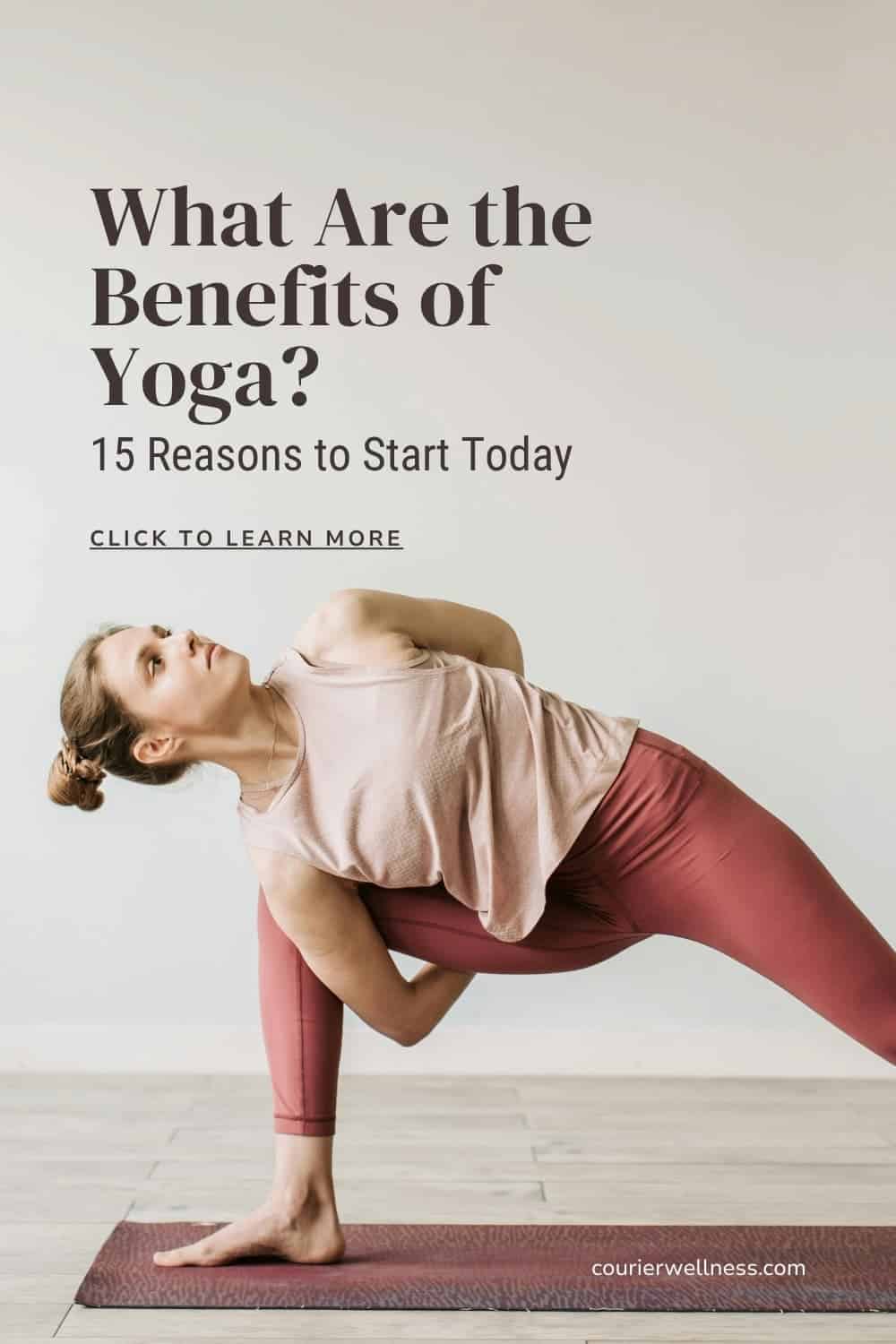
Yoga gently challenges your sense of balance with poses like Tree Pose and Half-Moon Pose, where you learn to steady yourself on one leg and engage muscles you might rarely use.
Studies show these poses can improve your coordination and postural control, so you’ll feel steadier on your feet in everyday life.
Over time, these poses help strengthen your stabilizing muscles and improve your overall coordination.
Why it Matters:
Good balance is crucial, especially as we age, because it lowers the risk of falls and injuries.
But even if you’re younger, better balance can boost your athletic performance and make everyday activities—like walking on uneven ground or carrying groceries—a lot easier and safer.
Plus, there’s something pretty empowering about feeling steady and confident in your body.
7. Promotes Better Sleep
If you struggle with restless nights or find it hard to switch off after a busy day, yoga might just become your new best friend.
Gentle, calming practices like restorative yoga or Yoga Nidra work to soothe your nervous system and signal to your body that it’s time to unwind and rest.
These slow, intentional movements and deep breathing help ease tension and quiet your mind, making it easier to fall asleep—and stay asleep.
Research shows that just a few weeks of Yoga Nidra can improve sleep efficiency, reduce the time you spend awake at night, and even boost the quality of deep sleep.
On top of that, it sharpens your focus and cognitive performance, so you wake up feeling both rested and mentally clear.
Why it Matters:
Getting quality sleep isn’t just about feeling rested—it’s essential for boosting your energy, supporting a strong immune system, and keeping your mood balanced.
Yoga helps you create that peaceful transition from the chaos of the day to the calm of a good night’s rest.
8. Boosts Cardiovascular Health
Yoga isn’t just about stretching and calming the mind—certain styles, like Vinyasa or Power Yoga, actually get your heart pumping.
These dynamic flows raise your heart rate, helping improve your cardiovascular endurance and overall heart health.
But even the gentler, slower practices play a key role by reducing stress and inflammation, two major factors that can negatively impact your heart.
Over time, regular yoga can help manage blood pressure, support healthy metabolism, and reduce your risk of heart disease.
Why it Matters:
Taking care of your cardiovascular system is one of the best things you can do for long-term health.
A stronger heart means a lower risk of heart disease, stroke, and high blood pressure—plus more energy to enjoy the things you love.
9. Supports Weight Management
Yoga might not burn as many calories as a high-intensity workout, but it plays a powerful role in supporting healthy weight management in other meaningful ways.
First, yoga helps build lean muscle, and more muscle means your body burns more calories even when you’re just relaxing.
On top of that, yoga’s calming effect reduces stress—which can often be a major trigger for emotional eating.
Studies have shown that people practicing yoga report becoming more mindful—not just of their movements, but also of what, when, and why they eat.
This mindful awareness can help you make better choices and tune into your body’s hunger and fullness cues.
Why it Matters:
Keeping a healthy weight isn’t just about how you look—it’s a crucial factor in protecting your overall health and lowering your risk for chronic diseases like diabetes and heart disease.
Yoga helps you build a balanced relationship with your body and food, making healthy habits easier to maintain.
10. Improves Digestion
Yoga isn’t just about what happens on the surface—it can actually help your digestive system work better, too.
Certain poses, like seated twists and forward folds, gently massage your abdominal organs and boost circulation in that area.
This can ease common tummy troubles like bloating, gas, and constipation, helping you feel lighter and more comfortable after meals.
Research shows that yoga can even benefit people with more serious gastrointestinal conditions, improving symptoms, mood, and overall quality of life.
It seems that the mindful, gentle movements of yoga help the gut and brain work together more smoothly.
Why it Matters:
When your digestion is running smoothly, your body absorbs nutrients more effectively, giving you more energy and supporting your overall health.
It’s a simple way yoga helps you feel good from the inside out.
11. Enhances Immunity
When stress levels run high, your immune system takes a hit—but yoga helps flip the script.
Studies suggest that yoga can help calm inflammation in the body and give your immune system a healthy boost.
By lowering stress hormones that can weaken your body’s defenses and improving circulation, yoga helps your immune cells travel through your body more efficiently, ready to fight off whatever comes your way.
Why it Matters:
A stronger immune system means fewer sick days, quicker recovery, and better overall health.
Yoga gives your body an extra boost to keep you feeling your best, no matter the season.
12. Reduces Chronic Pain
If you deal with chronic pain—whether it’s arthritis, lower back issues, or other persistent aches—yoga can be a game-changer.
Research shows yoga doesn’t just ease pain physically—it works as a whole-body system that interacts with the way we process pain.
This might explain why yoga can be especially helpful for long-term conditions like arthritis or back pain.
By strengthening the muscles that support your joints and improving flexibility, yoga helps ease pressure and stiffness.
Plus, the relaxation and mindful breathing techniques in yoga can actually change how you experience pain, making it more manageable.
Why it Matters:
Less pain means a better quality of life, more freedom to move, and often less reliance on medications.
Yoga offers a gentle, natural way to help you feel more comfortable in your own body.

13. Balances Energy Levels
One of the coolest things about yoga is how it can leave you feeling both calm and energized at the same time.
By syncing your breath with your movements, yoga helps balance your nervous system, so you’re not crashing midday or feeling wired at night. Instead, you get a steady, sustainable flow of energy that carries you through your day with ease.
Research shows that simply holding yoga poses—even for just a couple of minutes—can boost energy and self-esteem.
Why it Matters:
When your energy is balanced, you’re more productive, focused, and less likely to burn out. Yoga helps you keep that natural rhythm going strong—no caffeine required.
14. Enhances Emotional Well-Being
Yoga isn’t just about the body—it’s a powerful tool for your emotional health, too.
By encouraging self-awareness and self-compassion, yoga helps you build a kinder relationship with yourself.
Many people find that after a regular practice, they feel happier, more grounded, and better able to handle life’s ups and downs.
Why it Matters:
Taking care of your emotional well-being is key to living a balanced, fulfilling life—and yoga gives you the tools to do just that.
15. Cultivates a Sense of Inner Peace
At its heart, yoga is all about bringing your mind, body, and spirit into harmony.
Whether it’s through meditation, chanting, or sinking into savasana (that blissful final relaxation pose), yoga helps quiet the noise in your head and opens the door to a deep, lasting sense of inner peace.
Research confirms yoga can nurture spirituality—things like compassion, meaning, and inner peace—especially with regular practice.
Why it Matters:
When your mind is peaceful, you’re more resilient, joyful, and better equipped to face life’s challenges with grace and calm.

Tips for Starting a Yoga Practice
Feeling inspired to give yoga a try?
Here are a few simple tips to help you get started and stick with it:
1. Start Small
Even just 10–15 minutes a day can make a big difference—no need to jump into an hour-long class right away.
2. Pick a Style That Fits You
If you’re brand new, Hatha yoga is a gentle way to ease in. For a bit more cardio, try Vinyasa. And if you simply want to relax and unwind, then Yin or Restorative yoga might be your jam.
3. Invest in Comfy Gear
Having breathable leggings, a supportive sports bra, and a good-quality yoga mat can make your practice way more enjoyable.
4. Listen to Your Body
Yoga is all about honoring where you are. Never push into pain—move at your own pace and celebrate small progress.
5. Be Consistent
Like anything worth doing, yoga’s magic shows up with regular practice. Even on busy days, try to roll out your mat for a few minutes.
If you want a high-quality yoga mat, then The Liforme Printed Yoga Mat (available on Amazon) is a great option. It has amazing grip, which means your hands or feet won’t slip during practice.
It also has alignment guides, so you’ll know exactly where to put your hands and feet to ensure proper form (which is essential in yoga).
Final Thoughts
Yoga offers so much more than just physical exercise—it’s a holistic practice that nurtures your mind, body, and spirit all at once.
Whether you’re looking to boost your strength, improve flexibility, reduce stress, or simply find more calm and balance in your life, the benefits of yoga are truly transformative and accessible to everyone.
Remember, yoga is a personal journey, not a competition. It’s about tuning into your own body, honoring where you are, and growing at your own pace.
So why not roll out your mat today, take that first breath, and begin exploring what yoga can do for you?
With consistency and an open heart, you’ll soon discover how this ancient practice can bring more peace, strength, and joy into your everyday life.
*This article is for informational purposes only and is not intended as medical advice. It should not be used to diagnose, treat, or prevent any health condition. Always consult a qualified healthcare professional before making any changes to your diet, exercise, or health routine.
Chopra, Deepak et al. “Yoga and pain: A mind-body complex system.” Frontiers in pain research (Lausanne, Switzerland) vol. 4 1075866. 23 Feb. 2023, doi:10.3389/fpain.2023.1075866. Adapted and used under the terms of the Creative Commons Attribution 4.0 International License.
Csala, Barbara et al. “Is Weekly Frequency of Yoga Practice Sufficient? Physiological Effects of Hatha Yoga Among Healthy Novice Women.” Frontiers in public health vol. 9 702793. 18 Oct. 2021, doi:10.3389/fpubh.2021.702793. Adapted and used under the terms of the Creative Commons Attribution 4.0 International License.
Csala, Barbara et al. “The Relationship Between Yoga and Spirituality: A Systematic Review of Empirical Research.” Frontiers in psychology vol. 12 695939. 2 Aug. 2021, doi:10.3389/fpsyg.2021.695939. Adapted and used under the terms of the Creative Commons Attribution 4.0 International License.
Datta, Kanchan, et al. "Improved Sleep, Cognitive Processing and Enhanced Learning and Memory Task Accuracy with Yoga Nidra Practice in Novices." PLoS ONE, vol. 18, no. 12, 2023, e0294678, https://doi.org/10.1371/journal.pone.0294678. Adapted and used under the terms of the Creative Commons Attribution 4.0 International License.
Falkenberg, R I et al. “Yoga and immune system functioning: a systematic review of randomized controlled trials.” Journal of behavioral medicine vol. 41,4 (2018): 467-482. doi:10.1007/s10865-018-9914-y. Abstract only.
Golec de Zavala, Agnieszka et al. “Yoga Poses Increase Subjective Energy and State Self-Esteem in Comparison to 'Power Poses'.” Frontiers in psychology vol. 8 752. 11 May. 2017, doi:10.3389/fpsyg.2017.00752. Adapted and used under the terms of the Creative Commons Attribution 4.0 International License.
İnal, Özgü et al. “Postural stability and flexibility responses of yoga training in women: Are improvements similar in both sexes?.” Health care for women international vol. 44,6 (2023): 718-733. doi:10.1080/07399332.2022.2061971. Abstract only.
James-Palmer, Aurora et al. “Yoga as an Intervention for the Reduction of Symptoms of Anxiety and Depression in Children and Adolescents: A Systematic Review.” Frontiers in pediatrics vol. 8 78. 13 Mar. 2020, doi:10.3389/fped.2020.00078. Abstract only.
Ross, A et al. “A Different Weight Loss Experience: A Qualitative Study Exploring the Behavioral, Physical, and Psychosocial Changes Associated with Yoga That Promote Weight Loss.” Evidence-based complementary and alternative medicine : eCAM vol. 2016 (2016): 2914745. doi:10.1155/2016/2914745. Adapted and used under the terms of the Creative Commons Attribution 4.0 International License.
Sharma, Harshita, Swetanshu, and Pratichi Singh. “Role of Yoga in Cardiovascular Diseases.” Current Problems in Cardiology, vol. 49, no. 1, Part A, 2024, p. 102032, https://doi.org/10.1016/j.cpcardiol.2023.102032. Abstract only.
Thakur, Elyse R et al. “A systematic review of yoga for the treatment of gastrointestinal disorders.” Neurogastroenterology and motility, e14915. 17 Sep. 2024, doi:10.1111/nmo.14915. Abstract only.
van Aalst, June et al. “What Has Neuroimaging Taught Us on the Neurobiology of Yoga? A Review.” Frontiers in integrative neuroscience vol. 14 34. 8 Jul. 2020, doi:10.3389/fnint.2020.00034. Adapted and used under the terms of the Creative Commons Attribution 4.0 International License.
Wang, Feifei, and Attila Szabo. “Effects of Yoga on Stress Among Healthy Adults: A Systematic Review.” Alternative therapies in health and medicine vol. 26,4 (2020): AT6214, https://pubmed.ncbi.nlm.nih.gov/32088671/. Abstract only.
Yadav, Kanchan, Arti Yadav, and Sandeep Singh. "Yoga and Attention: A Systematic Review." Yoga Mimamsa, vol. 54, no. 2, July–Dec. 2022, pp. 128–132. Lippincott Williams & Wilkins/Wolters Kluwer Health, Inc., doi:10.4103/ym.ym_66_22. Abstract only.

Malin, the co-founder of Courier Wellness, is well-informed in nutrition and health and brings her own unique perspective to the world of holistic wellness. With a passion for writing and a deep interest in wellbeing, she wants to create content that fosters balance and nourishment for the mind and body.