What Blue Zones Teach Us About Longevity (And Why It Works)

This post contains affiliate links, which means we may earn a commission if you purchase through our links—at no extra cost to you. As an Amazon Associate we earn from qualifying purchases. We only recommend products we use or trust. Learn more about affiliate marketing or read our full disclosure.
For decades, scientists and researchers have searched for the secret to living a longer life.
Some focus on genetics. Others study supplements, anti-aging treatments, or cutting-edge technology.
But one of the most compelling lessons about longevity didn’t come from a laboratory. It came from ordinary communities.
In a handful of regions around the world, people consistently live longer and healthier lives than the global average.
These regions are known as blue zones.
What makes blue zones so remarkable is that the people who live there aren’t following the latest diet trends or extreme wellness routines.
Instead, their everyday lifestyles naturally support longevity through simple habits they practice consistently over many years.
In this article, you’ll discover what blue zones can teach us about longevity—and why these everyday habits appear to be so effective.
Longevity Is About Lifestyle, Not Just Genetics
One of the biggest lessons from blue zones research is that your lifespan isn’t determined by your genes alone.

Genetics certainly play a role, but your daily lifestyle appears to have a much greater influence than many people realize.
Research suggests that genetics are only part of the story. Lifestyle factors such as diet, physical activity, and strong social connections appear to have the greatest influence on longevity.
When researchers studied the blue zones, they found that people who live exceptionally long lives often share many of the same everyday habits, even though they come from very different parts of the world.
This reinforces the idea that your environment and daily choices can have a significant impact on:
- Lifespan
- Disease risk
- Physical function
- Mental wellbeing
- The takeaway is surprisingly encouraging.
Many of the factors that support healthy aging—and contribute to the remarkable longevity seen in blue zones—may be far more within your control than you might think.
RELATED POST: What Are Blue Zones? The Secrets Behind the World’s Longest-Living People
The World’s Longest-Lived People Don’t “Diet”
Modern wellness culture is often focused on dieting:
- Keto
- Paleo
- Detoxes
- Fasting trends
- Calorie tracking
But people living in blue zones generally don’t think about food this way.
Instead of following strict or restrictive eating plans, they tend to eat traditional diets built around:
- Whole foods
- Local ingredients
- Plant-based staples
- Moderate portions
Their eating habits are sustainable because they’re simply part of everyday life and culture, not a separate health program they have to stick with.
That matters because the best diet is rarely the most extreme one. More often, it’s the one you can follow consistently for years without feeling deprived or burned out.
Blue zones teach us that longevity nutrition isn’t about perfection. It’s about the everyday habits and patterns you maintain over time.
RELATED POST: Could the Blue Zones Diet Be the Healthiest Way to Eat?
Simplicity Often Works Better Than Optimization
Modern health culture often encourages the pursuit of optimization:
- Biohacking
- Expensive supplements
- Precision nutrition
- Complex fitness routines
But the lifestyles found in blue zones are remarkably simple.
People there often:
- Walk every day
- Cook simple, nourishing meals
- Spend time with family
- Work in gardens
- Stick to regular social routines
None of these habits seem especially remarkable on their own. But practiced consistently over the years, they build on one another and create meaningful health benefits.
Blue zones suggest that consistency matters far more than intensity when it comes to longevity.
The simple habits you practice every day may ultimately have a greater impact than occasional bursts of extreme effort—and that’s one of the most valuable lessons we can learn from blue zones.
Movement Is Built Into Daily Life
One of the clearest patterns across the blue zones is regular, low-level movement throughout the day.
People in these regions typically don’t rely on structured gym workouts.
Instead, they stay naturally active through activities such as:
- Walking
- Gardening
- Farming
- Household chores
- Climbing hills or stairs
Research suggests that this kind of regular, moderate movement, built naturally into everyday life, is associated with better health and longevity.
This kind of movement is sustainable because it’s built naturally into everyday life rather than treated as another task to schedule.
Modern lifestyles often encourage:
- Sitting for long periods
- Driving everywhere
- Screen-based entertainment
Blue zones show that natural daily movement may be more beneficial than intense exercise sessions done only occasionally.
The human body appears to respond especially well to steady movement spread throughout the day.
Social Connection Is a Major Longevity Factor
Many people assume longevity comes down mainly to diet and exercise.
However, blue zones research consistently highlights another important factor: relationships.
Research suggests that strong social relationships are associated with a lower risk of premature death, while loneliness and social isolation are linked to poorer physical and mental health.
People in blue zones often have:
- Strong family bonds
- Close friendships
- Active community involvement
- Reliable social support systems
Loneliness and social isolation are associated with:
- Higher stress levels
- Increased inflammation
- Poor mental health
- Greater risk of early death
By contrast, strong and meaningful social connections appear to offer genuine protection.
For example:
- Okinawans form lifelong support groups called “moai”
- In Sardinia, families often live close together across multiple generations
- In Loma Linda, religious communities provide built-in social support
Studies indicate that blue zone communities often place a strong emphasis on family, friendship, and community. Researchers have linked these close social ties with better mental well-being and suggest they may contribute to healthy aging and longevity.
Blue zones remind us that good health isn’t only physical—it’s deeply connected to our relationships and sense of belonging.
Purpose Matters More Than Many People Realize
Another common characteristic shared by people in blue zones is having a strong sense of purpose. They often have a clear reason to get out of bed each morning.
In Okinawa, this is known as “ikigai,” meaning a reason for being. In Nicoya, Costa Rica, people call it “plan de vida,” or life plan.
According to research, having a reason to get up each morning may be more than just emotionally rewarding—it could also support a longer life.
A 2008 study of more than 43,000 Japanese adults found that those who lacked ikigai, or a sense of purpose, had a higher risk of all-cause and cardiovascular mortality over seven years.
Research suggests that a sense of purpose may support healthy aging by:
- Reducing long-term stress
- Supporting mental wellbeing
- Encouraging continued engagement with life
Modern life can sometimes feel busy, scattered, and disconnected, especially in more individualistic cultures.
Blue zones suggest that purpose isn’t simply a nice addition to life—it may play a meaningful role in healthy aging.
Stress Reduction Is Built Into the Culture
Stress is a normal part of life, but it’s chronic stress that tends to cause the greatest harm.
Research suggests that long-term stress is associated with:
- Inflammation
- Cardiovascular disease
- Sleep issues
- Metabolic dysfunction
Blue zones cultures naturally incorporate ways to reduce stress into everyday life.
For example:
- Afternoon naps in Ikaria
- Prayer and reflection in Loma Linda
- Slow, social meals and daily rituals
- Time spent outdoors
What’s especially important is that stress reduction isn’t treated as another self-improvement project. It’s simply woven into daily life.
Blue zones show us that slowing down isn’t a sign of laziness. It may actually help protect your long-term health.

Food Quality Matters More Than Food Trends
One of the biggest differences between blue zones diets and many modern eating patterns is the quality of the food itself.
Meals are typically centered around:
- Vegetables
- Beans
- Whole grains
- Nuts
- Seasonal produce
Ultra-processed foods are far less common.
By comparison, many modern diets are filled with:
- Sugary drinks
- Fast food
- Refined carbs
- Packaged snacks
- Artificial additives
According to a recent Lancet Series, the global rise in ultra-processed foods has become a major public health concern, reinforcing the importance of building diets around whole, minimally processed foods.
We welcome the growing attention ultra-processed foods are receiving from the scientific community.
When one of the world’s leading medical journals describes them as a major global public health issue, it reinforces what many researchers have been warning for years: the foods we eat every day have consequences not only for our health, but also for society and the environment.
An blue zones remind us that healthy eating doesn’t have to be perfect. What seems to matter most is building your diet around real, minimally processed foods most of the time.
RELATED POST: 8 Blue Zones Diet Secrets for Cutting Out Ultra-Processed Foods
Moderation Is a Common Theme
Blue zones lifestyles generally avoid extremes.
People typically:
- Eat moderate portions
- Drink alcohol in small amounts or not at all
- Move consistently without overtraining
- Maintain balanced daily routines
This is a very different approach from the “all-or-nothing” mindset that often surrounds health today.
Extreme diets and difficult-to-maintain habits often fall short because they rely too heavily on willpower.
Blue zones show the lasting value of moderation practiced consistently over many years.
Environment Shapes Health More Than Motivation
One of the most valuable lessons from blue zones is that your environment has a powerful influence on your everyday choices.
In these communities:
- Walking is a natural part of life
- Healthy food is easy to access
- Social interaction happens regularly
- Rest is seen as normal
People aren’t constantly fighting temptation. Instead, their surroundings naturally make healthier choices the easier ones.
Studies indicate that healthy food environments make healthy choices more likely. People exposed to environments with better access to nutritious foods and stronger support for healthy eating were significantly more likely to choose fruits and vegetables.
Modern environments often create the opposite experience:
- Sedentary jobs
- Constant advertising
- Easy access to ultra-processed foods
- Social isolation
- Ongoing overstimulation
Blue zones suggest that improving your environment may be more effective than relying on endless self-discipline.
Longevity Is Closely Connected to Community
In many blue zones, getting older doesn’t mean becoming less involved in society.
Older adults remain active in:
- Family life
- Work
- Community traditions
- Social activities
This may support:
- Better mental health
- A stronger sense of purpose
- Higher levels of physical activity
In many modern societies, older adults become increasingly isolated, especially after retirement.
Blue zones remind us that maintaining strong social connections may be an essential part of healthy aging.
Sleep and Rest Are Taken Seriously
Many modern lifestyles treat rest as something optional.
People often:
- Stay up late
- Work long hours
- Sacrifice sleep for productivity
Blue zones cultures tend to place a greater value on rest as a natural part of daily life.
For example:
- Afternoon naps are common in Ikaria
- Daily routines often follow natural daylight patterns
- A slower pace helps reduce constant overstimulation
Research suggests that getting enough quality sleep supports:
- Brain health
- Mental wellbeing
- Cardiovascular health
- Overall health
Blue zones reinforce the idea that rest isn’t wasted time—it plays an important role in long-term health and longevity.
Longevity Is About Prevention, Not Constant Treatment
Modern healthcare systems often focus on managing disease after it develops.
Blue zones lifestyles naturally emphasize prevention through:
- Diet
- Movement
- Social support
- Stress management
This doesn’t mean people never experience illness. However, rates of many chronic diseases tend to be lower.
There Is No Single “Magic Secret”
One reason blue zones research is so valuable is that it challenges the idea that there’s a single shortcut to a longer life.
There isn’t one food, supplement, or exercise that can fully explain exceptional longevity.
Instead, long life appears to result from multiple habits working together:
- Nutritious food
- Physical activity
- Community
- Purpose
- Rest
- Stress reduction
This broader pattern is likely one reason why blue zones are so difficult to replicate through isolated health trends.
Why Blue Zones Habits Work
Blue zones lifestyles appear to work so well because they closely align with the way human biology evolved.
Humans developed in environments that included:
- Frequent movement
- Social connection
- Whole foods
- Natural light exposure
- Moderate eating patterns
Modern lifestyles often fall out of step with many of these biological needs.
Blue zones habits may support better health because they help bridge the gap between human biology and modern living.
In other words, these communities tend to live in ways that naturally support long-term wellbeing.
What We Can Learn Without Moving to a Blue Zone
You don’t have to move to Okinawa or Sardinia to apply these ideas to your own life. Even small changes can help you embrace many of the same principles found in blue zones.
Examples include:
- Walking more often
- Cooking simple meals at home
- Eating more beans and vegetables
- Cutting back on ultra-processed foods
- Prioritizing relationships
- Building simple daily routines
- Spending more time outdoors
- Eating meals more slowly
- Protecting your sleep
The most important factor is sustainability.
Blue zones habits are effective in part because people maintain them for years—not just for a few weeks.
If you’d like to explore the daily habits, recipes, and lifestyle practices behind the world’s longest-living communities in more depth, The Blue Zones Solution by Dan Buettner, available on Bookshop.org, is an excellent resource. It combines research with practical guidance to help you bring many of the same principles into your own everyday life.
book tip
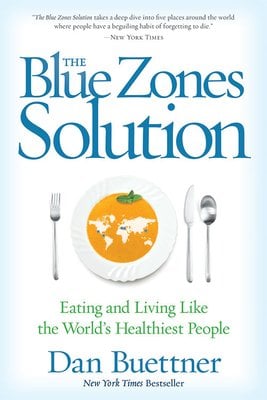
The Blue Zones Solution
By Dan Buettner
Want to know the secrets to living longer, healthier, and happier?
Did you know? Bookshop.org gives 80%+ of their profits to support independent bookstores.
*We may earn a commission at no extra cost to you.
Modern Longevity Culture Sometimes Misses the Bigger Picture
Many conversations about anti-aging focus heavily on:
- Supplements
- Lab testing
- Expensive wellness products
- Optimization strategies
Blue zones research points to a much simpler message.
The foundations of healthy aging are often:
- Behavioral
- Social
- Environmental
Technology may eventually help extend lifespan even further, but blue zones remind us that many of the most powerful health benefits are already available through the way we live each day.
The Real Secret of Blue Zones
Perhaps the most important lesson from blue zones is that longevity isn’t built through constant focus on health.
People in these regions usually aren’t actively trying to “live longer.”
They’re simply living in ways that naturally support good health:
- Eating traditional foods
- Staying active
- Maintaining strong relationships
- Being part of a community
- Living with purpose
Ironically, modern health culture can sometimes create stress around the pursuit of health itself.
Blue Zones offer a different perspective:
Health can grow from a balanced, connected lifestyle rather than endless optimization.
Final Thoughts
What blue zones teach us about longevity is both simple and deeply meaningful. A long life rarely comes from one miracle food, supplement, or habit.
Instead, longevity in blue zones appears to be built on steady, consistent patterns:
- Whole-food diets
- Natural movement
- Strong social connection
- Stress reduction
- Meaningful routines
- Purpose and community
Perhaps most importantly, these habits are sustainable. People in blue zones aren’t living perfect lives. They’re simply living in ways that are deeply human.
And that may be the real reason they live so long.
*This article is for informational purposes only and is not intended as medical advice. It should not be used to diagnose, treat, or prevent any health condition. Always consult a qualified healthcare professional before making any changes to your diet, exercise, or health routine.
Baker, Phillip et al. “Towards unified global action on ultra-processed foods: understanding commercial determinants, countering corporate power, and mobilising a public health response.” Lancet (London, England) vol. 406,10520 (2025): 2703-2726. doi:10.1016/S0140-6736(25)01567-3.
Cornwell, Erin York, and Linda J Waite. “Social disconnectedness, perceived isolation, and health among older adults.” Journal of health and social behavior vol. 50,1 (2009): 31-48. doi:10.1177/002214650905000103.
Kreouzi, Magdalini et al. “Lessons Learned From Blue Zones, Lifestyle Medicine Pillars and Beyond: An Update on the Contributions of Behavior and Genetics to Wellbeing and Longevity.” American journal of lifestyle medicine vol. 18,6 750-765. 20 Aug. 2022, doi:10.1177/15598276221118494. Adapted and used under the terms of the Creative Commons Attribution 4.0 International License.
Mariotti, Agnese. “The effects of chronic stress on health: new insights into the molecular mechanisms of brain-body communication.” Future science OA vol. 1,3 FSO23. 1 Nov. 2015, doi:10.4155/fso.15.21. Adapted and used under the terms of the Creative Commons Attribution 4.0 International License.
Mohol P, Ghosh A, Kulkarni S. Blue Zone Dietary Patterns, Telomere Length Maintenance, and Longevity: A Critical Review. Nutr Food Sci 2025; 13(2), doi:http://dx.doi.org/10.12944/CRNFSJ.13.2.6. Adapted and used under the terms of the Creative Commons Attribution 4.0 International License.
Scott, Alexander J et al. “Improving sleep quality leads to better mental health: A meta-analysis of randomised controlled trials.” Sleep medicine reviews vol. 60 (2021): 101556. doi:10.1016/j.smrv.2021.101556. Adapted and used under the terms of the Creative Commons Attribution 4.0 International License.
Sone, Toshimasa et al. “Sense of life worth living (ikigai) and mortality in Japan: Ohsaki Study.” Psychosomatic medicine vol. 70,6 (2008): 709-15. doi:10.1097/PSY.0b013e31817e7e64. Abstract only.
Thomas, Terrence W, and Murat Cankurt. “Influence of Food Environments on Dietary Habits: Insights from a Quasi-Experimental Research.” Foods (Basel, Switzerland) vol. 13,13 2013. 26 Jun. 2024, doi:10.3390/foods13132013. Adapted and used under the terms of the Creative Commons Attribution 4.0 International License.

Malin, the co-founder of Courier Wellness, is well-informed in nutrition and health and brings her own unique perspective to the world of holistic wellness. With a passion for writing and a deep interest in wellbeing, she wants to create content that fosters balance and nourishment for the mind and body.