What Are Blue Zones? The Secrets Behind the World’s Longest-Living People
This post contains affiliate links, which means we may earn a commission if you purchase through our links—at no extra cost to you. As an Amazon Associate we earn from qualifying purchases. We only recommend products we use or trust. Learn more about affiliate marketing or read our full disclosure.
Around the world, there are a handful of remarkable places where people tend to live longer, healthier lives than those in most other parts of the world.
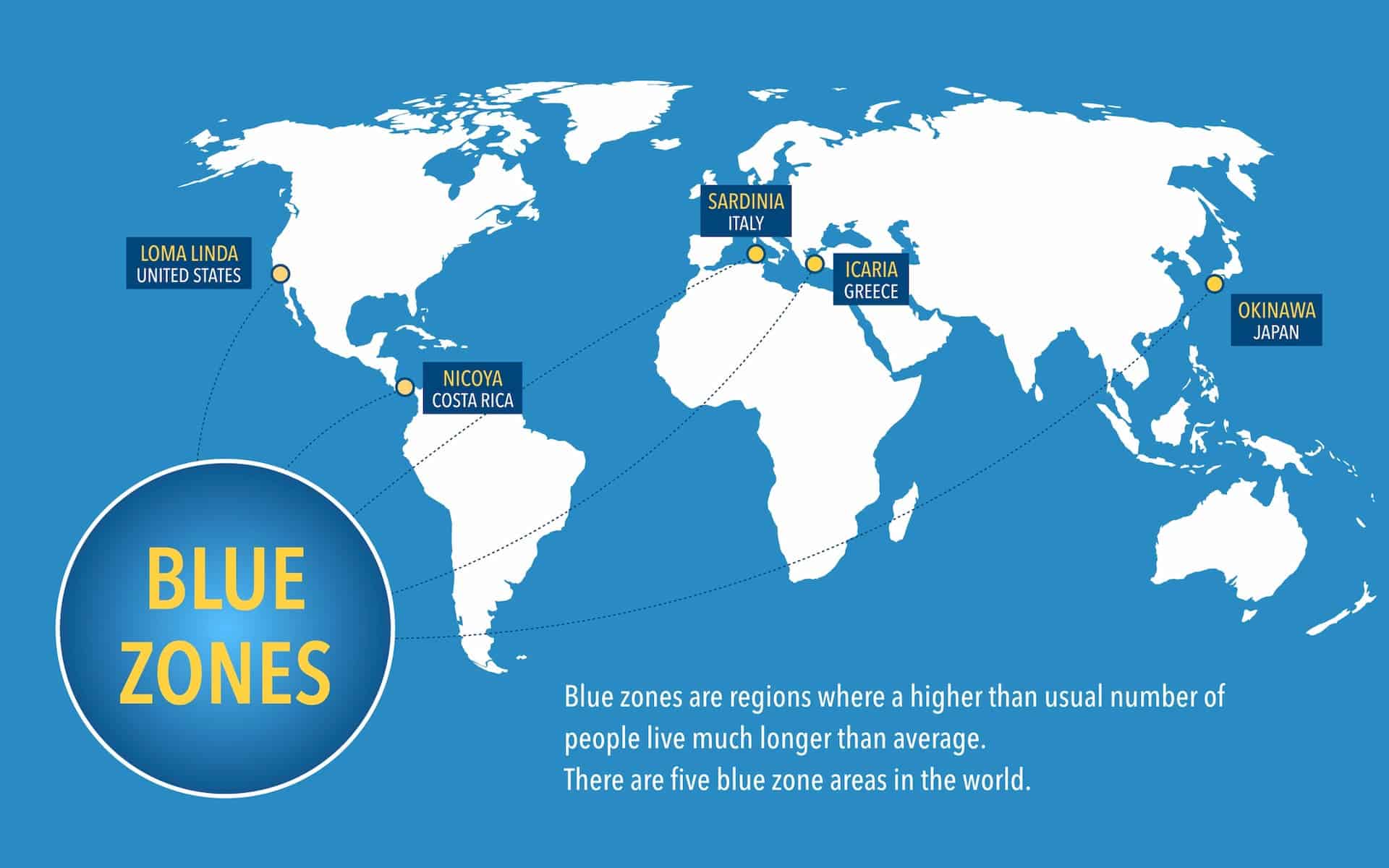
These places are known as blue zones—regions where an unusually high number of people live well into their 90s or even past 100, often with lower rates of chronic disease.
What makes these communities so remarkable isn’t advanced healthcare or expensive supplements. In many ways, it’s quite the opposite.
The secrets behind blue zones are rooted in simple, everyday habits that have been passed down from one generation to the next.
The foods you eat, staying active through natural daily movement, building strong social connections, having a sense of purpose, and even the environment you live in can all play a meaningful role in supporting a long, healthy life.
In this article, you’ll learn what blue zones are, where they’re found, and—most importantly—what you can take away from the lifestyles of the people who call them home.
The Origins of the Blue Zones Concept
The concept of blue zones was brought to public attention by researcher and author Dan Buettner, who worked alongside demographers and scientists to identify regions where people consistently live longer and experience lower rates of age-related disease.
By combining demographic data with on-the-ground research, they identified communities where people:
- Live much longer than the global average
- Have lower rates of heart disease, diabetes, and cancer
- Remain physically and mentally healthy well into later life
These regions were marked in blue on demographic maps, which is where the term “blue zones” comes from.
Rather than focusing on a handful of individuals who happened to live exceptionally long lives, researchers studied entire populations.
This approach made the findings more reliable because it showed that longevity wasn’t simply a matter of luck. Instead, it was linked to consistent lifestyle patterns shared across whole communities.
If you’re interested in the research behind Blue Zones and how to apply these habits in everyday life, The Blue Zones Solution: Eating and Living Like the World’s Healthiest People by Dan Buettner (available on Bookshop.org) offers a much deeper look at the communities, their lifestyles, and the practical lessons you can take from them.
book tip

The Blue Zones Solution
By Dan Buettner
Want to know the secrets to living longer, healthier, and happier?
Did you know? Bookshop.org gives 80%+ of their profits to support independent bookstores.
*We may earn a commission at no extra cost to you.
The Five Original Blue Zones
Today, researchers generally recognize five main blue zones:
1. Okinawa, Japan
Okinawa is known for having some of the longest-living women in the world.
Their lifestyle is centered around:
- A mostly plant-based diet
- Close-knit social circles known as “moai”
- A strong sense of purpose called “ikigai”
Research indicates that having ikigai—a sense of purpose or “life worth living”—may support longevity. In a 2008 study of more than 43,000 Japanese adults, people who lacked ikigai had a higher risk of death from all causes and cardiovascular disease over seven years.
2. Sardinia, Italy
In the mountainous regions of Sardinia, particularly among men, people often live remarkably long lives.
Key parts of their lifestyle include:
- Regular physical activity through work such as shepherding and farming
- A diet centered on whole foods and plenty of legumes
- Strong family relationships and close social connections
Research suggests that traditional diets in Sardinia are largely plant-based, with cereals, legumes, and other whole foods making up much of the diet.
3. Nicoya Peninsula, Costa Rica
The Nicoya Peninsula is well known for its high number of centenarians.
Some of the key contributing factors include:
- A diet centered on traditional staples such as beans, corn, rice, and other mostly plant-based foods
- A strong sense of purpose, locally known as “plan de vida”
- A naturally active lifestyle with plenty of daily movement
Research suggests that traditional diets in Costa Rica’s Nicoya Peninsula are centered on plant-based staple foods such as gallo pinto (rice and beans) and corn tortillas.
4. Ikaria, Greece
Ikaria is a Mediterranean island where many people live into their 90s, often with lower rates of dementia.
Their lifestyle includes:
- A Mediterranean-style diet
- Regular afternoon rest or naps
- Strong community relationships
- A slower-paced, lower-stress way of life
Research suggests that many older adults in Ikaria closely follow a traditional Mediterranean diet rich in vegetables, legumes, whole grains, olive oil, and moderate amounts of fish, which has long been associated with healthy aging.
5. Loma Linda, California (USA)
A community of Seventh-day Adventists in Loma Linda is well known in the United States for living longer than the average population.
Their lifestyle includes:
- Vegetarian or mostly plant-based diets
- Regular physical activity
- Strong religious and community ties
- Avoiding smoking and alcohol
Did You Know? The list of blue zones can vary depending on the source. While Dan Buettner’s popular list includes Loma Linda, demographer Michel Poulain’s scientific framework has recognized Martinique as a blue zone based on demographic validation.
Despite their cultural differences, these five blue zones share several surprisingly similar lifestyle habits.
Why People Live Longer in Blue Zones
When researchers studied these regions, they found that no single factor could fully explain why people live longer.
Instead, longevity appears to result from a combination of everyday lifestyle habits that work together to support long-term health.
Here are the key pillars:
1. Whole-Food, Mostly Plant-Based Diets
One of the most consistent findings is that blue zones diets are largely plant-based. That doesn’t necessarily mean people follow a strict vegetarian diet, but animal products are typically eaten in small amounts.
Common foods include:
- Beans and legumes
- Leafy greens
- Whole grains
- Nuts and seeds
- Fresh, seasonal fruits and vegetables
Meat is generally eaten in small portions and is often reserved for special occasions.
Sugary drinks and ultra-processed foods are rare or simply not part of traditional blue zones eating patterns.
2. Natural Movement Instead of Exercise
People living in blue zones don’t typically rely on structured gym workouts.
Instead, they stay active through natural movement woven into their daily routines, such as:
- Walking
- Gardening
- Farming
- Doing household chores
This kind of movement is gentle but consistent, helping people stay physically active without the need for intense exercise programs.
3. Strong Social Connections
Loneliness is considered a major risk factor for early death. In blue zones, staying connected with others is simply a natural part of everyday life.
Examples include:
- Okinawa’s “moai” groups (lifelong social circles)
- Multi-generational households in Sardinia and Nicoya
- Close-knit religious communities in Loma Linda
People in these communities don’t just live longer—they also remain socially connected and actively involved throughout their lives.
Research suggests that many older adults in Sardinia’s blue zone remain socially active through family life, community activities, and gardening or farming, habits that researchers say may help reduce loneliness and support mental well-being.
4. Purpose and Meaning in Life
A strong sense of purpose is a common thread across every blue zones community.
- In Okinawa, it’s called “ikigai” (reason for being)
- In Nicoya, it’s called “plan de vida” (life plan)
Having a reason to get out of bed each morning is associated with lower stress levels, better mental well-being, and a longer, healthier life overall.
5. Stress Reduction and Relaxation
Long-term stress can accelerate the aging process.
In blue zones, people naturally build habits into their daily lives that help them slow down and recharge:
- Afternoon naps in Ikaria
- Prayer or meditation in Loma Linda
- Relaxed social routines and unhurried meals
Stress isn’t eliminated entirely, but it’s managed naturally through the way everyday life is structured.
Research suggests that regular midday naps may support heart health. A large Greek study found that adults who regularly took a siesta had a lower risk of death from coronary heart disease than those who did not.
RELATED POST: Could the Blue Zones Diet Be the Healthiest Way to Eat?
The Role of Diet in Blue Zones Longevity
While lifestyle forms the foundation of longevity, diet also plays an important role in helping people live longer in blue zones.
A typical blue zones eating pattern looks like this:
- 95% plant-based foods
- High fiber intake
- Low added sugar
- Very little processed food
- Moderate amounts of fish and small amounts of meat
One of the most important staple foods is beans. In many blue zones, legumes are eaten every day.
They’re affordable, nutrient-dense, and associated with lower cholesterol levels and better metabolic health.
Another defining habit is moderation. People in blue zones often stop eating when they feel about 80% full, a practice in Okinawa known as “Hara Hachi Bu.”
Why Ultra-Processed Foods Are Rare in Blue Zones
Many modern diets rely heavily on ultra-processed foods, including packaged snacks, fast food, sugary breakfast cereals, and refined ingredients.
By comparison, traditional blue zones diets:
- Focus on local, seasonal foods
- Avoid artificial additives
- Use simple methods of food preparation
This difference may help explain the lower rates of chronic disease often seen in these communities, including:
- Type 2 diabetes
- Heart disease
- Obesity
It’s not just about what people choose to eat—it’s also about the foods they rarely eat.
RELATED POST: 8 Blue Zones Diet Secrets for Cutting Out Ultra-Processed Foods
How the Blue Zones Environment Supports Healthy Habits
One of the most valuable insights from blue zones research is that your environment often has a greater influence on your daily habits than willpower alone.
In blue zones:
- Healthy food is the easiest choice
- Walking is a natural part of everyday life
- Social connections are woven into daily routines
- Rest is considered normal and socially accepted
Because of this, people don’t have to constantly work at being healthy—it simply becomes part of the way they live.
In contrast, many modern environments tend to encourage:
- Long periods of sitting
- Overeating
- Social isolation
- Constant stress
The difference goes beyond individual choices—it’s built into the design of everyday life.
Can We Recreate Blue Zones in Modern Life?
While it’s not possible to completely recreate blue zones, you can adopt many of their principles in your own daily routine.
Simple dietary changes:
- Eat more beans and vegetables
- Reduce your intake of processed foods
- Cook at home more often
- Keep portion sizes modest
Movement changes:
- Walk every day
- Take the stairs instead of the elevator whenever possible
- Do more hands-on tasks whenever you can
Social changes:
- Spend more time with close friends
- Create consistent social routines
- Make family and community a priority in daily life
Mental and Emotional Changes:
- Identify your sense of purpose
- Set aside time for rest and relaxation
- Reduce sources of chronic stress whenever possible
Small, consistent changes like these can add up over time and make a meaningful difference.
The Science Behind Blue Zones
Although blue zones are based on observational research rather than controlled experiments, the findings closely align with broader research on longevity.
Studies consistently show that:
- Plant-based diets are associated with a lower risk of death
- Strong social relationships are linked to longer lifespans
- Regular low-intensity movement supports cardiovascular health
- Chronic stress accelerates the aging process
Blue zones research brings these findings together by showing how they naturally come together within real-world communities and everyday life.
The Evolving Science of Blue Zones
Recent research suggests that blue zones are more dynamic than many people realize.
1. Blue Zones Aren’t Permanent
Blue zones can change over time. As communities become more urbanized and adopt more Western lifestyles, some of the habits associated with exceptional longevity may gradually disappear.
2. Okinawa Isn’t What It Once Was
Okinawa no longer meets the scientific criteria for a blue zone.
Researchers believe that changes in diet, modernization, and shifting lifestyle habits have contributed to a decline in the exceptional longevity that once made the island famous.
3. Nicoya Is Changing Too
The blue zone in Costa Rica’s Nicoya Peninsula is also changing.
Men born more recently are less likely to reach age 100 than earlier generations, although researchers are still working to understand the reasons behind this trend.
5. New Blue Zones May Emerge
While some regions lose their exceptional longevity over time, others may emerge.
For example, Martinique has recently been identified as a potential new blue zone following scientific validation.
6. Lifestyle Appears To Matter More Than Genetics
Genetics likely play a role in exceptional longevity, but they don’t appear to tell the whole story.
Researchers have yet to identify a single genetic explanation for the remarkable lifespans seen in blue zones. Many believe that lifestyle factors—such as diet, regular physical activity, and strong social connections—have an even greater influence.
7. The Research Is Still Evolving
Some aspects of blue zones research continue to be debated, including how blue zones should be defined and which lifestyle factors have the greatest impact.
Even so, the ages of people living in the original scientifically recognized blue zones have been extensively verified using modern demographic methods.
Final Thoughts
Blue zones aren’t about chasing perfection. They’re about noticing the everyday habits that seem to support healthy aging.
While no community offers a one-size-fits-all blueprint, a growing body of research suggests that many of these simple lifestyle patterns are associated with better health and a longer life.
These include:
- Eating mostly whole, minimally processed foods
- Staying physically active through everyday movement
- Building strong relationships with family and friends
- Managing stress through regular habits that help you slow down
- Having a sense of purpose in daily life
You don’t have to move to a blue zone to benefit from these habits. Start with one or two changes that feel realistic for your lifestyle, and build from there.
Small, consistent choices can make a meaningful difference over time.
*This article is for informational purposes only and is not intended as medical advice. It should not be used to diagnose, treat, or prevent any health condition. Always consult a qualified healthcare professional before making any changes to your diet, exercise, or health routine.
Buettner, Dan, and Sam Skemp. “Blue Zones: Lessons From the World's Longest Lived.” American journal of lifestyle medicine vol. 10,5 318-321. 7 Jul. 2016, doi:10.1177/1559827616637066.
Hitchcott, Paul Kenneth et al. “Psychological Well-Being in Italian Families: An Exploratory Approach to the Study of Mental Health Across the Adult Life Span in the Blue Zone.” Europe's journal of psychology vol. 13,3 441-454. 31 Aug. 2017, doi:10.5964/ejop.v13i3.1416. Adapted and used under the terms of the Creative Commons Attribution 3.0 License.
Lane, Melissa M. et al. "Ultra-processed food exposure and adverse health outcomes: umbrella review of epidemiological meta-analyses." BMJ, 2024; 384 doi: https://doi.org/10.1136/bmj-2023-077310. Abstract only.
Legrand, Romain et al. “Description of Lifestyle, Including Social Life, Diet and Physical Activity, of People ≥90 years Living in Ikaria, a Longevity Blue Zone.” International journal of environmental research and public health vol. 18,12 6602. 19 Jun. 2021, doi:10.3390/ijerph18126602. Adapted and used under the terms of the Creative Commons Attribution 4.0 International License.
Naska, Androniki et al. “Siesta in healthy adults and coronary mortality in the general population.” Archives of internal medicine vol. 167,3 (2007): 296-301. doi:10.1001/archinte.167.3.296.
Nieddu, Alessandra et al. “Dietary Habits, Anthropometric Features and Daily Performance in Two Independent Long-Lived Populations from Nicoya peninsula (Costa Rica) and Ogliastra (Sardinia).” Nutrients vol. 12,6 1621. 1 Jun. 2020, doi:10.3390/nu12061621. Adapted and used under the terms of the Creative Commons Attribution 4.0 International License.
Poulain, Michel, and Anne Herm. “Blue Zone, a Demographic Concept and Beyond.” American journal of lifestyle medicine, 15598276251342502. 28 May. 2025, doi:10.1177/15598276251342502.
Sone, Toshimasa et al. “Sense of life worth living (ikigai) and mortality in Japan: Ohsaki Study.” Psychosomatic medicine vol. 70,6 (2008): 709-15. doi:10.1097/PSY.0b013e31817e7e64. Abstract only.

Linda is the co-founder of Courier Wellness and holds a Diploma in Natural Health Nutrition & Diet. Her passions include photography, food, and travel, where she derives inspiration from diverse cultures and their holistic approaches to well-being. She is committed to helping others make informed, nourishing choices for a healthier life.