Exercise Motivation for Women Who Want to Feel Stronger
This post contains affiliate links, which means we may earn a commission if you purchase through our links—at no extra cost to you. As an Amazon Associate we earn from qualifying purchases. We only recommend products we use or trust. Learn more about affiliate marketing or read our full disclosure.
For many women, exercise isn’t just about how you look—it’s about how you feel. It’s about feeling capable, confident, and strong enough to handle real life, whether that’s carrying groceries, keeping up with your kids, or simply trusting your own body.
If you’ve ever struggled to stay consistent with exercise, you’re not alone.
Many women find that motivation goes deeper than just following a workout plan—it’s tied to mindset, self-belief, and having a reason that actually matters to you.
In this article, we’ll talk honestly about what helps women stay motivated to exercise, share practical strategies that fit real lives, and show you how to build strength in a way that feels empowering and sustainable.
Important Note: Before starting any new exercise plan, especially if you have a medical condition, injury, or have been inactive, consult a qualified healthcare professional. Always listen to your body and progress at a safe, sustainable pace. Exercise should challenge you — not cause pain.
Let’s get started!
Why Strength Matters for Women
Strength isn’t just about lifting heavier weights or pushing through tough workouts. It’s about making everyday life feel easier and more empowering.
When you build strength, you’re not just training your muscles—you’re investing in your long-term health and confidence.
Here’s how strength training shows up for you in real life:
- Everyday tasks feel easier. Carrying groceries, lifting kids, moving furniture, or climbing stairs doesn’t leave you feeling drained.
- Your bones get stronger. Weight-bearing exercises help protect against osteoporosis and fractures as you age.
- Your metabolism gets a boost. Muscle burns more calories than fat, which supports healthy weight management without extreme dieting.
- Your posture and balance improve. Strengthening your core and back helps reduce aches, pains, and the risk of injury.
- Your mindset gets stronger too. Hitting small fitness milestones builds confidence, discipline, and trust in your own abilities.
For women, strength is so much more than a fitness goal—it’s a pathway to independence, resilience, and feeling good in your body.
When you focus on getting stronger, you’re choosing health, confidence, and a version of yourself that feels capable both inside and out.
Understanding Exercise Motivation
Motivation is what gets you started—and what keeps you going when life gets busy or your energy is low.
For women, staying motivated often comes from a combination of personal reasons, clear goals, and support from others.
You might recognize one or more of these motivation styles:
Intrinsic Motivation
This is the “doing it for me” kind of motivation. You move your body because it helps you feel healthier, more confident, and more like yourself.
Research shows that enjoyment and personal challenge are some of the strongest long-term motivators for exercise.
When workouts feel fun or personally rewarding, you’re much more likely to stay consistent.
Many women who train independently report higher enjoyment because they can choose activities they genuinely like and set challenges that feel meaningful to them.
Extrinsic Motivation
Sometimes a little outside encouragement helps—compliments, accountability, recognition, or even signing up for a challenge.
For some women, working with a coach or joining a structured program provides clarity and external goals that keep them focused.
External motivation isn’t “bad”—it can be incredibly helpful, especially when you’re building a new habit.
Goal-Oriented Motivation
Setting clear goals, like lifting heavier weights, holding a plank longer, mastering a yoga pose, or completing a fitness program, gives you something concrete to work toward.
Research suggests that personal challenge is especially powerful for women. The sense of accomplishment that comes from achieving something you once thought was difficult builds confidence that extends far beyond the gym.
Social Motivation
Working out with friends, joining a class, or connecting with an online fitness community can make exercise feel more energizing and less lonely.
Group training often strengthens a sense of belonging and accountability. Many women feel more committed when they know others are showing up too.
That feeling of connection can be just as motivating as the workout itself.
I personally love group classes because they’re fun, social, and they take the decision-making out of the workout. I don’t have to think about what exercise comes next—I can simply follow the instructor and focus on moving my body.
Stress-Relief Motivation
For many women, exercise is also emotional self-care.
Physical activity helps release endorphins—your body’s natural mood boosters—and can lower stress hormones like cortisol.
Studies show that stress management is one of the most common reasons women turn to fitness, especially when life feels overwhelming.
Sometimes the best therapy isn’t talking—it’s moving. After a tough spinning class or hot power yoga session, I feel wrung out in the best way.
The stress, frustration, or negative energy I walked in with doesn’t follow me out. I leave tired, clear-headed, and emotionally lighter.
Takeaway
The strongest exercise motivation for women usually comes from combining these elements.
When you connect your personal “why” with supportive people and track real progress, staying consistent starts to feel more natural—and a lot more sustainable.
And the most important thing?
There’s no single “right” way to be motivated. What matters is discovering what makes you want to show up.
Common Challenges Women Face with Exercise Motivation
If staying motivated feels hard sometimes, you’re not failing—you’re human. Many women run into real obstacles that make consistent exercise feel frustrating or even impossible at times.
Recognizing these challenges can help you stop blaming yourself and start finding solutions that actually work for your life.
Some of the most common challenges include:
- Lack of time: Juggling work, family, and personal responsibilities can make exercise feel like just one more thing on an already long to-do list.
- Self-doubt: Worrying about being judged or feeling “not strong enough” can hold you back from starting or pushing forward.
- Plateaus: When progress slows or stalls, it’s easy to lose enthusiasm and wonder if your effort is even worth it.
- Boredom: Doing the same workouts over and over can drain your excitement and motivation.
- Fatigue and stress: Busy, demanding days can leave you mentally and physically exhausted before you even think about exercising.
The good news?
Simply identifying these roadblocks is a powerful first step.
Once you understand what’s getting in your way, you can create a more realistic and supportive approach to exercise.
Strategies to Boost Exercise Motivation for Women
Staying motivated doesn’t mean relying on willpower alone. The right strategies can make strength training feel purposeful, rewarding, and even enjoyable.
These tips are designed to help you stay consistent while building strength in a way that fits your life.
1. Set Clear, Achievable Goals
Clear goals give your workouts direction and help you stay focused when motivation dips. The key is to make them realistic, measurable, and meaningful to you.
For example, you might aim to:
- Increase the weight you lift by 10% over the next two months
- Complete three strength-training workouts per week for one month
- Work your way up to 10 strong, controlled push-ups within four weeks
Tracking your progress—whether in a notebook, app, or notes on your phone—helps you see how far you’ve come.
And don’t skip the small wins!
Celebrating milestones, no matter how small they seem, is a powerful way to stay motivated and keep moving forward.
2. Create a Structured Routine
Consistency is key when it comes to building strength. Having a simple, realistic weekly routine makes it easier to stay on track, even on busy days.
A balanced plan might include:
- Strength training: Focus on compound movements like squats, deadlifts, push-ups, and lunges to build full-body strength.
- Cardio: Support heart health and endurance with activities you enjoy.
- Flexibility and mobility: Include stretching, yoga, or Pilates to aid recovery and help prevent injury.
Scheduling your workouts at the same time each day can make exercise feel less like a decision and more like a natural part of your daily routine.
3. Find Workouts You Enjoy
Exercise should feel rewarding, not like a chore. Women who pick workouts they genuinely enjoy are far more likely to stick with them—and see results over time.
Some ideas to get you moving and having fun:
- Dance-based workouts: Try Zumba, hip-hop fitness, or other rhythmic classes.
- Resistance training: Use free weights, resistance bands, or machines to build strength.
- Functional training: Bodyweight circuits, kettlebell routines, or full-body workouts that mimic real-life movements.
- Outdoor activities: Hiking, cycling, swimming, or even brisk walks in nature.
Mixing things up not only keeps workouts interesting, it also challenges different muscle groups, helping you build well-rounded strength while keeping motivation high.
4. Use Social Support
Having a workout buddy—or a whole community—can make a huge difference in staying motivated. Exercising with others adds accountability, makes workouts more fun, and gives you encouragement when you need it most.
Try these ideas:
- Workout with friends or family: Exercising together keeps you consistent and makes it more enjoyable.
- Join a women’s fitness class or online community: Connect with others who share your goals.
- Participate in friendly challenges or group goals: A little friendly competition or shared milestones can keep motivation high.
Sharing your journey and celebrating progress with others turns exercise from a solo task into a rewarding, social experience.
5. Track Your Progress
One of the best ways to stay motivated is to see how far you’ve come. Tracking your progress turns effort into visible results, which reinforces your commitment and keeps you moving forward.
Ways to track your journey:
Keep a Workout Journal
Note exercises, weights, sets, and reps.
A great option for tracking workouts is the Life & Apples Wellness Journal Planner (available on Amazon).
It’s perfect for keeping exercises, weights, sets, and reps all in one place, while also letting you track habits, meals, or health goals if desired.
Writing things down helps stay consistent and motivated, and flipping back through previous weeks makes it easy to see real progress.
⚠️ Caution: While tracking workouts can be incredibly motivating, it’s important not to let it become a source of stress or obsession. The goal is progress, not perfection. Use your journal as a guide to see improvements, reflect on achievements, and stay consistent, rather than as a strict rule-book.
Use Fitness Apps
Monitor progress over time and celebrate milestones. A helpful tool for tracking progress is the Apple Watch Series 11 (GPS, 42mm) from Amazon.
This smartwatch does more than count steps — it automatically monitors workouts, heart rate, active calories, and daily movement, making it easy to see improvements over time without having to log everything manually.
Take Progress Photos
Seeing changes in strength, form, or endurance can be incredibly motivating.
Even small improvements matter—they build confidence, remind you of your growth, and make staying consistent feel worthwhile.
6. Focus on Strength, Not Just Appearance
When women focus on strength instead of just appearance, motivation becomes more sustainable—and workouts feel more rewarding.
Ways to celebrate strength progress:
- Lift heavier or complete more reps: Notice improvements in your performance.
- Track endurance, mobility, or flexibility gains: These small wins add up over time.
- Acknowledge milestones: Mastering a challenging exercise is a big deal!
Feeling stronger in your daily life—whether it’s carrying groceries, climbing stairs, or simply moving with ease—is a motivator that lasts far longer than chasing appearance-based goals.
7. Reward Yourself for Achievements
Celebrating your wins—big or small—makes staying consistent more enjoyable. Women who reward themselves for milestones often feel more motivated to keep going.
Try these non-food rewards:
- New workout gear or accessories: Treat yourself to something that makes training more fun.
- A massage or self-care day: Give your body the rest and care it deserves.
- A fun outdoor activity or mini-adventure: Celebrate progress with experiences that energize you.
Rewarding yourself reinforces positive habits, makes the journey enjoyable, and reminds you that all your effort is worth it.
8. Incorporate Music or Podcasts
The right soundtrack—or an inspiring podcast—can make a huge difference in how motivated you feel during a workout.
Music and audio content boost energy, focus, and enjoyment, helping exercise feel less like a chore.
Try these ideas:
- Create an upbeat playlist: Match the tempo to your workout intensity to keep you moving.
- Listen to motivational podcasts or audiobooks: Learn, laugh, or get inspired while you train.
A little audio stimulation can make workouts fly by, keep your energy high, and make it easier to stay consistent over time.
9. Break Workouts into Manageable Segments
For busy women, long workouts can feel overwhelming. Breaking your routine into shorter, manageable sessions makes exercise feel doable and keeps motivation high.
Some ideas:
- Morning mobility or strength session: 10–15 minutes to start your day energized.
- Quick HIIT circuit at lunch: 15–20 minutes to get your heart rate up.
- Evening stretching or yoga: A relaxing way to end the day and recover.
Short, focused sessions help you stay consistent, make exercise feel achievable, and reduce the chance of skipping workouts—proving that even a little effort adds up.
10. Embrace a Growth Mindset
Building strength is a journey, not a destination. Adopting a growth mindset helps women stay motivated, even when progress feels slow or challenging.
Studies suggest that people who believe their health can improve through effort (growth mindset) tend to be more physically active and often have lower BMI than those who see health as something fixed.
Here’s how to cultivate it:
- See challenges as opportunities: Each tough workout is a chance to learn and improve.
- Accept setbacks as part of the process: Missed workouts or plateaus are normal—don’t let them derail you.
- Celebrate every bit of progress: Small wins matter and add up over time.
Believing in your ability to grow—both physically and mentally—builds resilience and keeps you committed for the long haul.
Recommended Strength Workouts for Women
For women aiming to feel stronger, combining strength, cardio, and flexibility is ideal.
Adding a few simple tools can make your workouts more effective and enjoyable — especially at home.
If you’d like to use equipment, here are some great options:
- Vergali 4 Fabric Resistance Bands: These soft, comfortable bands (available on Amazon) are perfect for adding resistance to squats, glute bridges, standing leg abductions, and more — without needing heavy weights. They’re especially helpful if you’re just getting started or want a versatile tool you can use anywhere.
- HolaHatha Neoprene Dumbbell Free Hand Weight Set with Rack: This dumbbell set from Amazon allows you to gradually increase weight as you get stronger. The included rack keeps everything organized, and lighter weights work beautifully for exercises like single-arm shoulder presses, lunges, and tricep dips.
And if you prefer to start with bodyweight exercises (using your own body as resistance), that’s absolutely great too.
Here are 10 beginner‑friendly strength exercises you can do with (or without) tools:
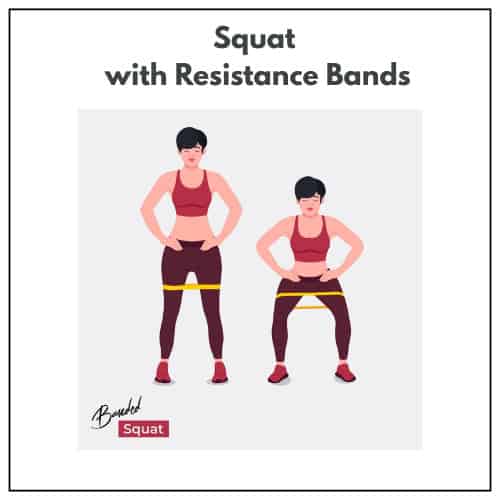
1. Squat with Resistance Bands
This exercise targets the quads, glutes, and core, helping to build lower-body strength and stability.
How to do it:
- Take a loop resistance band and pull it up so it sits just above your knees.
- Stand with feet shoulder-width apart, toes slightly pointed out.
- Squat down, keeping your chest lifted and knees tracking over your toes.
- Press back up to standing, maintaining tension on the band throughout the movement.
No equipment? You can do the same squat without a band — focus on controlled movement, keeping your weight in your heels, and engaging your glutes as you rise.
💡Tip: Keeping the band stretched or engaging your glutes without a band helps activate the muscles more effectively.
Why it works:
Research shows that resistance bands can increase squat effectiveness by adding variable resistance and helping you push through your “sticking point.”
They can also reduce perceived effort compared to traditional weights, making them a safe and efficient option for beginners and experienced lifters alike.
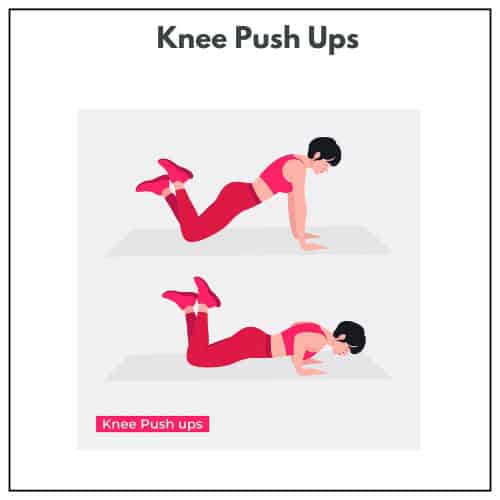
2. Knee Push-Ups
This exercise helps strengthen chest, arms, shoulders, and engages the core.
How to do it:
- Start in a plank position on your knees.
- Cross your legs behind you and lift them off the floor.
- Place your hands directly under your shoulders.
- Lower your chest toward the floor, keeping your core engaged.
- Push back up to the starting position, maintaining control throughout.
💡 Tip: Knee push-ups are easier and gentler on your body. As you get stronger, you can progress to full push-ups if you like.
Why it works:
Research shows that both full push-ups and knee push-ups effectively activate the same upper-body muscles.
Performing them on your knees requires less force, making it a safer and more manageable option for beginners.
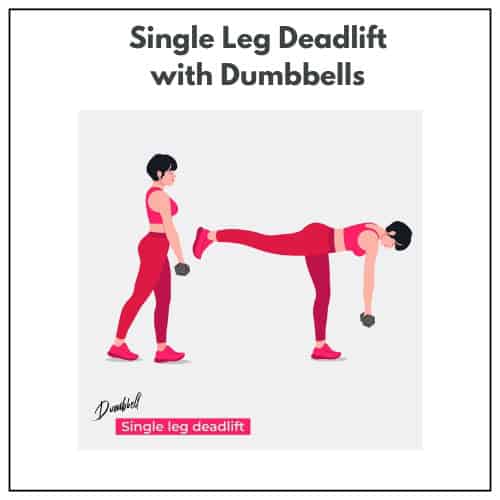
3. Single-Leg Deadlift with Dumbbells
This exercise strengthens hamstrings, glutes, and core while improving balance and stability.
How to do it:
- Hold a dumbbell in each hand, with arms at your sides.
- Straighten your spine, tuck in your tummy, and engage your core.
- Shift your weight onto your left leg, keeping a soft bend in the knee.
- Hinge at the hips to lower your torso forward while extending your right leg straight behind you, keeping your back flat and core engaged.
- Lower the dumbbells toward the floor, then return to standing.
- Repeat as many times as you want, then switch sides.
No equipment? Just do the exercise without any weights. You’ll still get a great workout.
💡 Tip: Don’t get discouraged if it feels wobbly — if you haven’t trained your balance much, it’s natural for your feet to feel a bit unstable. That wobble just means all the little stabilizing muscles in your feet are working!
why it works:
Single-leg deadlifts are a functional, multi-tasking move that engages the hamstrings, glutes, and lower back while also activating the core to stabilize your body.
Using dumbbells increases resistance, helping build strength safely and effectively.
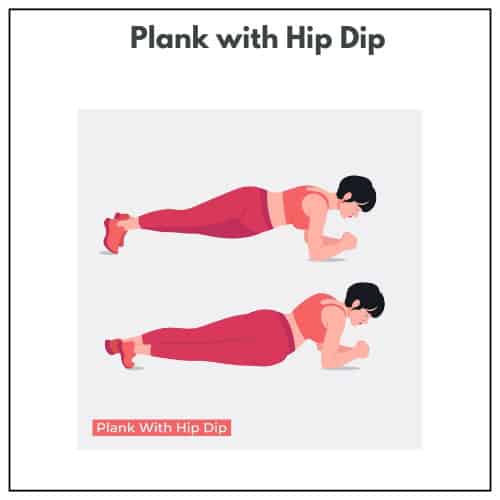
4. Plank with Hip Dip
This exercise engages the core, obliques, and helps stabilize the hips and shoulders.
How to do it:
- Start in a forearm plank, keeping your body in a straight line from head to heels.
- Press your forearms into the floor and actively push your shoulders down and away from your ears.
- Keep your shoulder blades broad and your upper back engaged.
- Slowly rotate your hips to one side, lowering them just a few inches toward the floor, then return to center.
- Repeat on the other side.
- Keep your core tight and movements controlled throughout.
💡 Tip: Focus on keeping your spine straight, core engaged, and shoulders stable. Start with small dips and slowly increase your range as you get stronger.
Why it works:
Plank variations with hip rotation effectively activate the core and obliques while engaging hip stabilizers like the gluteus medius and shoulder stabilizers.
This makes it a functional move for improving strength, balance, and overall stability.
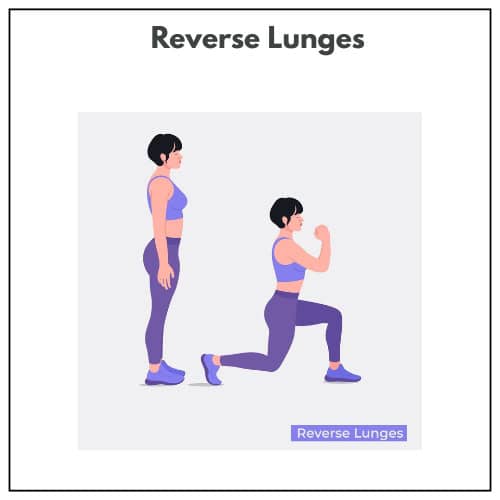
5. Reverse Lunges
This exercise strengthens the quadriceps, hamstrings, and glutes while improving balance and lower-body control.
How to do it:
- Stand tall with your feet hip-width apart.
- Keep your chest lifted and core engaged.
- Step one leg back, lowering both knees until they form roughly 90-degree angles. Your back knee should move toward the floor while your front knee stays aligned over your ankle.
- Press through your front heel to return to standing.
- Repeat on the other side.
💡Tip: Focus on control rather than speed — your front leg should do most of the work as you push back up.
Why it works:
Research shows that when you perform a reverse lunge, the stepping leg works the quads and hamstrings the most, while the front leg strongly activates the glutes.
That means both legs are working hard in different ways, making this a powerful move for building strength and stability.
6. Glute Bridge
This exercise strengthens the glutes while also engaging the core to support hip stability.
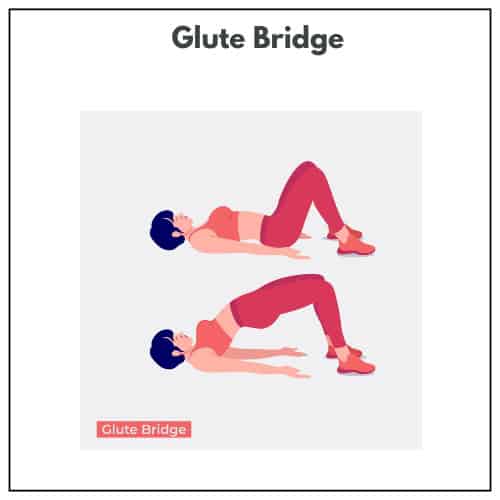
How to do it:
- Lie on your back with knees bent and feet flat on the floor, hip-width apart.
- Press through your heels to lift your hips toward the ceiling while squeezing your glutes at the top.
- Slowly lower your hips back down and repeat.
💡 Tip: Keep your spine neutral and your core gently engaged as you lift. If you feel strain in your lower back, lower your hips slightly and focus on pressing through your heels to activate your glutes.
Why it works:
Research shows that glute bridge exercises strongly activate the gluteus maximus and gluteus medius — the key muscles responsible for hip stability and power.
This makes glute bridges an effective way to strengthen the hips while also supporting posture and lower-body movement.
7. Tricep Dips
This exercise targets the triceps, shoulders, and core.
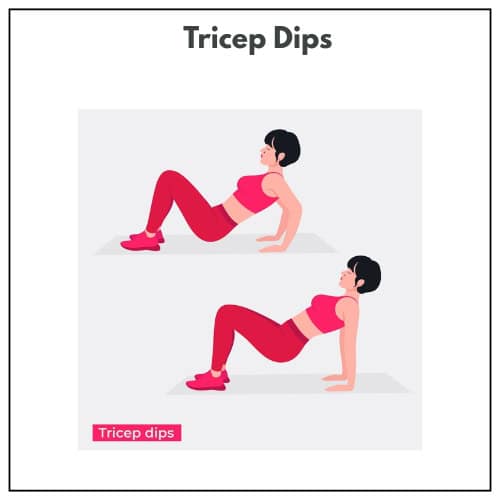
How to do it:
- Sit on the floor or a bench with knees bent and feet flat.
- Place your hands behind you, fingers pointing toward your feet.
- Press into your palms to lift your hips, bend your elbows to lower your body a few inches, then push back up (but don’t lock elbows).
- Keep elbows pointing straight back and core engaged.
💡 Tip: If your wrists start to hurt, try placing your hands on a bench or chair instead of the floor. Elevating your hands can help reduce the load on your wrists while still targeting your triceps and shoulders effectively.
Why it works:
Triceps dips engage the triceps and shoulders, while also activating core and stabilizer muscles.
This makes them effective for building upper-body strength, improving shoulder mobility, and balancing arm strength.
8. Walking High Kicks
This warm-up exercise improves hip mobility and helps your glutes and hamstrings become more flexible.
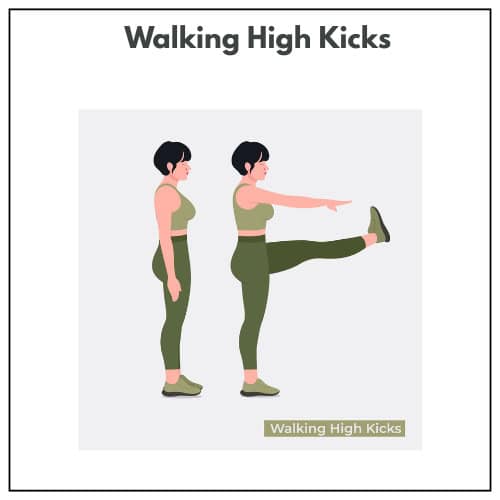
How to do it:
- Keep your chest tall and shoulders back.
- Walk forward, kicking one leg straight up in front of you as straight as you can and reaching toward it with the opposite hand.
- Keep your arms swinging naturally for balance.
- Alternate legs as you move forward.
💡 Tip: Avoid leaning back or over-kicking — work within your flexibility range. You can do it slowly at first to ensure proper posture.
Why it works:
Walking high kicks dynamically stretch your hamstrings, activate the hip flexors, engage your core, and wake up your glutes and quads.
This makes them an ideal warm-up or mobility exercise that prepares your lower body for more demanding moves.
9. Standing Leg Abductions with Resistance Bands
This exercise strengthens outer thighs and glutes while improving balance.
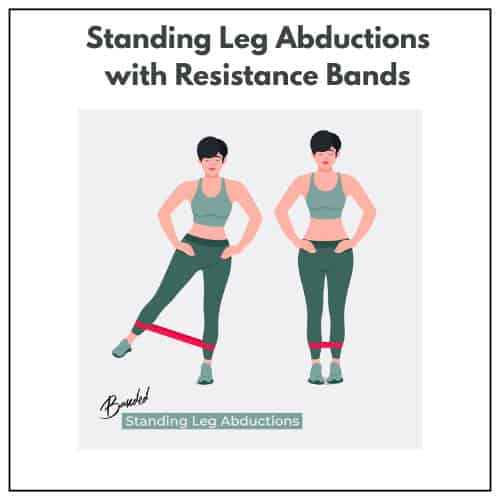
How to do it:
- Place a resistance band above your ankles.
- Stand tall with feet hip-width apart and core engaged.
- Lift one leg out to the side, keeping your pelvis stable, then slowly return.
- Do as many as you want, then repeat for the other leg.
No equipment? You can do the exercise without a resistance band, but you may need to do more reps on each side to get the full effect.
💡 Tip: Keep your spine tall and core tight. Start with small lifts and gradually increase range of motion as you get stronger.
Why it works:
Research shows hip abductor strength is crucial for stabilizing the pelvis and maintaining one-leg balance.
This exercise targets the gluteus medius and outer thighs, building both strength and stability in the hips.
10. Toe Reach
This exercise is great for the core and hamstrings.
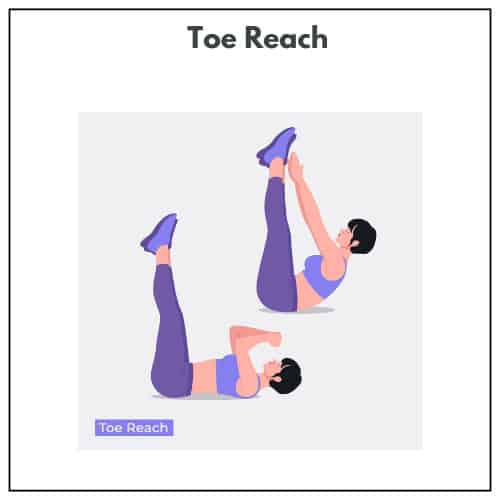
How to do it:
- Lie on your back with legs extended straight up toward the ceiling.
- Engage your core and slowly lift your head and shoulders off the floor.
- Reach your hands toward your toes, then slowly lower back down.
- Repeat for the desired number of reps, keeping the movement controlled and steady.
💡Tip: Keep your bellybutton drawn in toward your spine to protect your lower back. If your hamstrings feel tight, bend your knees slightly or try a few hamstring stretches before starting.
Why it works:
This movement activates the rectus abdominis, obliques, and transverse abdominis while also stretching and engaging the hamstrings.
It’s a simple yet effective way to strengthen the core while improving lower-body flexibility.
Cardio Options
Cardio isn’t just about burning calories—it boosts heart health, endurance, and energy, all of which support your strength goals. The key is to pick activities you enjoy so you’ll actually stick with them.
Some beginner-friendly options for women include:
- Running or jogging: Great for building endurance and getting fresh air.
- Cycling: Low-impact on joints while strengthening legs and improving stamina.
- Jump rope: Quick, effective, and perfect for short, high-intensity sessions.
- Rowing machine: Works both upper and lower body while giving a solid cardio workout.
- Swimming: Full-body, low-impact exercise that improves endurance and flexibility.
Mixing different cardio activities keeps things fun, challenges your body in new ways, and complements your strength training routine.
Flexibility and Mobility
Flexibility and mobility work is essential for preventing injuries, improving posture, and supporting strength gains.
Incorporating yoga and stretching into your routine keeps your body feeling agile, balanced, and ready for every workout — and having the right mat can make that practice more comfortable and motivating.
A great option to consider is the Liforme Printed Yoga Mat, available on Amazon. Its non‑slip surface and supportive cushioning help you stay steady in poses like Downward‑Facing Dog or Cat‑Cow, while the built‑in alignment system makes it easier to find proper form.
The eco‑friendly, sweat‑resistant material and included free yoga bag also make it ideal for home or gym use.
Here are six beginner-friendly poses and stretches you can include:
1. Cat-Cow Pose (Marjaryasana-Bitilasana)
This dynamic stretch pose targets the spine, back, neck, and shoulders for flexibility and gentle warm-up.
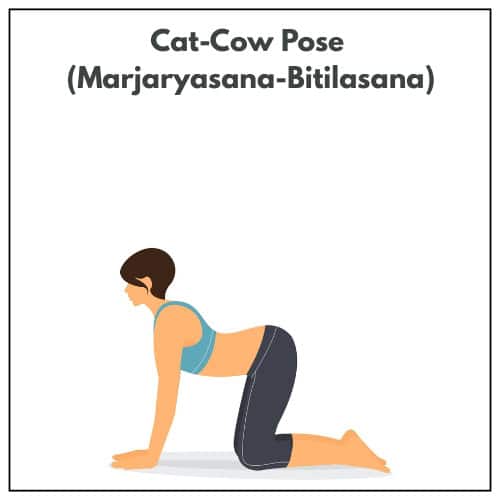
how to do it:
- Start on your hands and knees with shoulders stacked over wrists and hips over knees.
- Cow Pose: Inhale, drop your belly toward the mat, lift your chest, and gently raise your head and tailbone, arching your spine softly.
- Cat Pose: Exhale, round your spine toward the ceiling, tuck your chin to your chest, and draw your tailbone under.
- Flow slowly between Cow and Cat, moving with your breath.
💡 Tip: Breathe in through your nose during cow pose and breathe out in cat pose.
Why it works:
This gentle movement alternates between spinal flexion and extension, loosening stiffness in the back and neck while improving overall spinal flexibility.
It also warms up the body, making it easier to move into deeper stretches or strength exercises.
2. Downward-Facing Dog (Adho Mukha Svanasana)
One of my favorite yoga poses for targeting the spine, shoulders, hamstrings, and calves for full-body stretch and mobility.
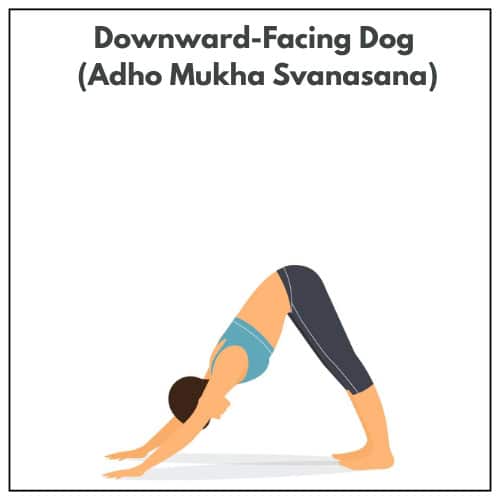
how to do it:
- Begin on your hands and knees in tabletop, wrists under shoulders and knees under hips.
- Spread your fingers wide (index fingers pointing forward), pressing firmly into the mat to create a stable foundation.
- Tuck your toes under and lift your hips up and back toward the ceiling, forming an inverted V.
- Lengthen your spine and straighten your legs or keep a soft bend in the knees if needed.
- Let your head and neck relax between your arms, and breathe deeply, holding for 30–60 seconds.
💡 Tip: If you’re feeling weight in your shoulders and hands, push back further so your head is between your shoulders and your spine is fully lengthened. Bending your knees slightly can help you create more space and straighten your spine more comfortably.
why it works:
This pose stretches multiple muscle groups at once—hamstrings, calves, shoulders, and spine—while also building strength in the arms and legs.
It improves full-body mobility, relieves tension, and creates a strong foundation for deeper stretches or strength exercises.
3. Crescent Lunge (Anjaneyasana)
This pose targets hips, quadriceps, and core while improving hip strength and stability.
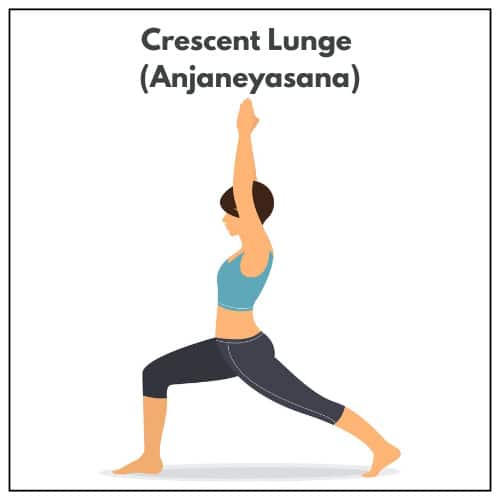
how to do it:
- Step your right foot forward into a lunge, keeping your left leg extended behind you.
- Inhale and lift your arms overhead, reaching toward the ceiling.
- Keeping your shoulders down and away from your ears.
- Ensure your front knee is directly over your ankle, forming about a 90° angle, and press firmly through your back heel.
- Engage your core and lengthen your spine, holding the pose for 30–60 seconds.
- Repeat on the opposite side.
💡 Tip: Tuck your pelvis slightly under to stabilize the pose.
Why it works:
Crescent Lunge opens the hip flexors and stretches the quadriceps while strengthening the legs and engaging the core.
Research shows that lunges in yoga improve hip range of motion, increase hip strength, and enhance postural stability, helping protect the knees and support better balance.
4. Spinal Twist (Ardha Matsyendrasana)
This pose targets the spine, obliques, and lower back to improve mobility and relieve tension.
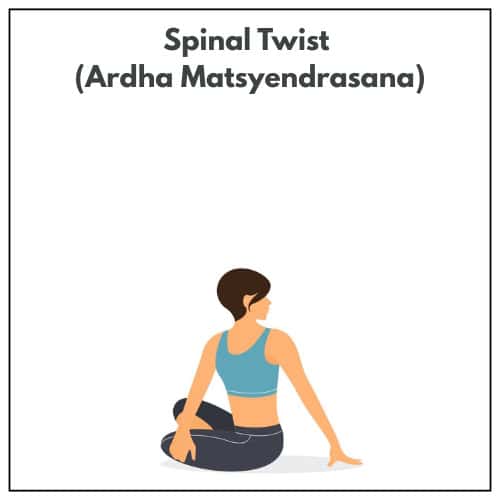
how to do it:
- Sit tall in a comfortable cross-legged position.
- Inhale as you lengthen your spine.
- Gently rotate your torso to the right.
- Exhale as you place your left hand on your right knee and your right hand behind you for support.
- Keep your chest lifted and twist from your mid-back rather than pulling with your neck.
- Hold for a few slow breaths, then repeat on the other side.
💡Tip: Keep both sitting bones grounded and avoid rounding your lower back as you twist.
why it works:
Seated twists improve spinal mobility by encouraging controlled rotation through the mid-back.
They also gently activate the core muscles, can ease lower back tightness, and stimulate the abdominal area, which may support healthy digestion.
Practiced regularly, this pose can help you feel more open, balanced, and fluid in your movements.
5. Butterfly Pose (Baddha Konasana)
This is a great pose for inner thighs, hips, and lower back to improve flexibility and pelvic mobility.
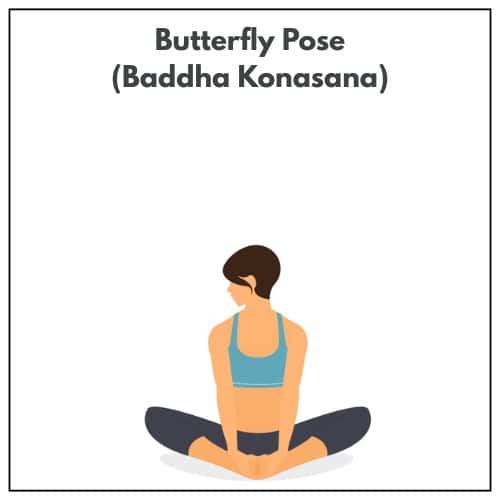
how to do it:
- Sit tall on the floor with your legs extended in front of you.
- Bend your knees and bring the soles of your feet together, letting your knees gently fall out to the sides.
- Hold your feet, ankles, or shins—whatever allows you to sit upright comfortably.
- Lengthen your spine and broaden your chest.
- Gently encourage your knees toward the floor without forcing them.
- Hold for as long as it feels comfortable, breathing slowly and steadily.
💡Tip: Place yoga blocks or cushions under your thighs or knees for support if your hips feel tight. This can help you relax into the stretch without forcing your knees downward.
why it works:
This pose stretches the inner thighs and hips while encouraging an upright, aligned posture. It can help ease lower back discomfort caused by tight hip muscles.
Practiced regularly, it supports pelvic health and overall flexibility.
6. Corpse Pose (Savasana)
This pose promotes full-body relaxation and supports recovery after your workout.
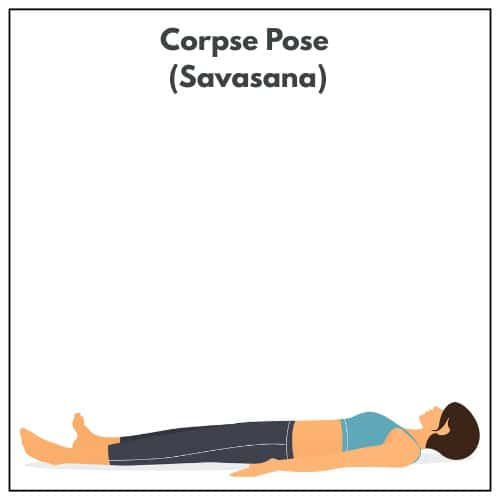
How to do it:
- Lie flat on your back with your legs extended and feet falling naturally outward.
- Rest your arms comfortably at your sides with your palms facing up.
- Gently close your eyes and allow your jaw, shoulders, and hips to soften.
- Breathe slowly and evenly through your nose.
- Stay here for 3–5 minutes, allowing your body to fully relax.
💡 Tip: If your lower back feels tight, place a pillow or rolled blanket under your knees. This helps your spine relax and makes it easier to release tension.
why it works:
Savasana allows your nervous system to shift into a calm, restorative state after movement.
Research shows that even short periods of deep relaxation in this position can lower heart rate, blood pressure, and breathing rate—helping reduce the physical effects of stress.
Practicing it regularly may improve your ability to handle stress and enhance overall recovery, making it just as important as the strengthening poses in your routine.
Tips:
Nutrition and Recovery for Strength
Exercise is only one part of feeling strong—what you eat and how you recover is just as important. Proper nutrition and rest fuel your workouts, help muscles repair, and keep your energy high.
Here’s a simple guide:
- Protein: Supports muscle repair and growth. Include sources like chicken, fish, tofu, beans, or lentils.
- Complex carbohydrates: Fuel your workouts and replenish energy. Think oats, quinoa, sweet potatoes, or whole grains.
- Healthy fats: Aid hormone balance, joint health, and overall well-being. Examples include avocado, nuts, seeds, and olive oil.
- Hydration: Water is essential for performance and recovery — aim to sip throughout the day. A Hydro Flask Water Bottle from Amazon makes staying hydrated easy, whether at home, at the gym, or on the go. Its leakproof, non-spill design keeps water within reach, helping you hit your hydration goals without any hassle.
- Rest days: Muscles grow and repair when you rest, so don’t skip recovery days.
- Sleep: 7–9 hours per night enhances recovery, boosts performance, and keeps energy levels steady.
Balancing nutrition with exercise and recovery makes strength gains more sustainable—and keeps you feeling strong both in and out of the gym.
Overcoming Common Motivation Slumps
Even the most dedicated women have days when motivation dips—and that’s completely normal. The key is having strategies ready to keep yourself moving forward.
Try these approaches:
- Change your environment: Switch up your gym, take your workout outside, or try a new style of exercise to keep things fresh.
- Focus on short-term wins: Notice the immediate benefits of exercise—like boosted energy, improved mood, or better focus.
- Visualize success: Picture yourself achieving strength milestones, mastering a challenging move, or finishing your workout strong.
- Mix solo and group workouts: Balance personal focus with accountability and social support.
- Seek inspiration: Follow strong women athletes, fitness influencers, or mentors who motivate and challenge you.
Even small adjustments like these can reignite your drive, making it easier to stay consistent and enjoy the journey toward strength.
Motivation Hack: What I Do When I Don’t Feel Like Going to the Gym
Some days, getting to the gym feels like a huge effort.
Here’s what I do:
- Picture the downside of skipping: I remind myself how slow and sluggish I’ll feel if I don’t work out, and how it might affect my day.
- Focus on the upside of showing up: I think about how amazing I’ll feel afterward—energized, proud, and stronger.
This simple mental trick turns “I don’t want to go” into “I can go,” making it much easier to get moving—and actually enjoy my workout once I start.
Try it for yourself and see if it works for you too!
Long-Term Benefits of Staying Motivated
Staying consistent with exercise doesn’t just change your body—it transforms your life.
Women who maintain motivation over time enjoy benefits that go far beyond the gym:
- Sustainable Strength: Gradual improvements build lasting strength, reduce injury risk, and ensure long-term results.
- Increased Confidence: Feeling strong boosts self-esteem and creates a positive body image.
- Better Health Outcomes: Regular exercise lowers the risk of chronic diseases, supports heart health, and strengthens bones.
- Mental Resilience: Overcoming challenges in your workouts strengthens focus, patience, and discipline, which carry over into other areas of life.
- Positive Lifestyle Habits: Motivation to exercise often encourages healthier eating, better sleep, and improved stress management.
When motivation becomes consistent, the payoff isn’t just physical—it’s a lifestyle that supports strength, health, and confidence for years to come.
Final Thoughts
Building strength and staying consistent isn’t about perfection—it’s about showing up, making small improvements, and celebrating progress along the way.
Motivation naturally ebbs and flows, but the strategies in this article—from setting clear goals and tracking progress to incorporating social support and flexibility work—are tools you can use every day to keep moving forward.
Remember, strength isn’t just physical. Every workout builds confidence, resilience, and a sense of empowerment that carries into your daily life.
Pair consistent exercise with proper nutrition, recovery, and rest, and you’ll notice changes not just in your body, but in your energy, focus, and mindset.
And sometimes, when you don’t feel like going to the gym, try this: picture how sluggish you’d feel if you skipped, then imagine the boost of energy and pride you’ll get afterward.
This simple mental shift can make all the difference—try it for yourself and see if it works for you too!
Your journey toward strength is personal, achievable, and entirely worth it. Start where you are, use the strategies that fit your life, and celebrate every step forward.
Over time, staying motivated won’t feel like a struggle—it will feel like a natural part of living stronger, healthier, and more empowered every day.
*This article is for informational purposes only and is not intended as medical advice. It should not be used to diagnose, treat, or prevent any health condition. Always consult a qualified healthcare professional before making any changes to your diet, exercise, or health routine.
Buick, Kirsti. "Single-Leg Deadlift: This Home Workout-Friendly Move is a Must for Runners." Women's Health UK, January 14, 2021, https://www.womenshealthmag.com/uk/fitness/workouts/a35176739/single-leg-deadlift/. Accessed 12 March 2026.
Cronkleton, Emily. "Butterfly Pose: 6 Benefits of This Classic Hip Opener." Healthline, September 9, 2021, https://www.healthline.com/health/fitness/butterfly-pose-benefits. Accessed 13 March 2026.
Gasibat, Qais et al. “Decoding Hip Muscle Activation: A Comparative Electromyographic Analysis of Turn-Out Bent Knee Pulse and Single-Leg Banded Glute Bridge Exercises in Healthy Female Subjects.” European journal of investigation in health, psychology and education vol. 13,9 1612-1623. 26 Aug. 2023, doi:10.3390/ejihpe13090117. Adapted and used under the terms of the Creative Commons Attribution 4.0 International License.
Gene-Morales, Javier et al. “Adding the Load Just Above Sticking Point Using Elastic Bands Optimizes Squat Performance, Perceived Effort Rate, and Cardiovascular Responses.” Journal of sports science & medicine vol. 19,4 735-744. 19 Nov. 2020, https://pmc.ncbi.nlm.nih.gov/articles/PMC7675618/. Abstract only.
Gottschall, Jinger S., Bryce Hastings, and Zachary Becker. "Muscle Activity Patterns do not Differ Between Push-Up and Bench Press Exercises". Journal of Applied Biomechanics 34.6 (2018): 442-447. < https://doi.org/10.1123/jab.2017-0063>. Web. 12 Mar. 2026. Abstract only.
Hoogenboom, Barbara J., et al. “The Reverse Lunge: A Descriptive Electromyographic Study.” Applied Sciences, vol. 14, no. 24, 2024, p. 11480. MDPI, https://doi.org/10.3390/app142411480. Adapted and used under the terms of the Creative Commons Attribution 4.0 International License.
John-Henderson, Neha A et al. “Health mindsets as a predictor of physical activity and body mass index in American Indian college students.” Journal of health psychology vol. 26,12 (2021): 2098-2105. doi:10.1177/1359105319901284.
Lohre, Julie. "How to Do High Kicks for Flexibility, Core Strength, and Dynamic Balance." Julie Lohre, https://julielohre.com/high-kick/. Accessed March 12, 2026.
Mazzo, Lauren. "Target Your Triceps with This Key Move for Powerful Arms." One Peloton, February 13, 2024, https://www.onepeloton.com/blog/triceps-dips. Accessed March 12, 2026.
Mirshams Shahshahani, Payam, and James A Ashton-Miller. “On the importance of the hip abductors during a clinical one legged balance test: A theoretical study.” PloS one vol. 15,11 e0242454. 13 Nov. 2020, doi:10.1371/journal.pone.0242454. Adapted and used under the terms of the Creative Commons Attribution 4.0 International License.
"Seated Spinal Twist Benefits and How To." Yoga Rove, last updated December 5, 2021, https://yogarove.com/seated-spinal-twist-tutorial/. Accessed March 13, 2026.
Sharma, Geetanjali, K. K. Mahajan, and Luv Sharma. “Shavasana—Relaxation Technique to Combat Stress.” Journal of Bodywork and Movement Therapies, vol. 11, no. 2, 2007, pp. 173–180. ScienceDirect, https://doi.org/10.1016/j.jbmt.2007.01.002. Abstract only.
"What are Toe Touches?" Pure Gym, https://www.puregym.com/exercises/abs/toe-touches/. Accessed March 12, 2026.
Vuckovic, Vojko, and Sasa Duric. “Motivational variations in fitness: a population study of exercise modalities, gender and relationship status.” Frontiers in psychology vol. 15 1377947. 21 Mar. 2024, doi:10.3389/fpsyg.2024.1377947. Adapted and used under the terms of the Creative Commons Attribution 4.0 International License.
Whissell, Elizabeth et al. “Biomechanical Characteristics on the Lower Extremity of Three Typical Yoga Manoeuvres.” Applied bionics and biomechanics vol. 2021 7464719. 12 Aug. 2021, doi:10.1155/2021/7464719. Adapted and used under the terms of the Creative Commons Attribution 4.0 International License.

Malin, the co-founder of Courier Wellness, is well-informed in nutrition and health and brings her own unique perspective to the world of holistic wellness. With a passion for writing and a deep interest in wellbeing, she wants to create content that fosters balance and nourishment for the mind and body.