10 Easy Yoga Poses for Absolute Beginners
This post contains affiliate links, which means we may earn a commission if you purchase through our links—at no extra cost to you. As an Amazon Associate we earn from qualifying purchases. We only recommend products we use or trust. Learn more about affiliate marketing or read our full disclosure.
Yoga is a wonderful way to move your body, calm your mind, and build strength and flexibility.
If you’re new, it’s completely normal to feel unsure or even a little intimidated by all the poses you see online.
The good news?
Yoga doesn’t have to be complicated to work. If you’re looking for yoga for beginners, you’re in the right place.
In this article, I’ll guide you through 10 easy yoga poses for absolute beginners, with step-by-step instructions, helpful tips, and the benefits of each. All you need is a yoga mat (or soft surface), comfy clothes, and an open mind.
Let’s get started!
The Importance of Yoga in Our Hectic World
In today’s fast-paced world, it’s easy to stay busy without ever truly slowing down. That’s where yoga comes in.
It offers a chance to pause, reconnect with your body, and breathe—something many of us rarely do.
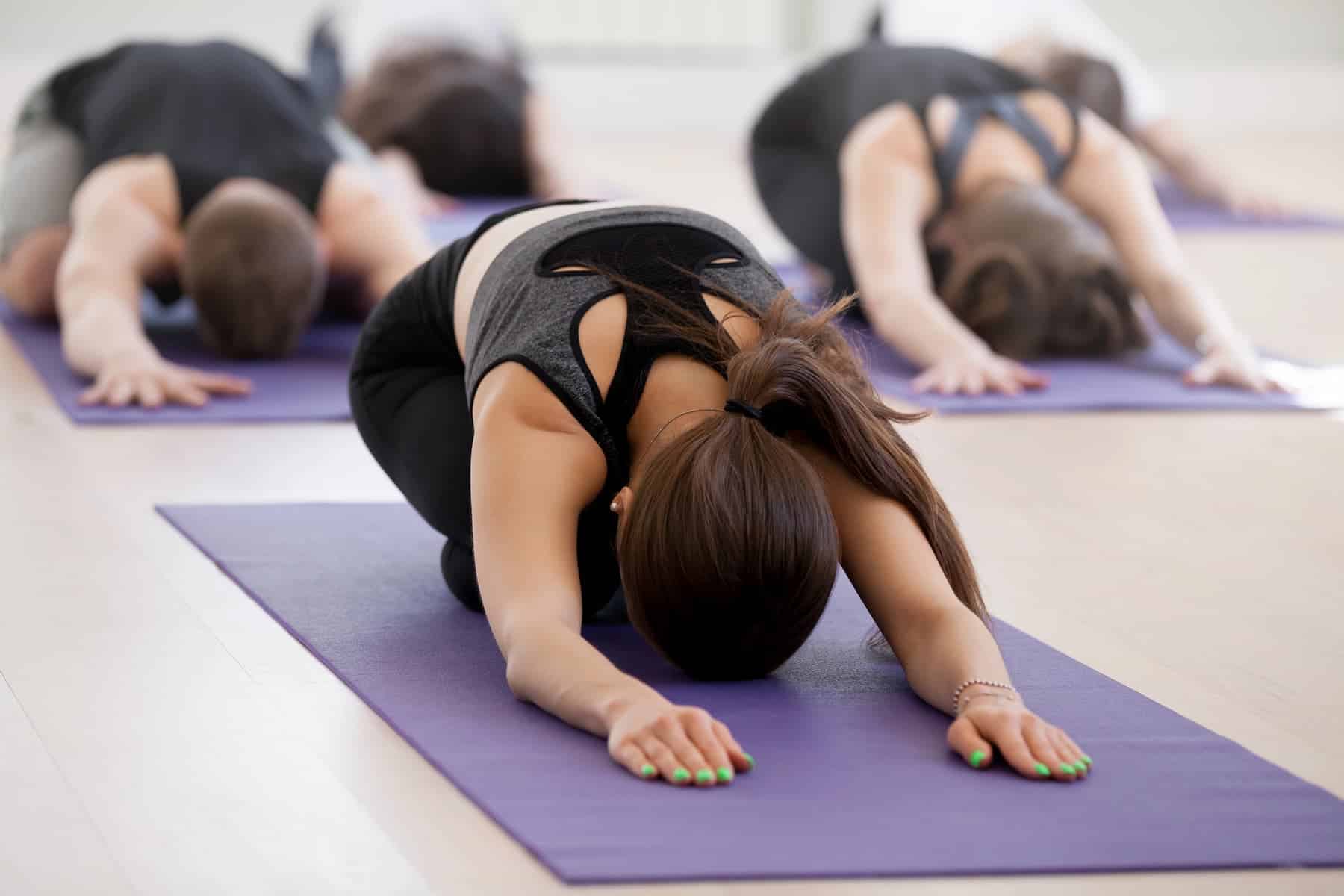
Even a few minutes of gentle movement and mindful breathing can ease stress and bring a sense of calm that feels deeply refreshing.
I’ll be honest: when I first tried yoga, I didn’t like it. I felt awkward and restless, and I was sure it wasn’t for me.
Years later, I decided to try again—this time making a simple deal with myself: attend three classes before making up my mind. By the third class, something shifted. My body relaxed, my mind slowed down, and I finally understood why so many people swear by yoga.
Nearly six years later, it’s become a cornerstone of my well-being.
That’s why I always tell people: if you try yoga and don’t love it right away, don’t give up. Sometimes it takes a few sessions for everything to click.
One thing that made a big difference for me—especially early on—was having the right setup. Posture and alignment matter in yoga, and a good mat can really support that learning process.
The Liforme Travel Yoga Mat with Yoga Bag (available on Amazon), for example, is designed with built-in alignment guides that show you exactly where to place your hands and feet.
It also has a strong, non-slip grip, so your hands stay put—making your practice feel safer, more stable, and less stressful.
Now, let’s dive into 10 easy yoga poses for absolute beginners to help you build strength, improve flexibility, and find a little more calm along the way.
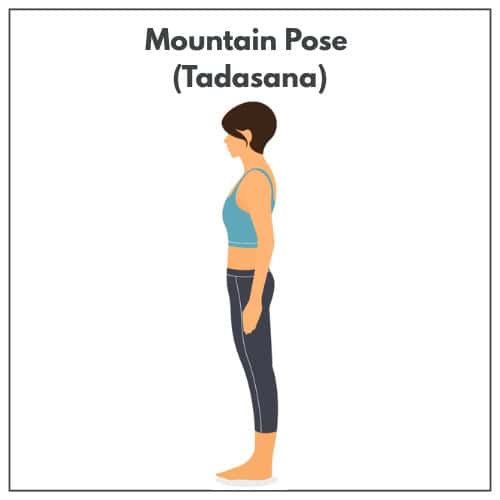
1. Mountain Pose (Tadasana)
Mountain Pose may look simple, but don’t let that fool you — it’s one of the most important poses for beginners.
It stretches and strengthens the body, improves posture, builds balance, and encourages body awareness and mental focus.
It’s the foundation for many standing poses and helps you feel grounded, steady, and centered.
How to do it:
- Stand tall with your feet together (big toes touching, heels slightly apart) or hip-width apart for more stability.
- Distribute your weight evenly across your feet.
- Engage your thighs and lift your kneecaps slightly.
- Bring your pelvis into a neutral position and lightly engage your core.
- Lengthen your spine as if a string is lifting the crown of your head.
- Relax your shoulders down and back, open your chest, and keep your head stacked with chin level.
- Rest your arms by your sides with palms facing forward, or raise them overhead with palms facing each other.
- Breathe slowly and deeply, holding for 30–60 seconds.
Beginner tips:
- Keep a soft bend in the knees rather than locking them — this protects your joints and makes it easier to stand tall.
- Focus on evenly grounding your feet, spreading your weight through the balls, heels, and edges.
- Think of lengthening your spine and lifting the chest, rather than just standing straight.
Caution:
Mountain Pose is generally safe, but take care if you have knee or lower back pain, balance issues, high blood pressure, or if you are pregnant.
If you’re unsure, check with a qualified yoga instructor before practicing.
2. Downward-Facing Dog (Adho Mukha Svanasana)
Downward-Facing Dog is a classic yoga pose you’ll see in almost every class.
It stretches the spine, hamstrings, calves, and shoulders while strengthening the arms, shoulders, and legs.
It’s also energizing and calming, making it a powerful yet accessible pose for beginners.
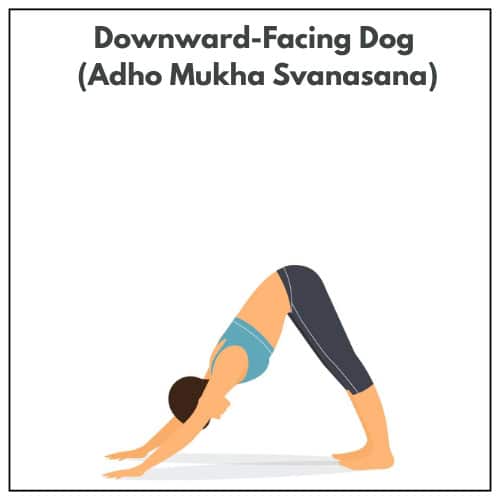
How to do it:
- Start on your hands and knees, wrists under shoulders and knees under hips.
- Spread your fingers wide, press evenly through your hands, and keep shoulders down and separated.
- Tuck your toes under and lift your hips up and back into an upside-down “V,” focusing on lengthening your spine.
- Straighten your legs as much as comfortable, keeping a slight bend in the knees if needed.
- Press the balls of your feet into the mat, spread your toes, and feel your weight evenly across your feet.
- Let your head relax between your arms, keeping your neck long.
- Hold for 30–60 seconds, breathing steadily.
Beginner tips:
- Focus on spine length and shoulder placement, not on forcing heels down.
- If your wrists feel strained, make sure your hips are high enough and your spine is straight.
- Gently “pedal” your feet (bend one knee at a time) to stretch calves safely.
Caution:
Downward-Facing Dog is generally safe for most people, but take care if you have wrist, shoulder, or back injuries.
If you’re unsure, check with a qualified yoga instructor before practicing.
3. Child’s Pose (Balasana)
Child’s Pose is one of the most comforting poses in yoga for beginners.
It gently stretches the lower back, hips, and thighs, helps relieve stress and tension, and calms the mind.
It’s a perfect “reset” pose you can return to anytime you need a break.
Studies have shown that practicing this pose regularly can reduce heart rate and blood pressure, improve circulation, and calm the nervous system.
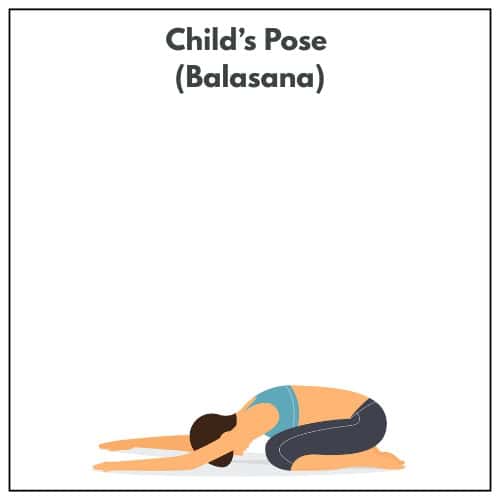
How to Do It:
- Kneel on your mat with your big toes touching and your knees slightly apart.
- Sit your hips back toward your heels.
- Slowly fold forward, extending your arms out in front of you or resting them alongside your body.
- Gently lower your forehead to the mat (or a block or pillow if needed).
- Breathe deeply and comfortably.
- Stay here for 1–3 minutes, or longer if it feels good.
Beginner tips:
- Keep your hips moving toward your heels — don’t force them.
- Let your arms and shoulders relax; the focus is on gentle stretching and calming your body.
- Adjust your knee distance to what feels comfortable — wider knees can make folding easier if your hips or lower back are tight.
- Use a pillow or block under your forehead if it doesn’t comfortably reach the mat.
Caution:
Child’s Pose is generally safe, but be cautious if you have knee injuries, ankle issues, or severe lower back pain.
If unsure, check with a qualified yoga instructor before practicing.

4. Cat-Cow Pose (Marjaryasana-Bitilasana)
Cat–Cow is a gentle, flowing sequence that’s perfect for warming up the spine.
It improves spinal mobility and flexibility, gently strengthens the core, and helps release tension in the back, neck, and shoulders.
Just as importantly, it teaches you how to move with your breath — one of the most important skills in yoga for beginners.
Slow and soothing, this pose feels especially good if you’ve been sitting for long periods.
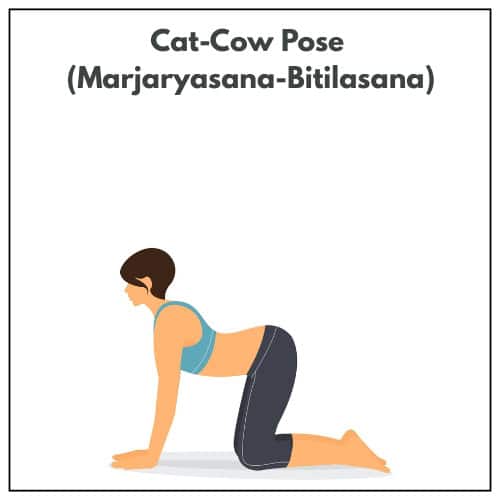
How to Do It:
- Start on your hands and knees in a tabletop position, with your wrists under your shoulders and knees under your hips.
- Cow Pose: Inhale as you arch your back, drop your belly toward the mat, and lift your chest, head, and tailbone.
- Cat Pose: Exhale as you round your spine, tuck your chin toward your chest, and gently draw your belly in.
- Continue flowing smoothly between Cat and Cow, matching each movement with your breath.
- Repeat for 5–10 slow breaths.
Beginner tips:
- Move slowly and let your breath guide the movement.
- In Cow Pose, lift your gaze slightly, but avoid throwing your head back or compressing the neck.
- In Cat Pose, round the spine smoothly without forcing the movement.
- Focus on creating space along the spine rather than pushing into a deep arch or stretch.
Caution:
Cat–Cow is generally safe, but take care if you have neck or spinal injuries, chronic back pain, or wrist discomfort.
If you’re unsure, check with a qualified yoga instructor before practicing.
5. Warrior II (Virabhadrasana II)
Warrior II is a strong, confidence-building pose that helps you feel grounded and powerful.
It strengthens the legs, hips, arms, and shoulders while improving balance, stability, stamina, and mental focus.
For beginners, it’s an excellent pose for building both physical strength and concentration. You may feel your muscles working — and that’s a good thing.
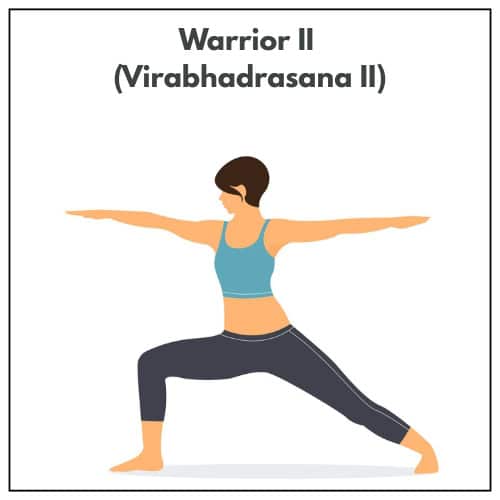
How to Do It:
- Stand with your feet wide apart, facing the long edge of your mat.
- Turn your right foot out about 90 degrees and your left foot slightly inward.
- Bend your right knee until it’s stacked directly over your ankle.
- Stretch your arms out to the sides at shoulder height, palms facing down.
- Turn your head and gaze softly over your right fingertips.
- Hold the pose for 30 seconds, breathing steadily.
- Straighten your right leg, switch sides, and repeat.
Beginner tips:
- Press firmly into both feet and imagine drawing them slightly toward each other without moving them — this helps activate your legs and improves stability.
- Keep your front knee tracking over your toes, not collapsing inward.
- Relax your shoulders down away from your ears, even as your arms stay strong.
- Engage your core lightly to help maintain balance and protect the lower back.
Caution:
Warrior II is generally safe, but take care if you have knee, hip, shoulder, or balance issues, or high blood pressure.
If you’re unsure, check with a qualified yoga instructor before practicing.
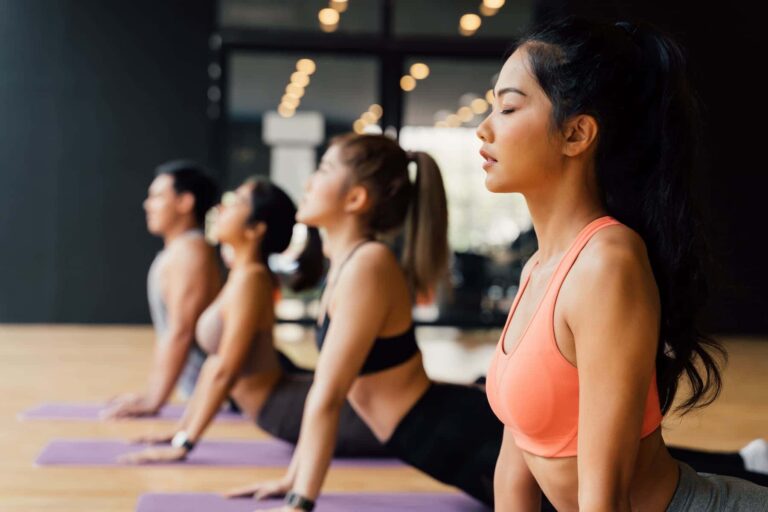
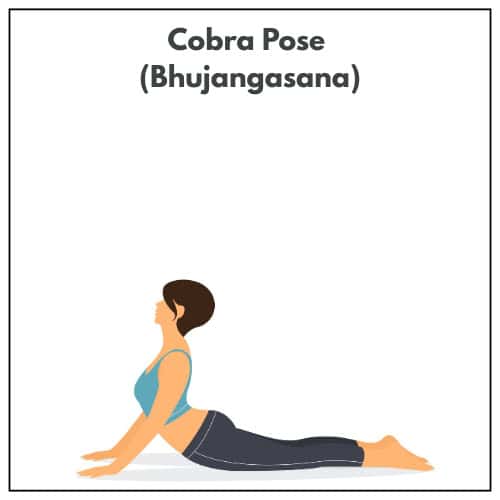
6. Cobra Pose (Bhujangasana)
Cobra Pose is a gentle backbend that helps open the chest and strengthen the spine.
In yoga for beginners, it’s especially helpful for improving posture — making it a great counterpose if you spend a lot of time sitting or looking at screens.
The key here is lifting with control and using your back muscles, not pushing too far with your hands.
How to Do It:
- Lie face down on your mat with your legs extended straight back and the tops of your feet resting on the floor.
- Place your hands under your shoulders, elbows hugging in close to your sides.
- As you inhale, gently lift your chest off the mat, keeping a slight bend in your elbows.
- Press lightly into your hands while engaging your back muscles.
- Roll your shoulders back and down, away from your ears.
- Hold the pose for 15–30 seconds, breathing comfortably.
- Exhale and slowly lower your chest back down to the mat.
Beginner tips:
- Keep your elbows slightly bent rather than locking them.
- Focus on lengthening the front of your body instead of lifting as high as possible.
- Keep your shoulders relaxed and avoid scrunching them toward your ears.
- Let your gaze stay forward or slightly downward to avoid overextending the neck.
Caution:
Cobra Pose is generally safe, but may not be suitable if you’re pregnant or have wrist, neck, abdominal, rib, or back injuries, especially in the lower back.
If you’re unsure, consult a qualified yoga instructor before practicing.
7. Seated Forward Bend (Paschimottanasana)
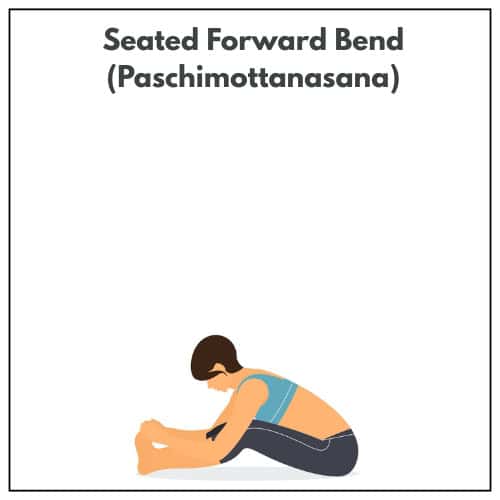
Seated Forward Bend is a calming pose that gently stretches the back of the body — from the spine and hamstrings to the calves.
It’s a wonderful way to slow down, turn inward, release tension, and gradually improve flexibility.
This pose also encourages relaxation and a sense of mental calm.
How to Do It:
- Sit on the floor with your legs extended straight out in front of you.
- Inhale and lengthen your spine, sitting up tall.
- Exhale as you hinge forward from your hips, keeping your chest open.
- Reach for your shins, ankles, or feet—wherever your hands naturally land.
- Let your neck and shoulders relax as you breathe deeply.
- Hold the pose for 30–60 seconds, or longer if comfortable.
Beginner tips:
- Focus on folding from the hips rather than rounding the lower back.
- Keep a slight bend in the knees if your hamstrings feel tight.
- Think about lengthening the spine forward before relaxing deeper into the pose.
- Avoid pulling yourself forward with your arms — let gravity and breath do the work.
Caution:
Take care if you have lower back issues, hamstring injuries, or disc problems. Move gently and stop if you feel pain or sharp discomfort.
If unsure, consult a qualified yoga instructor before practicing.
8. Tree Pose (Vrksasana)
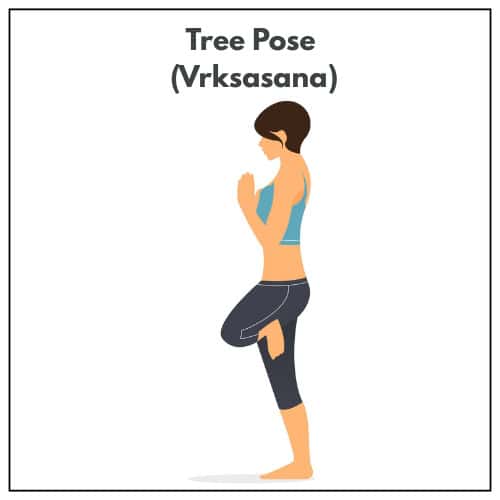
Tree Pose is a classic balancing posture that helps you feel steady, strong, and focused.
In yoga for beginners, it’s a fun way to challenge balance while building leg strength and core stability.
Tree pose is also great for cultivating mental focus and mindfulness.
How to Do It:
- Begin standing tall in Mountain Pose.
- Shift your weight onto your left foot.
- Place the sole of your right foot on your inner left thigh or calf—avoid pressing directly on your knee.
- Bring your hands to prayer position at your chest, or extend them overhead if that feels comfortable.
- Fix your gaze on a steady point in front of you to help with balance.
- Hold the pose for 20–30 seconds, breathing steadily.
- Slowly switch sides and repeat.
Beginner tips:
- Press your standing foot firmly into the mat and imagine growing tall through the crown of your head.
- Gently engage your core to help stabilize the pose.
- Keep your shoulders relaxed, even if your arms are raised.
- If balance feels challenging, start with your lifted foot lower on the calf or ankle.
Caution:
Take care if you have ankle, knee, or balance issues, or vertigo. Practice near a wall for support if needed, and stop if you feel pain or dizziness.
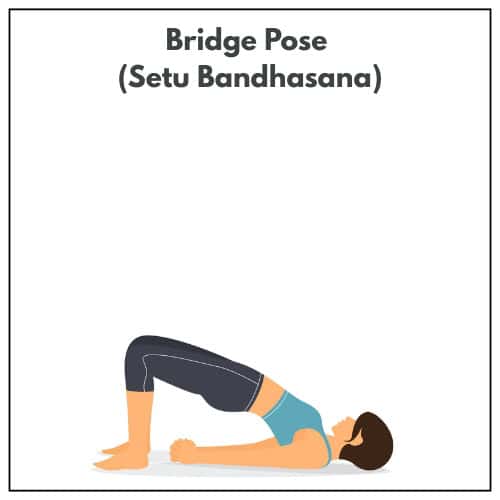
9. Bridge Pose (Setu Bandhasana)
Bridge Pose is a gentle backbend that helps open the chest, stretch the spine, and strengthen the back and legs.
In yoga for beginners, it’s a safe and effective way to build strength while improving posture and circulation.
How to Do It:
- Lie on your back with your knees bent and feet hip-width apart, flat on the floor.
- Place your arms alongside your body with your palms pressing down for support.
- Inhale and lift your hips toward the ceiling, engaging your glutes and core.
- Press firmly into your feet and shoulders to stabilize your body.
- Keep your chest open and shoulders relaxed, not squeezed up toward your ears.
- Hold the pose for 20–30 seconds, breathing steadily.
- Exhale and slowly lower your hips back to the mat.
Beginner tips:
- Lift your hips only as high as feels comfortable — if you feel strain in your lower back, lower the lift slightly.
- Keep your knees parallel and avoid letting them splay outward.
- Engage your core gently to support your lower back.
- Keep your neck long and avoid turning your head while in the pose.
Caution:
Take care if you have neck, back, or knee injuries, or high blood pressure. Avoid discomfort in the neck by keeping your head and gaze neutral.
If unsure, consult a qualified yoga instructor before practicing.
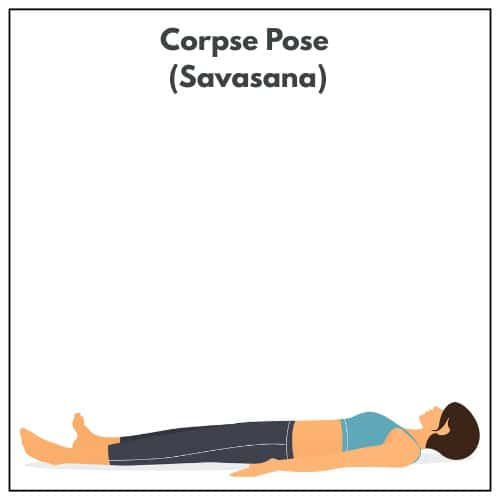
10. Corpse Pose (Savasana)
Savasana is often called the “ultimate relaxation pose,” and for good reason.
It’s usually done at the end of your yoga practice to give your body and mind a chance to fully absorb all the benefits of the poses you’ve just done.
Studies have shown that practicing Savasana can help reduce stress, lower heart rate and blood pressure, and improve overall physical and mental well-being.
How to Do It:
- Lie flat on your back with your arms relaxed at your sides, palms facing up.
- Close your eyes and consciously release tension from your entire body.
- Breathe naturally, allowing your chest and belly to rise and fall with ease.
- Stay in this restful pose for 5–10 minutes, or as long as feels good.
Beginner tips:
- Focus on letting go completely — try to release even small areas of tension like your jaw, shoulders, and hands.
- If your lower back feels uncomfortable, place a folded blanket or pillow under your knees or bend your knees and let them rest against each other while keeping your feet flat on the floor.
- Breathe naturally and avoid forcing your breath — just let it flow.
Caution:
Savasana is generally very safe, but avoid lying flat on your back if you have severe lower back pain, certain respiratory or heart conditions, or if you feel dizzy.
Modify with props as needed.
Tips for Beginners Starting Yoga
Starting yoga can feel exciting — and maybe a little intimidating — but these simple tips will help you build a safe, mindful, and enjoyable practice from day one:
1. Start Slow
Don’t rush into advanced poses. Focus on proper alignment, comfort, and learning the basics first.
Yoga is not about performance or looking perfect — it’s about connecting with your body and breath.
Even a few minutes a day will build strength, flexibility, and awareness over time.
2. Use Props
Blocks, straps, or blankets are not just optional — they’re tools to help you practice safely and prevent injury. Props provide support, help with flexibility, and make poses more accessible.
For example, when sitting cross-legged for breath work, placing yourself at the edge of a block encourages a straight spine and better posture.
A strap can gently guide the body deeper into stretches without forcing, helping to build flexibility gradually and safely. A soft blanket adds cushioning for the knees, hips, or back, allowing for longer holds and more restorative poses.
Products like the Gaiam Yoga Block with supportive, non-slip foam, the Gaiam Yoga Strap with adjustable metal buckle, and the Yogikuti Yoga Blanket (all available on Amazon), offer practical support while enhancing comfort.
Using props allows you to fully relax into poses without strain, making your practice both safer and more effective.
3. Breathe — Really Breathe
Breath is the heart of yoga. Let your breath guide your movements and help you settle into each pose.
Start your practice by lying on your back, palms facing up, taking slow, deep breaths to connect with your body.
Inhale fully through your nose, exhale completely, and notice how your body naturally responds.
Breath work allows you to fully enter each pose and gain the true physical and mental benefits of yoga.
Remember: breathe, breathe, breathe — even in online classes, it’s easy to forget!
4. Be Present and Slow Down
Yoga is about presence, not performance.
Bring your attention to your body, your breath, and each movement. Move slowly and mindfully — notice each shift, stretch, and sensation.
Slowing down can be challenging at first, especially for beginners who are used to rushing, but it’s key to connecting your breath and body, preventing strain, and truly benefiting from the practice.
5. Consistency is Key
Even 10–15 minutes a day can make a noticeable difference.
Regular practice — even short sessions — helps your body and mind adapt, strengthens muscles, improves flexibility, and fosters calmness and clarity.
6. Listen to Your Body
Avoid pushing into pain or forcing positions. Gentle stretching and mindful movement are far more effective than overexertion.
Honor your limits and allow your body to get stronger naturally.
Final Thoughts
Starting with yoga for beginners can feel a little intimidating at first, but as you’ve seen, it doesn’t have to be complicated.
These 10 easy poses provide a solid foundation for building strength, flexibility, balance, and calm—all at your own pace.
The beauty of yoga is that it meets you exactly where you are. Some days you might feel strong and flexible, and other days your body may need extra rest—and that’s perfectly okay.
Consistency, patience, and kindness toward yourself are what truly make a difference.
Take a few minutes each day to connect with your breath, move mindfully, and enjoy the simple pleasure of being present in your body. Let each practice remind you that yoga is a journey, not a destination.
Your mat is your personal space to explore, stretch, and recharge.
Embrace these poses, honor your body, and enjoy the sense of calm and strength that comes from your practice.
*This article is for informational purposes only and is not intended as medical advice. It should not be used to diagnose, treat, or prevent any health condition. Always consult a qualified healthcare professional before making any changes to your diet, exercise, or health routine.
Patidar, Kanhaiyalal, et al. “Anatomical Exploration of Tadasana: Mountain Pose.” International Journal of Creative Research Thoughts, vol. 13, no. 8, Aug. 2025, www.ijcrt.org. Abstract only.
Sharma, Geetanjali, K. K. Mahajan, and Luv Sharma. “Shavasana—Relaxation Technique to Combat Stress.” Journal of Bodywork and Movement Therapies, vol. 11, no. 2, 2007, pp. 173–180. ScienceDirect, https://doi.org/10.1016/j.jbmt.2007.01.002. Abstract only.

Linda is the co-founder of Courier Wellness and holds a Diploma in Natural Health Nutrition & Diet. Her passions include photography, food, and travel, where she derives inspiration from diverse cultures and their holistic approaches to well-being. She is committed to helping others make informed, nourishing choices for a healthier life.