Flat Stomach Workout Trainers Swear By (Deep Core Routine)
This post contains affiliate links, which means we may earn a commission if you purchase through our links—at no extra cost to you. As an Amazon Associate we earn from qualifying purchases. We only recommend products we use or trust. Learn more about affiliate marketing or read our full disclosure.
If you’ve ever tried to get a flatter stomach, chances are you’ve done crunches, sit-ups, or quick ab routines that claim to deliver fast results.
Maybe they worked a little at first—but over time, the results started to slow down, or your stomach still didn’t feel as firm and supported as you wanted.
That’s exactly why many fitness trainers move beyond traditional ab exercises and focus on something that tends to be much more effective: deep core training.
In fact, many trainers swear by a deep core flat stomach workout—not because it’s the latest trend, but because it targets the muscles that influence how your stomach looks, feels, and functions throughout your daily life.
This guide explains why trainers rely on this deep core flat stomach workout, how it works, and how you can start doing it at home to build core strength, improve your posture, and develop better abdominal control.
What “Deep Core” Actually Means
When most people think about their abs, they usually picture the six-pack muscle (rectus abdominis). But that’s only the outer layer.
Your deep core system includes:
- Transverse abdominis (your natural “corset” muscle)
- Pelvic floor muscles
- Multifidus muscles (small stabilizing muscles along your spine)
- Diaphragm (your main breathing muscle)
Together, these muscles act like an internal support system that helps stabilize your entire midsection.
Why This Matters for a Flatter Stomach
When your deep core is weak or not working the way it should:
- Your stomach may stick out, even if you don’t carry much body fat
- Your posture can start to round forward
- You lose some of the natural support around your midsection
But when your deep core is strong and functioning properly:
- Your stomach looks more lifted and controlled
- Your posture improves without much effort
- Your core feels naturally tight and supported from the inside
That’s exactly why so many trainers place such a strong emphasis on deep core training.
Why Crunches Aren’t Enough (According to Trainers)
Crunches aren’t necessarily “bad,” but on their own, they usually aren’t enough.
They mainly target:
- The surface abdominal muscles
- Repeated spinal flexion
- Short-range movement patterns
What They Miss
- Deep core activation
- Stability training
- Postural control
- Breathing coordination
That’s why many people can do hundreds of crunches and still feel like their stomach doesn’t change much in terms of appearance.
What Trainers Prefer Instead
Movements that teach your body to:
- Stabilize your spine
- Engage your core while moving
- Coordinate your breathing with muscle tension
- Activate your deep abdominal muscles
That’s where deep core workouts really make a difference.
The Real Goal of a Deep Core Flat Stomach Workout
Trainers aren’t using these exercises simply to “burn belly fat.”
The real goals are:
1. Build Internal Core Support
Your deep core works like a natural corset around your midsection. It helps hold everything in place and gives your body a stronger foundation from the inside out.
When this support system is active, your body doesn’t have to depend only on the surface muscles to stay stable throughout the day.
2. Improve Posture
Better posture can instantly change the way your stomach looks. When you stand taller and keep your spine properly aligned, your midsection naturally appears more lifted and controlled.
Over time, good posture can also help reduce the slouched, relaxed position that often makes the stomach stick out more than necessary.
3. Train Core Control (Not Just Strength)
Control is what helps create a tighter, more stable-looking midsection. It’s not only about how strong your abs are—it’s also about how effectively you can activate and maintain that engagement when you need it.
When your core learns to stay engaged during movement, your midsection feels more supported and naturally looks firmer throughout the day.
4. Support Breathing and Digestion
Deep core engagement is closely connected to diaphragmatic breathing, which helps your body use air more efficiently and stay more relaxed.
Breathing this way can reduce unnecessary tension around your midsection and may also help ease feelings of bloating.
Over time, this connection between breathing and core control can help your stomach feel more balanced, supported, and comfortable.
Why Trainers Swear By It
Here’s why this approach is used so often in fitness and Pilates-based training.
1. It Works From the Inside Out
Traditional ab workouts focus on the muscles you can see on the surface.
Deep core training focuses on the muscles that provide support underneath.
Trainers Prefer It Because:
- It improves the way your body naturally supports itself
- Results can become noticeable even without significant fat loss
- It builds long-term stability rather than just creating short-term muscle fatigue
Instead of trying to make your stomach “burn,” it teaches your body how to support itself more effectively.
2. It Improves Posture Instantly
One of the fastest noticeable benefits of deep core training is improved posture.
When your posture improves:
- Your stomach is less likely to push forward
- Your torso can appear longer and leaner
- Your midsection looks more controlled
Many people notice posture improvements before they see any visible muscle changes.
3. It Targets Muscles Crunches Miss
Deep core workouts activate muscles that are often neglected in traditional ab training.
Especially:
- Transverse abdominis
- Pelvic floor
- Spinal stabilizing muscles
These muscles usually don’t create the same intense “burn” that crunches do, but they provide the deep support that influences how your stomach looks—even when you’re not working out.
4. It Reduces “Stomach Pooch” Appearance
Many people deal with a lower belly protrusion, even when they’re at a healthy weight.
This is often linked to:
- Weak deep core muscles
- Poor pelvic alignment
- Lack of internal abdominal support
Trainers use deep core exercises to help the midsection naturally draw inward over time.
5. It Supports Better Breathing
Breathing plays a major role in how your core functions.
In deep core training:
- Your diaphragm works together with your abdominal muscles
- Exhaling helps activate core engagement
- Your body learns to stay stable while breathing
This is one of the main reasons Pilates and rehabilitation-based trainers place so much emphasis on it.
6. It Reduces Risk of Injury
A strong deep core helps keep your spine stable and supported.
This helps:
- Protect your lower back
- Improve your balance
- Support everyday movement
Many trainers prioritize deep core work because it builds functional strength, not just a certain appearance.
The Most Effective Deep Core Flat Stomach Exercises
Trainers typically combine a handful of slow, controlled movements rather than relying on fast-paced ab workouts.
Here are some of the foundational exercises they often recommend:
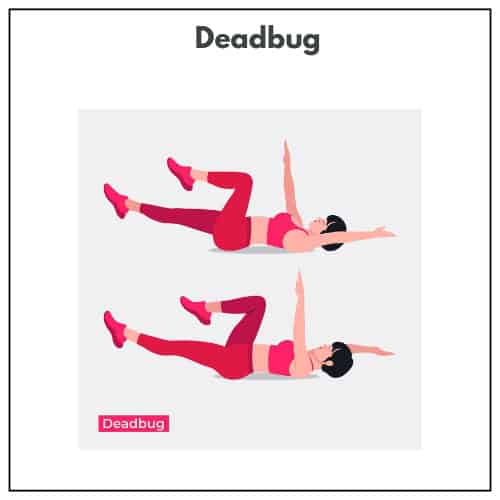
1. Dead Bug
A slow, controlled exercise that helps build core stability.
- Strengthens deep core control
- Improves coordination
- Helps prevent your lower back from arching
How to Do It:
- Lie on your back with arms extended toward the ceiling and knees bent at 90 degrees.
- Slowly lower your right arm and left leg toward the floor.
- Return to the starting position and switch sides.
- Keep your lower back gently pressed into the floor throughout.
Common Mistake to Avoid: Letting your lower back arch as you extend your arm and leg.
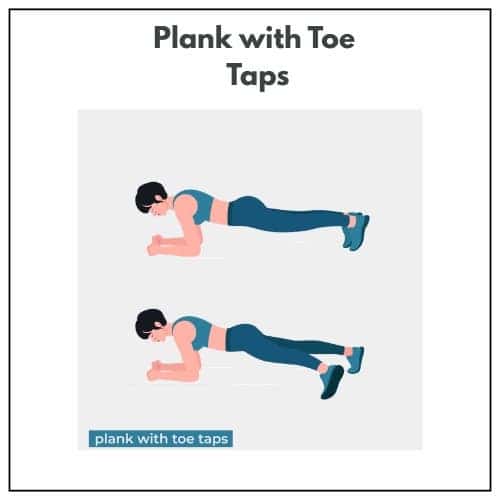
2. Plank with Toe Taps
A plank variation that builds core stability while adding controlled movement.
- Builds endurance
- Activates your entire abdominal system
- Improves posture control
How to Do It:
- Start in a high plank position with your hands directly under your shoulders.
- Keep your body in a straight line from head to heels.
- Slowly move one foot out to the side and tap the floor.
- Bring it back to the starting position and repeat with the other foot.
- Keep your core engaged and your hips as steady as possible throughout the movement.
Common Mistake to Avoid: Allowing your hips to sway or rotate as you tap your foot.
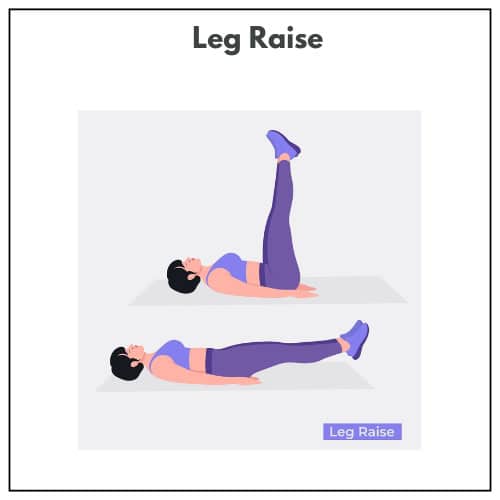
3. Leg Raises
An exercise that focuses on lower abdominal control.
- Strengthens the connection between your deep core muscles
- Improves pelvic stability
How to Do It:
- Lie on your back with your legs straight and your hands by your sides.
- Engage your core and slowly lift your legs toward the ceiling.
- Lower them back down with control.
- Stop before your lower back begins to arch.
Common Mistake to Avoid: Using momentum or allowing your lower back to lift off the floor.
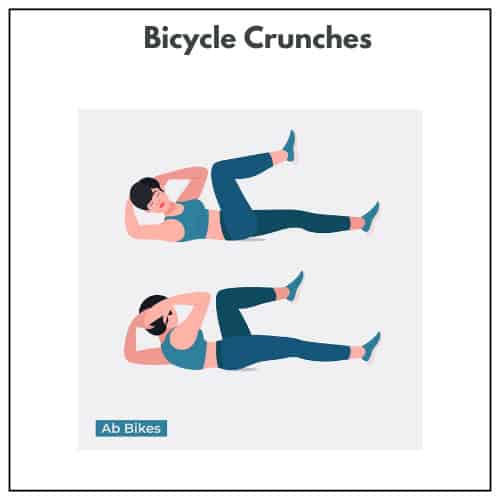
4. Bicycle Crunches (Controlled)
When done with control, this becomes a deep-core-focused movement.
- Builds rotational strength
- Engages multiple layers of the core
How to Do It:
- Lie on your back with your hands lightly behind your head.
- Lift your shoulders slightly off the floor.
- Bring one knee toward your chest while rotating your torso toward it.
- Return slowly and repeat on the opposite side.
Common Mistake to Avoid: Moving too quickly and relying on momentum.
5. Mountain Climbers (Slow Version)
In this variation, the exercise isn’t used as cardio—it’s performed slowly and with control.
- Improves stability during movement
- Activates your core through dynamic motion
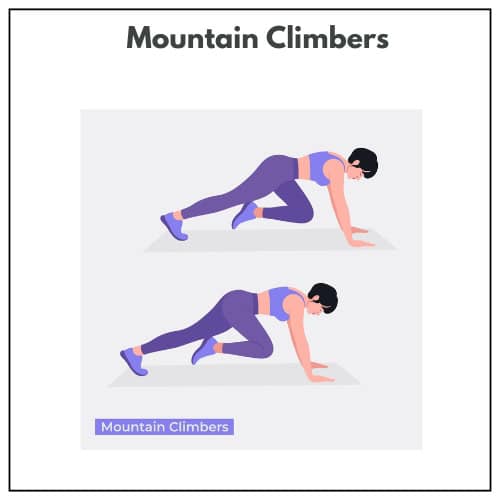
How to Do It:
- Start in a high plank position with your hands under your shoulders.
- Slowly bring one knee toward your chest.
- Return it to the starting position.
- Alternate sides while keeping your body stable.
Common Mistake to Avoid: Rushing the movement and allowing your hips to sway.
6. Russian Twists
An exercise that targets rotational core strength.
- Strengthens the obliques
- Improves waist control
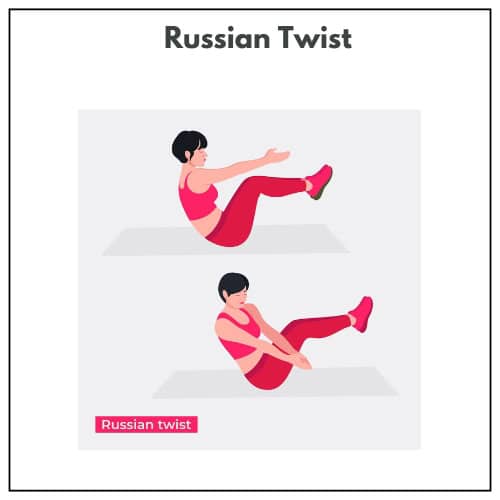
How to Do It:
- Sit on the floor with your knees bent and feet lightly touching the ground.
- Lean back slightly while keeping your spine neutral.
- Engage your core and rotate your torso from side to side.
- Move slowly and stay controlled throughout.
Common Mistake to Avoid: Swinging your arms instead of rotating through your torso.
7. Reverse Crunches
A highly effective lower abdominal exercise.
- Builds better control of pelvic movement
- Strengthens deep abdominal support
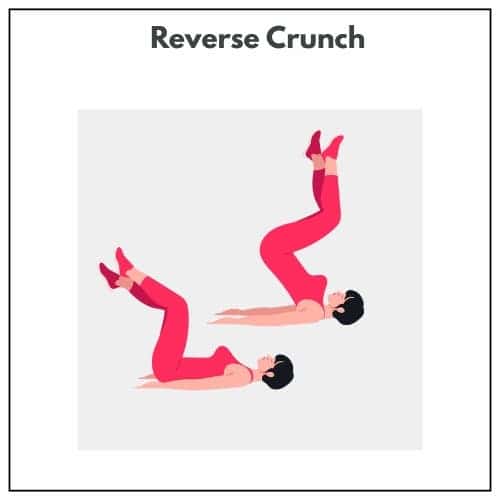
How to Do It:
- Lie on your back with your knees bent and feet off the floor.
- Engage your lower abs.
- Slowly curl your hips upward toward your chest.
- Lower back down with control.
Common Mistake to Avoid: Using momentum to swing your legs.
8. Plank Shoulder Taps
A stability-focused exercise that challenges your ability to stay controlled.
- Trains anti-rotation strength
- Builds deep core coordination
- For an added challenge, use a medicine ball
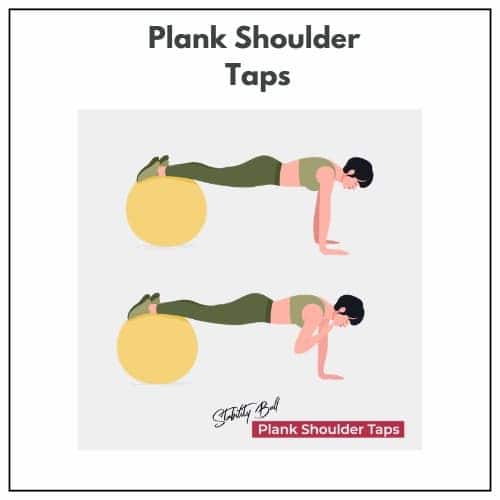
How to Do It:
- Begin in a high plank position.
- Keep your hips as still as possible.
- Lift one hand and tap the opposite shoulder.
- Return it to the floor and repeat on the other side.
Common Mistake to Avoid: Allowing your torso to rotate from side to side.
The Most Important Part: Breathing + Core Engagement
There’s one thing trainers emphasize more than almost anything else:
If you’re not breathing properly, you’re not fully training your deep core.
That’s because your breathing plays a major role in how effectively your deep core muscles activate and stay engaged during movement.
Correct Technique:
- Inhale before the movement
- Exhale during the effort
- Gently draw your stomach inward as you exhale
- Maintain a light core engagement as you breathe in
What This Does:
- Activates the transverse abdominisImproves muscle coordination
- Reduces the tendency to rely on momentum
- Enhances the flat stomach effect while you move
Breathing is what transforms a regular workout into true deep core training.
What a Trainer-Style 10-Minute Routine Looks Like
Most trainers recommend keeping things simple with a short, consistent routine like this:
- Dead Bug – 1 min
- Plank with Toe Taps – 1 min
- Leg Raises – 1 min
- Bicycle Crunches – 1 min
- Mountain Climbers (slow) – 1 min
- Russian Twists – 1 min
- Reverse Crunches – 1 min
- Plank Shoulder Taps – 1 min
Then repeat the circuit or take a short break, depending on your fitness level.
How Often Trainers Recommend Doing It
Consistency is usually more important than intensity.
Typical recommendation:
- 4–6 times per week
- 10–15 minutes per session
As you stay consistent, your body gradually adapts and your core control can improve significantly over time.
What Results You Can Expect
Deep core training won’t create overnight changes, but with consistency, you can start noticing meaningful improvements over time.
Early Stage (1–2 Weeks):
- Better awareness of your core muscles
- Improved posture
- Less abdominal relaxation throughout the day
Mid Stage (3–4 Weeks):
- A tighter-looking midsection
- Better stability during movement
- A less bloated appearance due to improved posture
Longer Term:
- A stronger, more controlled core
- A naturally flatter-looking stomach
- Improved movement efficiency
Final Thoughts
Trainers swear by deep core flat stomach workouts because they target the areas that traditional ab training often overlooks: internal stability, posture, and true functional core strength.
Rather than chasing muscle fatigue or doing endless crunches, this approach focuses on:
- Control
- Breathing
- Deep muscle activation
- Consistency
Over time, these elements work together to help create a stomach that looks:
- Tighter
- More supported
- More naturally aligned with your body
The key takeaway is simple:
A flatter stomach isn’t just about working harder—it’s about training smarter from the inside out.
*This article is for informational purposes only and is not intended as medical advice. It should not be used to diagnose, treat, or prevent any health condition. Always consult a qualified healthcare professional before making any changes to your diet, exercise, or health routine.

Malin, the co-founder of Courier Wellness, is well-informed in nutrition and health and brings her own unique perspective to the world of holistic wellness. With a passion for writing and a deep interest in wellbeing, she wants to create content that fosters balance and nourishment for the mind and body.