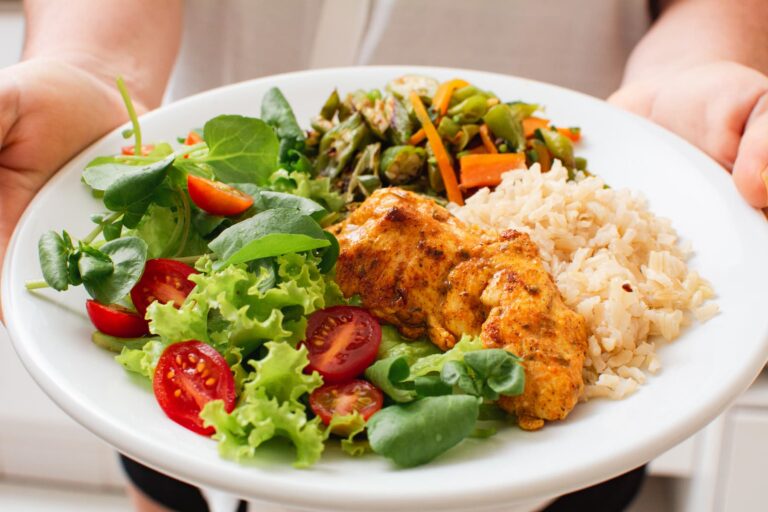
Is It Really Difficult to Lose Weight After 30?
So, you’ve hit your 30s—and suddenly, your body doesn’t respond to pizza and gym sessions the way it used to.
Sound familiar?
You’re not alone. A lot of people wonder: is it hard to lose weight after 30? And if you’ve noticed the pounds aren’t dropping as easily as before, it’s easy to feel frustrated or confused.
There’s a popular belief that once you turn 30, your metabolism slows to a crawl, your schedule gets too packed for workouts, and weight loss becomes a losing battle.
But is that really true—or just another myth passed around in fitness circles?
In this article, we’re diving into what really happens to our body after 30. We’ll talk about the science, the lifestyle shifts, the mental hurdles—and most importantly, what you can actually do about it.
Ready?
Let’s get into it!
Why Does Losing Weight After 30 Feel So Different?
If you’re in your 30s and wondering why your go-to diet or workout plan suddenly isn’t working like it used to, you’re not imagining things.
A lot of people start asking themselves, is it hard to lose weight after 30, and the short answer is—sometimes, yes. But the longer answer is way more encouraging.
Turning 30 doesn’t mean your metabolism crashes or that you’re stuck with stubborn weight forever. It does mean your body starts to shift—physically, hormonally, and in terms of lifestyle.
And the better you understand those shifts, the easier it is to work with your body instead of fighting against it.
SAVE THIS PIN FOR LATER!
Be sure to save this post by pinning the image to your Pinterest board. I’ll be updating it regularly, so you can easily come back to explore this topic further!

So, let’s take a closer look at what’s really going on—and what you can do about it.
1. Understanding Your Metabolism After 30
Let’s talk metabolism—aka, the way your body turns food into energy. It’s a hot topic when people start asking, is it hard to lose weight after 30?
And while metabolism does slow down with age, the truth is a little more nuanced than “you hit 30 and everything goes downhill.”
Here’s what’s really going on behind the scenes:
Starting in your 30s, your body naturally starts to lose muscle—about 3–8% per decade if you’re not doing strength training.
Since muscle burns more calories than fat (even when you’re just chilling on the couch), less muscle = a slower metabolism.
Testosterone, estrogen, and growth hormone levels gradually decline, and that can impact how your body stores fat and how efficiently it burns it.
It’s not your imagination—your hormonal landscape is changing.
Your cells’ little energy factories (mitochondria) don’t run quite as efficiently with age. This can subtly slow down your body’s entire energy production process.
But here’s the good news: this doesn’t mean weight gain is your destiny.
The changes in metabolism are real—but they’re also manageable. With the right habits, you can absolutely take back control.
2. How Your Lifestyle Shifts in Your 30s
Let’s be real: your 30s often come with a lot more life. Careers ramp up, relationships deepen, some become parents or caregivers, and suddenly… there’s way less time for you.
And when you’re juggling all that, it’s no surprise that weight loss might feel harder than it used to.
Here’s what tends to get in the way:
Between meetings, errands, and everything else, carving out an hour for a workout—or even planning a healthy meal—can feel impossible.
Desk jobs, long commutes, and screen time add up. You might not even realize how much less you’re moving compared to your 20s.
Get the eBook
Join now to receive our FREE ebook on how to create a healthy relationship with food.

Whether it’s kids, work stress, or just racing thoughts at night, getting quality sleep becomes more challenging. And when you’re sleep-deprived, your metabolism and hunger hormones (like ghrelin and leptin) get out of whack.
Chronic stress spikes cortisol, your body’s “fight or flight” hormone—and that often leads to increased belly fat and emotional eating.
If you’re over 30 and life hasn’t turned out exactly how you expected, it can definitely affect your weight.
Stress from unmet goals, societal pressures, or challenges like delayed parenthood, job dissatisfaction, or body image concerns can trigger emotional eating as a way to cope. This emotional eating cycle can make it even harder to lose weight after 30.
The takeaway?
It’s not just age that makes weight loss trickier—it’s the life load that comes with it.
The good news is, once you start recognizing these patterns, you can begin making small, realistic changes that fit your lifestyle and help you manage stress in a healthier way.
Related Article: The Ultimate Guide to Living a Healthy Lifestyle»
3. Hormonal and Biological Changes
Hormones run the show behind the scenes, and once you hit your 30s, they start to shift in ways that can quietly—but noticeably—affect your weight.
These changes don’t hit everyone the same way, but they do play a role in how your body stores fat, builds muscle, and handles energy.
Let’s break it down:
For Women:
This usually begins in your late 30s or early 40s. As estrogen declines, your body tends to hold onto more fat—especially around the midsection.
Polycystic Ovary Syndrome often emerges in early adulthood. It can mess with insulin levels, making weight loss more challenging and unpredictable.
PCOS is very common, affecting approximately 1 in 10 women of reproductive age—and some estimates suggest it may be as high as 15%, depending on how it’s diagnosed.
Despite how common it is, many women remain undiagnosed for years.
For Men:
Testosterone helps keep muscle mass up and fat in check. When levels drop, metabolism can slow down, and fat may start to creep in—especially if activity levels also dip.
These hormonal shifts don’t mean you’re out of luck—they just mean the strategy needs to shift, too.
Related Article: Can Hormones Cause Belly Fat? Everything You Need to Know»
Myth vs. Reality: Is It Really Harder to Lose Weight After 30?
Let’s tackle the big question head-on: Is it hard to lose weight after 30?
The Myth:
Once you blow out the candles on your 30th birthday cake, your metabolism crashes and weight loss becomes nearly impossible.
You’re stuck, so why bother?
The Reality:
Not true. Yes, your metabolism slows slightly—but it’s not the dramatic drop-off that people make it out to be.
The bigger culprits?
A loss of muscle mass, less movement, more stress, and, let’s face it, a lot more on your plate (figuratively and literally).
What’s actually needed isn’t panic—it’s a pivot. Your old routines might not work like they used to, but with a few smart adjustments, you can absolutely still lose weight, build strength, and feel great in your 30s and beyond.
It’s not about working harder—it’s about working smarter.
SAVE THIS PIN FOR LATER!
Be sure to save this post by pinning the image to your Pinterest board. I’ll be updating it regularly, so you can easily come back to explore this topic further!
Why Traditional Diets Stop Working
Ever find yourself thinking, “This used to work—what changed?”
You’re not imagining things. One of the biggest frustrations people face after 30 is realizing that the diets or workout plans that used to get results suddenly… don’t.
Here’s why that happens:
As we’ve mentioned, muscle mass naturally declines with age.
So even if you’re eating the same way you did in your 20s, your body may be burning fewer calories—leading to slower results or even weight gain.
Especially if your lifestyle has leaned more sedentary over the years, your cells can become less responsive to insulin. This makes it harder to manage blood sugar—and easier to store fat.
In your 30s, your metabolism is a bit more sensitive. Extreme or restrictive diets can send your body into “survival mode,” slowing things down even more and making long-term fat loss harder, not easier.
But here’s the silver lining: this doesn’t mean weight loss is off the table. It just means your approach needs to evolve.
The good news?
Sustainable, smarter strategies not only work—they tend to feel a whole lot better, too.
One great strategy to incorporate?
Start eating more fiber. Fiber helps improve digestion and keeps you feeling full longer, making it easier to manage your weight. It’s a small change that can make a big impact!
Related Article: The Ultimate Guide to Sustainable Weight Loss: Eat Better, Not Less»
Smart Strategies for Losing Weight After 30
So, we’ve covered the science, the myths, and the why behind those extra pounds creeping up after 30.
Now, let’s get down to what you can actually do about it. These strategies aren’t about following the latest fad or pushing yourself to extremes—they’re about making smart, sustainable changes that work with your body, not against it.
1. Strength Training is Your Best Friend
Muscle is more than just a look—it’s metabolically active, meaning it burns calories even when you’re not working out.
Strength training isn’t optional if you want to maintain or build muscle as you age. Whether it’s weights, resistance bands, or bodyweight exercises, aim for at least 2–3 sessions per week.
You’ll build muscle, rev your metabolism, and even improve insulin sensitivity. Win-win!
Related Article: »
2. Make Protein a Priority
Protein isn’t just for bodybuilders—it’s a game-changer for everyone, especially when you’re trying to lose weight.
It helps maintain muscle mass, keeps you feeling full longer, and burns more calories during digestion (yep, protein makes your body work harder to break it down).
A good target is around 0.8–1.0 grams of protein per pound of body weight. So, if you weigh 150 lbs, aim for 120–150 grams of protein each day.
3. Go for a Sustainable Calorie Deficit
Forget the drastic, crash diet approach. A mild calorie deficit of 250–500 calories a day is much more effective and sustainable.
A larger deficit might seem tempting, but it can backfire by slowing your metabolism or causing muscle loss. Slow and steady wins this race!
Related Article: 9 Sustainable Weight Loss Habits That Will Change Your Life»
4. Manage Stress Like a Pro
Stress is sneaky when it comes to weight loss. Chronic stress spikes cortisol, which not only encourages fat storage—especially around your belly—but also increases cravings and messes with your sleep.
Try stress-busting activities like meditation, yoga, or even deep breathing. Y
5. Prioritize Quality Sleep
If you’re not sleeping well, weight loss can become way harder. Sleep deprivation messes with hunger hormones (ghrelin and leptin), making you hungrier and less likely to make healthy choices.
Aim for 7–9 hours of quality sleep a night to help regulate your appetite and metabolism.
6. Get Moving—Even When You’re Not at the Gym
NEAT (Non-Exercise Activity Thermogenesis) might sound like a fancy term, but it’s really just a way of saying: move more throughout the day.
Whether it’s taking the stairs, walking more, or using a standing desk, small movements add up and can burn hundreds of extra calories per day.
Every little bit counts.
Get the eBook
Join now to receive our FREE ebook on how to create a healthy relationship with food.
7. Track Progress Beyond the Scale
Weight isn’t the only measure of success.
Track your progress in other ways, too:
Progress might be a little bit slower than in your 20s, but it’s still progress. Don’t let the scale define your journey—celebrate the other victories along the way!
Related Article: How to Reduce Lower Belly Pooch With The Right Foods»
What the Science Says
So, what does the research actually tell us about weight loss after 30?
It’s easy to assume that metabolism slows down drastically with age, but the truth is a bit more reassuring.
A 2021 study published in Science found that while metabolism does slow a little as we age, it remains pretty steady between the ages of 20 and 60—when you factor in body size.
So, no, your metabolism isn’t crashing, even though you might feel like your body isn’t burning calories like it used to.
And here’s a game-changer: numerous studies have showed that adults who kept up with resistance training (like weightlifting) well into their 40s and 50s preserved significantly more muscle mass.
Not only that, but they had much better metabolic health than their sedentary peers.
The takeaway?
Strength training isn’t just about looking toned—it’s about keeping your metabolism in check, too.
Related Article: How to Get Rid of Lower Belly Pooch»
Final Thoughts
From my own experience, I can tell you that losing weight in my 30s wasn’t nearly as difficult as I once thought it would be. The truth is, what worked for me in my 20s didn’t necessarily work in my 30s, and that’s okay.
Instead of feeling frustrated, I realized I just needed to incorporate new habits that better supported my body’s changing needs.
I started eating healthier, reducing ultra-processed foods, and focusing on more whole, nourishing options. I partied less and prioritized things like strength training and yoga—not just for physical strength, but to help manage stress.
With these small shifts, I started to feel better than ever, and weight loss became a natural part of the process.
It wasn’t about making drastic changes or following fad diets—it was about creating habits that truly supported my health.
So, if you’re in your 30s and struggling with weight loss, don’t feel discouraged. It’s not about fighting against your body—it’s about embracing new habits that align with where you are now.
With a little patience and a focus on sustainable changes, losing weight can actually be a lot easier than you think.
*This article is for informational purposes only and is not intended as medical advice. It should not be used to diagnose, treat, or prevent any health condition. Always consult a qualified healthcare professional before making any changes to your diet, exercise, or health routine.
Alexander, Jeanne Leventhal et al. “Role of stressful life events and menopausal stage in wellbeing and health.” Expert review of neurotherapeutics vol. 7,11 Suppl (2007): S93-113. doi:10.1586/14737175.7.11s.S93.
Carpio-Arias, Tannia Valeria et al. “Relationship between perceived stress and emotional eating. A cross sectional study.” Clinical nutrition ESPEN vol. 49 (2022): 314-318. doi:10.1016/j.clnesp.2022.03.030.
Courtney-Martin, Glenda et al. “Protein Requirements during Aging.” Nutrients vol. 8,8 492. 11 Aug. 2016, doi:10.3390/nu8080492. Adapted and used under the Creative Commons Attribution 4.0 International License.
Herhaus, Benedict et al. “High/low cortisol reactivity and food intake in people with obesity and healthy weight.” Translational psychiatry vol. 10,1 40. 27 Jan. 2020, doi:10.1038/s41398-020-0729-6.Adapted and used under the Creative Commons Attribution 4.0 International License.
“How to get more fibre into your diet.” NHS, last reviewed 13 July 2022, https://www.nhs.uk/live-well/eat-well/digestive-health/how-to-get-more-fibre-into-your-diet/. Contains public sector information licensed under the Open Government Licence v3.0. Accessed 4 December 2023.
Kapoor, Ekta et al. “Weight Gain in Women at Midlife: A Concise Review of the Pathophysiology and Strategies for Management.” Mayo Clinic proceedings vol. 92,10 (2017): 1552-1558. doi:10.1016/j.mayocp.2017.08.004.
Lin, Yi-Hsuan et al. “Physical activity and successful aging among middle-aged and older adults: a systematic review and meta-analysis of cohort studies.” Aging vol. 12,9 (2020): 7704-7716. doi:10.18632/aging.103057. Adapted and used under the Creative Commons Attribution 4.0 International License.
“Metabolism.” A.D.A.M Medical Encyclopedia, MedlinePlus, updated by Frank D. Brodkey, MD, FCCM, 21 July 2022, https://medlineplus.gov/ency/article/002257.htm. Accessed 4 December 2023.
McCarthy, Micheline, and Ami P Raval. “The peri-menopause in a woman's life: a systemic inflammatory phase that enables later neurodegenerative disease.” Journal of neuroinflammation vol. 17,1 317. 23 Oct. 2020, doi:10.1186/s12974-020-01998-9. Adapted and used under the Creative Commons Attribution 4.0 International License.
Pontzer, Herman, et al. "Daily energy expenditure through the human life course." Science, 2021, 373 (6556), pp.808-812. 10.1126/sci-ence.abe5017. hal-03364046.
Shimokata, H, and F Kuzuya. Nihon Ronen Igakkai zasshi. Japanese journal of geriatrics vol. 30,7 (1993): 572-6. doi:10.3143/geriatrics.30.572.
Wilkinson, D J et al. “The age-related loss of skeletal muscle mass and function: Measurement and physiology of muscle fibre atrophy and muscle fibre loss in humans.” Ageing research reviews vol. 47 (2018): 123-132. doi:10.1016/j.arr.2018.07.005. Adapted and used under the Creative Commons Attribution 4.0 International License.

Linda is the co-founder of Courier Wellness and holds a Diploma in Natural Health Nutrition & Diet. Her passions include photography, food, and travel, where she derives inspiration from diverse cultures and their holistic approaches to well-being. She is committed to helping others make informed, nourishing choices for a healthier life.