How to Get Rid of a Lower Belly Pooch

This post contains affiliate links, which means we may earn a commission if you purchase through our links—at no extra cost to you. As an Amazon Associate we earn from qualifying purchases. We only recommend products we use or trust. Learn more about affiliate marketing or read our full disclosure.
If you’ve ever looked in the mirror and wondered why that stubborn lower belly pooch refuses to budge, you’re definitely not alone.
A lot of people notice that the area below the belly button seems to hang onto fat, no matter how well they eat or how regularly they work out.
The good news? There are proven, science-backed approaches that can help.
The less exciting news? There’s no single exercise, miracle food, or quick fix that will specifically target only the lower belly.
In this guide, you’ll learn what really causes a lower belly pooch and the most effective ways to reduce it if you’re wondering how to get rid of lower belly pooch.
What Is a Lower Belly Pooch?
A lower belly pooch is the small bulge or fullness that shows up in the lower abdomen, just below the belly button.

For some people, it’s mostly body fat. For others, it can be linked to posture, bloating, genetics, muscle weakness, hormones, or simply normal body structure.
Before you try to “fix” it, it’s important to know that some fullness in the lower abdomen is completely normal. Even very fit people can have a slight lower belly curve because of organ placement, natural fat distribution, and genetics.
Why Is Lower Belly Fat So Stubborn?
The lower abdomen is often one of the last areas where your body lets go of fat.
Several factors contribute to this:
- Genetics
- Hormones
- Age-related changes
- Stress
- Poor sleep
- Lack of physical activity
- Diet quality
- Muscle loss
Unfortunately, you can’t spot-reduce fat from one specific area. That means doing hundreds of crunches won’t automatically burn fat from your lower belly.
Research indicates that targeted exercises can strengthen specific muscles, but they do not selectively burn fat from the area being exercised.
Instead, you need an approach that supports overall fat loss while also strengthening your core.
Now let’s look at how to get rid of lower belly pooch:
1. Focus on Sustainable Fat Loss
If extra body fat is contributing to your lower belly pooch, creating a moderate calorie deficit is one of the most effective things you can do.
That doesn’t mean starving yourself or following restrictive fad diets.
Instead, focus on:
- Eating more whole foods
- Prioritizing protein
- Increasing vegetables
- Limiting ultra-processed foods
- Managing portion sizes
The goal is steady, sustainable fat loss rather than quick fixes that are hard to stick with long term.
Protein Matters
Protein helps you maintain muscle while losing fat and can keep you feeling full for longer.
Research suggests that higher protein intake during weight loss can help preserve lean muscle mass.
Good protein sources include:
- Eggs
- Greek yogurt
- Chicken
- Turkey
- Fish
- Tofu
- Beans
- Cottage cheese
Many people see noticeable improvements in their body composition simply by increasing their daily protein intake.
RELATED POST: Looking for Foods for Lower Belly Pooch? Start With These
2. Strength Training Is More Important Than Most People Think
When you’re trying to get a flatter stomach, it’s common to focus only on cardio.
However, strength training plays a major role in reducing overall body fat and improving body composition.
Evidence shows that resistance training can help preserve muscle mass during weight loss and contribute to healthier body composition.
Building muscle helps:
- Increase calorie expenditure
- Improve metabolism
- Enhance posture
- Create a firmer appearance throughout the body
Aim to strength train at least 2–4 times per week.
Focus on compound movements such as:
- Squats
- Deadlifts
- Lunges
- Push-ups
- Rows
- Overhead presses
These exercises work multiple muscle groups at once and typically burn more calories than isolated ab exercises alone.
3. Stop Relying on Crunches
One of the most common myths about lower belly fat is that endless crunches will make it disappear.
Crunches can strengthen your abdominal muscles, but they don’t directly burn fat from the lower stomach.
Instead, include exercises that strengthen your entire core:
Dead Bugs
Dead bugs help improve core stability and activate the deeper abdominal muscles.
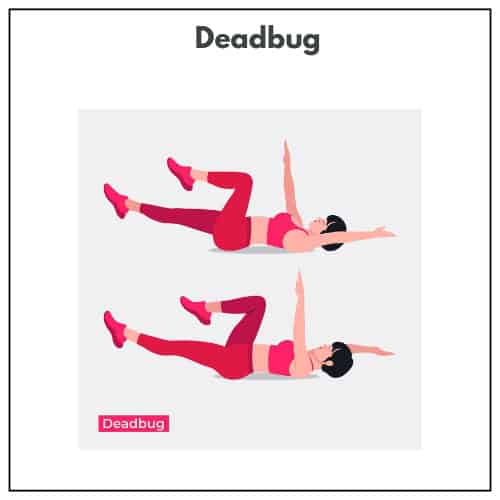
How to do it:
- Lie on your back with your arms extended toward the ceiling and your knees bent at 90 degrees.
- Slowly lower one arm and the opposite leg toward the floor while keeping your core engaged.
- Keep your lower back gently pressed into the floor throughout the movement.
- Return to the starting position and repeat on the opposite side.
Tip: Only lower your arm and leg as far as you can while keeping your lower back pressed into the floor. If your back begins to arch, reduce the range of motion and gradually work toward a fuller movement.
Plank with Toe Taps
Plank with toe taps strengthens the entire core while challenging balance and stability.
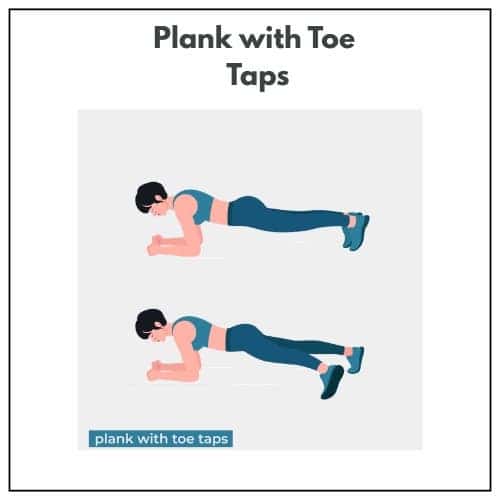
How to do it:
- Start in a high plank position with your hands directly under your shoulders.
- Keep your body in a straight line from head to heels and engage your core.
- Slowly tap one foot out to the side, then return it to the starting position.
- Repeat with the opposite foot while keeping your hips as stable as possible.
Tip: If you can’t keep your hips stable, reduce the speed or widen your stance for better balance.
Bird Dogs
Bird dogs help improve balance, coordination, and overall core engagement.
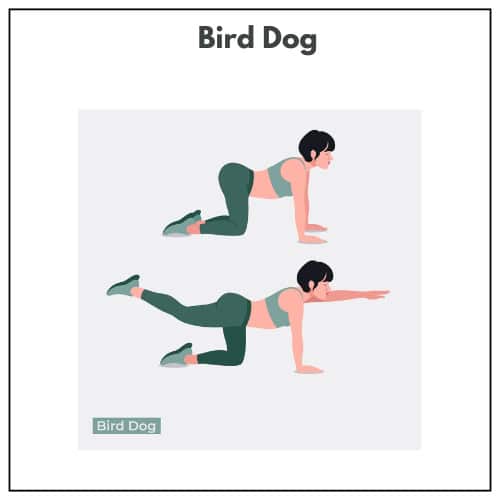
How to do it:
- Start on your hands and knees with your back flat and your core engaged.
- Extend one arm straight in front of you while extending the opposite leg behind you.
- Keep your hips level and avoid rotating your torso.
- Pause briefly, then return to the starting position and repeat on the other side.
Tip: Reach long through your fingertips and heel rather than lifting your arm and leg as high as possible.
Reverse Crunches
Reverse crunches can effectively target the lower abdominal muscles while reducing strain on the neck.
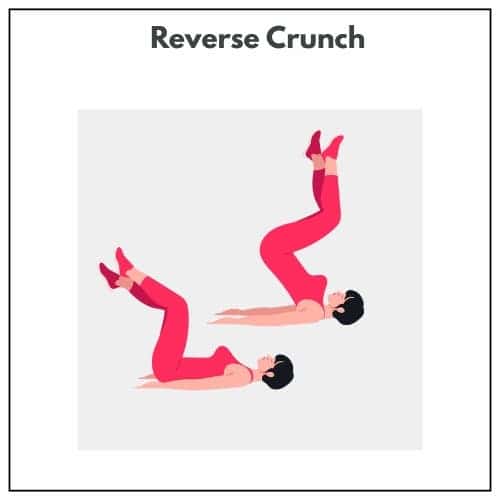
How to do it:
- Lie on your back with your knees bent and feet lifted off the floor.
- Place your arms by your sides for support.
- Use your abdominal muscles to curl your hips slightly off the ground and bring your knees toward your chest.
- Slowly lower back to the starting position with control.
Tip: If you feel discomfort in your lower back, place your hands under your hips for extra support.
Leg Raises
Leg raises challenge the lower portion of the abdominal area and help build core strength.
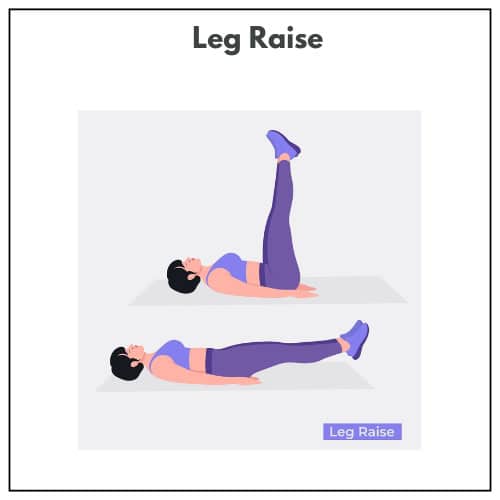
How to do it:
- Lie flat on your back with your legs extended and your hands by your sides or under your hips.
- Keep your core engaged and slowly raise your legs toward the ceiling.
- Pause briefly at the top of the movement.
- Lower your legs slowly without allowing your lower back to lift off the floor.
Tip: Only lower your legs as far as you can while keeping your lower back pressed into the floor. If your back starts to arch, reduce the range of motion and build up gradually.
Remember: these exercises build muscle underneath the fat. Fat loss mainly comes from nutrition and your overall activity level.
4. Walk More Than You Think You Need To
Walking is one of the most overlooked tools for reducing body fat. Many people put all their attention on intense workouts while ignoring daily movement.
According to the CDC, regular physical activity—including brisk walking—can contribute to calorie expenditure and support long-term weight management.
Research shows that walking can:
- Increase daily physical activity
- Improve mental well-being
- Help reduce the risk of type 2 diabetes
- Support healthy aging
- Promote long-term health and longevity
Try aiming for:
- 8,000–12,000 steps per day
- A short walk after meals
- Consistent movement throughout the day
These simple habits can add up and make a surprisingly big difference over time.
5. Manage Stress Levels
Stress can have a major impact on fat storage, especially around the abdominal area. When stress stays high for extended periods, your body produces more cortisol.
Studies indicate that chronic stress and prolonged elevation of cortisol are associated with increased abdominal fat accumulation and alterations in appetite regulation.
High cortisol levels may contribute to:
- Increased appetite
- Cravings for sugary foods
- Fat storage around the midsection
- Poor sleep quality
Simple stress-management techniques include:
- Walking outdoors
- Meditation
- Deep breathing exercises
- Journaling
- Yoga
- Spending time with friends and family
You don’t have to eliminate stress completely. The goal is to develop healthier ways to manage it.
6. Improve Your Sleep
Sleep is one of the most overlooked factors when it comes to weight loss. But if you’re not getting enough quality sleep, losing body fat can become much more difficult.
Research consistently shows that poor sleep can affect hunger hormones and increase cravings.
Research suggests that insufficient sleep can alter hormones involved in hunger and satiety, potentially increasing appetite and calorie intake.
Aim for:
- 7–9 hours of sleep per night
- Consistent sleep and wake times
- Limited screen use before bed
- A cool, dark sleeping environment
Many people notice better appetite control and higher energy levels after improving their sleep habits.
7. Reduce Bloating
Sometimes what appears to be a lower belly pooch isn’t actually body fat at all.
Bloating can cause temporary fullness in the abdomen and make the lower stomach look larger than it really is.
Research suggests that bloating and abdominal distension are common gastrointestinal symptoms that can temporarily increase abdominal girth even without changes in body fat.
Common causes include:
- Eating too quickly
- Excess sodium
- Carbonated beverages
- Food intolerances
- Constipation
- Dehydration
To reduce bloating:
- Drink enough water
- Eat slowly
- Increase fiber gradually
- Identify trigger foods
- Stay physically active
Addressing bloating can help your stomach look noticeably flatter, even before significant fat loss occurs.
8. Pay Attention to Your Posture
Poor posture may make the lower abdomen appear more prominent.
Research suggest that anterior pelvic tilt can alter body alignment and may make the abdomen appear more prominent, even when body fat has not changed.
Common posture issues include:
- Anterior pelvic tilt
- Rounded shoulders
- Weak core muscles
- Tight hip flexors
Improving posture may help your stomach appear flatter.
Helpful exercises include:
- Glute bridges
- Hip flexor stretches
- Plank with toe taps
- Bird dogs
- Wall posture drills
These exercises may help improve posture and core stability.
9. Be Realistic About Genetics
One of the most important things to remember is that everyone stores body fat differently.
Some people naturally carry more fat in:
- The hips
- The thighs
- The arms
- The lower abdomen
This is largely influenced by genetics.
Research indicates that genetics play a significant role in determining where the body stores fat, including abdominal fat distribution.
Comparing yourself to influencers or celebrities can create unrealistic expectations, especially since many photos are edited, carefully posed, or taken under ideal lighting.
Focus on becoming healthier and stronger rather than chasing perfection.
10. Support Your Gut Health
If your lower belly seems to change throughout the day, digestion could be part of the reason.
Many people notice their stomach looks relatively flat in the morning but becomes more bloated or distended by the evening. In these situations, gut health and bloating may be contributing factors.
Research suggests that alterations in gut microbiota are associated with bloating and other digestive symptoms, highlighting the importance of gut health in gastrointestinal comfort.
To support digestive health:
- Eat fiber-rich foods such as fruits, vegetables, legumes, and whole grains
- Stay hydrated throughout the day
- Eat meals slowly and chew thoroughly
- Include fermented foods like yogurt, kefir, sauerkraut, and kimchi if tolerated
- Move your body regularly
- Identify foods that consistently trigger bloating
- Manage stress, which can directly affect digestion
Improving gut health won’t magically eliminate lower belly fat, but it can reduce bloating and help your stomach look and feel flatter.
My personal experience
One of the biggest improvements I personally noticed came when I started making my own Specific Carbohydrate Diet (SCD) yogurt at home.
I use a Luvele yogurt maker and ferment the yogurt for 24 hours, which removes most of the lactose and allows beneficial bacteria to multiply.
editor’s pick

Luvele Pure Yogurt Maker
Make thick, probiotic-rich yogurt at home with even heat and reliable results every time.
*We may earn a commission at no extra cost to you.
After regularly including it in my diet, I couldn’t believe how much my belly changed. The “mush-mush” around my belly was finally gone.
Of course, this was simply my personal experience, and I can’t guarantee the same results for everyone. But if bloating or digestive issues contribute to your lower belly pooch, supporting your gut health may be worth exploring.
I use the smaller Luvele yogurt maker myself, but if you’re making yogurt for a larger family or want to make kefir as well, the Luvele Pure Plus Yogurt Maker (2L glass container) may be worth considering.
great pick

Luvele Pure Plus Yogurt Maker
Create thick, probiotic-rich yogurt or fresh kefir with precise heat and consistently smooth results.
*We may earn a commission at no extra cost to you.
Curious about the Luvele Pure Yogurt Maker?
Check out our full review here for all the details!
What Doesn’t Work for Lower Belly Fat?
If you’re trying to reduce a lower belly pooch, be careful with claims that sound too good to be true.
Common myths include:
- Spot-reduction exercises
- Detox teas
- Fat-burning wraps
- Waist trainers
- Miracle supplements
- Extreme crash diets
While some of these products may create temporary changes, none of them address the underlying causes of a lower belly pooch.
What Actually Works for a Lower Belly Pooch
If you’re wondering how to get rid of a lower belly pooch, the solution isn’t a single exercise, food, or supplement.
What actually works is a combination of:
- Sustainable fat loss
- Strength training
- Core strengthening exercises
- Daily movement
- Better sleep
- Stress management
- Reduced bloating
- Improved posture
- Healthy gut
Most importantly, be patient.
The lower belly is often one of the last areas of the body to change, but consistent healthy habits can lead to significant improvements over time.
Instead of looking for quick fixes, focus on building habits and routines you can maintain for months and years. That’s where long-term results come from.
Final Thoughts
If you’ve been struggling with a lower belly pooch, it’s completely understandable to feel frustrated—especially when it seems like nothing is making a difference.
The reality is that there isn’t one single cause or one magic solution.
For some people, a lower belly pooch is mostly related to body fat. For others, factors such as bloating, gut health, posture, hormones, stress, sleep, or genetics may play a role.
That’s why the most effective approach is to focus on your overall health instead of searching for a quick fix.
Small, consistent habits often produce the best results.
Eating nutritious foods, strength training regularly, staying active throughout the day, getting enough sleep, managing stress, and supporting your digestive health can all contribute to a stronger, healthier body over time.
Most importantly, remember that progress takes time. The lower belly is often one of the last areas to change, and having some fullness in this area is completely normal.
Instead of striving for perfection, focus on becoming stronger, healthier, and more confident in your body. The habits you build today will have a much greater impact than any short-term diet or trendy workout ever could.
Be patient with yourself, stay consistent, and trust the process. Real, lasting results come from the habits you can stick with for the long run.
*This article is for informational purposes only and is not intended as medical advice. It should not be used to diagnose, treat, or prevent any health condition. Always consult a qualified healthcare professional before making any changes to your diet, exercise, or health routine.
Crucillà, Salvatore et al. “Functional Abdominal Bloating and Gut Microbiota: An Update.” Microorganisms vol. 12,8 1669. 14 Aug. 2024, doi:10.3390/microorganisms12081669. Adapted and used under the terms of the Creative Commons Attribution 4.0 International License.
"Getting It Straight: Improve Your Posture for Better Health." NIH News in Health, Aug. 2017, https://newsinhealth.nih.gov/2017/08/getting-it-straight. Accessed 12 June 2026.
Lacy, Brian E et al. “Management of Chronic Abdominal Distension and Bloating.” Clinical gastroenterology and hepatology : the official clinical practice journal of the American Gastroenterological Association vol. 19,2 (2021): 219-231.e1. doi:10.1016/j.cgh.2020.03.056.
Liu, Shuailing et al. “Sleep Deprivation and Central Appetite Regulation.” Nutrients vol. 14,24 5196. 7 Dec. 2022, doi:10.3390/nu14245196. Adapted and used under the terms of the Creative Commons Attribution 4.0 International License.
Ramirez-Campillo, Rodrigo et al. "A proposed model to test the hypothesis of exercise-induced localized fat reduction (spot reduction), including a systematic review with meta-analysis." Human Movement, vol. 23, no. 3, 2022, pp. 1–14. doi:10.5114/hm.2022.110373.
Sancho-Haro, Edgar, et al. "Optimizing Weight Loss in the GLP-1 Era: Preserving Muscle Mass, Function and Metabolic Health Through Precision Nutrition and Resistance Training." Pharmaceuticals, vol. 19, no. 6, 2026, p. 897. https://doi.org/10.3390/ph19060897. Adapted and used under the terms of the Creative Commons Attribution 4.0 International License.
Sun, Chang et al. “Genetics of Body Fat Distribution: Comparative Analyses in Populations with European, Asian and African Ancestries.” Genes vol. 12,6 841. 29 May. 2021, doi:10.3390/genes12060841. Adapted and used under the terms of the Creative Commons Attribution 4.0 International License.
Ungvari, Zoltan et al. “The multifaceted benefits of walking for healthy aging: from Blue Zones to molecular mechanisms.” GeroScience vol. 45,6 (2023): 3211-3239. doi:10.1007/s11357-023-00873-8. Adapted and used under the terms of the Creative Commons Attribution 4.0 International License.
Xiao, Yang et al. “Chronic stress, epigenetics, and adipose tissue metabolism in the obese state.” Nutrition & metabolism vol. 17 88. 19 Oct. 2020, doi:10.1186/s12986-020-00513-4. Adapted and used under the terms of the Creative Commons Attribution 4.0 International License.

Linda is the co-founder of Courier Wellness and holds a Diploma in Natural Health Nutrition & Diet. Her passions include photography, food, and travel, where she derives inspiration from diverse cultures and their holistic approaches to well-being. She is committed to helping others make informed, nourishing choices for a healthier life.