Homemade Chicken Stock: A Classic Comfort in a Pot
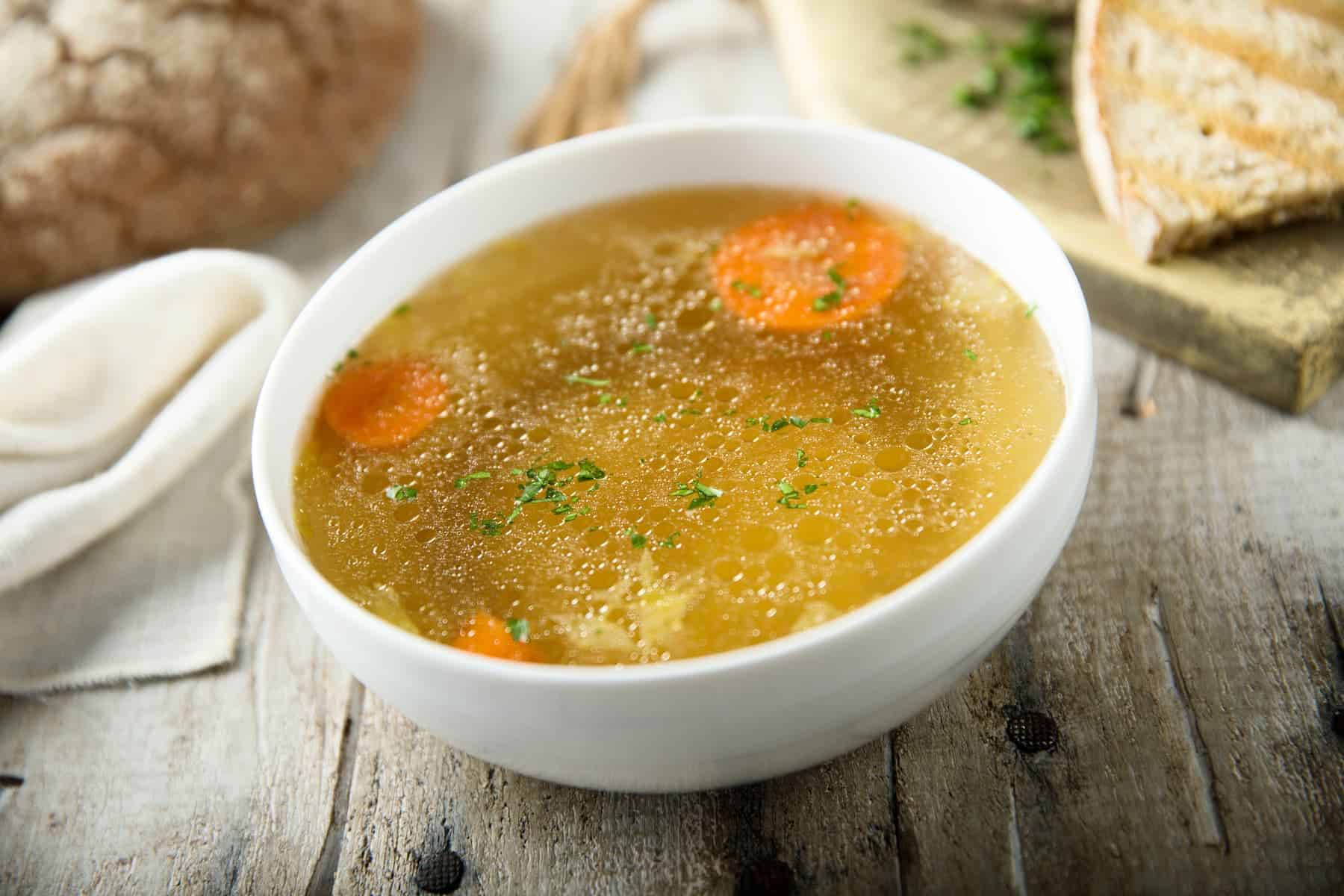
Few things can warm the soul and nourish the body quite like homemade chicken stock.
Bursting with rich flavor and wholesome goodness, it can enhance the taste of everyday recipes, and is a must-have in any kitchen, whether you’re a seasoned chef or an avid home cook.
Use it as a perfect foundation for soups, sauces, and stews, or simply savor it as a nourishing beverage on its own.
While preparing chicken stock may require some time, the process is relatively straightforward. The rich and savory flavor it imparts to dishes makes the effort well worth it.
Plan to whip up a batch whenever you find yourself with a little extra time, and elevate the taste of your culinary creations.
Why Should You Make Your Own Chicken Stock?
Chicken stock is a delicious source of nutrients and collagen. Since it’s made by simmering chicken bones, it facilitates the release of calcium, magnesium, and other micronutrients into the liquid, enhancing their digestibility and promoting bone health and improved sleep.
Additionally, the transformation of collagen into gelatin yields numerous amino acids that may help:
- Strengthen the immune system and reduce inflammation
- Support joint health and alleviate arthritis-related discomfort
- Aid in digestion and maintain a healthy gut lining
- Improve skin elasticity and reduce the appearance of wrinkles
- Contribute to robust bone health
- Assist in weight management by promoting a feeling of fullness
- Enhance sleep quality and reduce daytime fatigue
What Is the Difference Between Chicken Stock and Chicken Broth?
|
Chicken Broth |
Chicken Stock |
|
|
Main Ingredients |
Primarily meat, possibly with bones |
Higher proportion of bones |
|
Seasoning |
Salt is used |
No salt |
|
Cooking Time |
Shorter cooking time |
Longer simmering time |
|
Consistency |
Thinner liquid |
Thicker liquid |
|
Usage |
Adds flavor to soups and can be used instead of water in stews for example |
Forms a rich base for soups, sauces, stews, etc. |
Tips for Success
1. Use Quality Ingredients
Consider using good quality ingredients for your stock. The better the quality, the more nutritious and tasty the stock will be.
2. Use Cold Water
When preparing your stock, begin with cold water. Research indicates that boiling certain vegetables may heavily reduce the concentration of phenolic compounds and antioxidant activity.
Phenolic compounds in plants are crucial for various activities such as anti-aging, anti-inflammatory benefits, and managing oxidative stress, which is known to contribute to skin aging.
3. Avoid Boiling the Stock
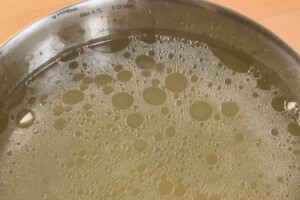
While simmering chicken stock, impurities may rise to the surface as foam. Boiling the stock can cause these impurities to dissolve and blend into the liquid, resulting in a murky and greasy consistency.
Keeping the stock at a simmer helps maintain its clarity and ensures a cleaner, more flavorful end product.
4. Skim Impurities
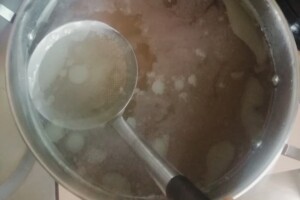
During the cooking process, impurities will form a foam layer on the surface of your stock. Regularly skimming this foam is essential to prevent it from settling back into the liquid, ensuring a clear and flavorful stock.
Neglecting this step could result in a stock that is cloudy and greasy.
5. Avoid Adding Salt
Because your stock will be used as a base for various dishes, it’s best to delay the seasoning process until later. This approach allows for better control over the overall salt content, ensuring that the stock complements the flavors of different recipes without overpowering them.
6. Strain the Stock
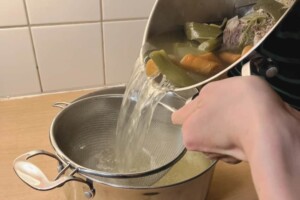
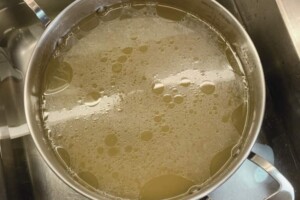
After the cooking process, straining the stock is essential to remove any solid particles. This will result in a smooth, clear, and visually appealing liquid that enhances the overall quality of your dishes.
7. Let it Cool Quickly
It’s crucial to allow your stock to cool swiftly before refrigerating it to minimize the risk of bacterial contamination. To speed up the cooling process, you can place the pot on top of something (an overturned bowl for example) in the sink, creating an elevated position, and fill the sink with ice cubes and cold water.
8. Skim Off the Fat Layer
Once the stock has been refrigerated, skim off the solidified fat layer that has accumulated on the surface.
9. Store Properly
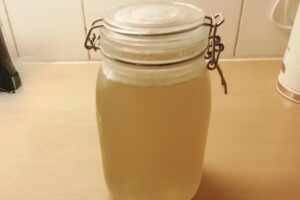
Preserve your homemade chicken stock in airtight containers or freezer-safe bags to maintain its freshness and flavor. Refrigerate the stock for up to 2 days, or freeze it for longer storage, with a recommended duration of up to 6 months.

Chicken Stock
Equipment
- Large stock pot or Dutch oven
- Fine mesh skimming tool (to skim impurities from the stock)
- Colander or sieve lined with cheesecloth (to strain the stock)
- Cheesecloth and string (for Bouquet garni)
- Ladle or large spoon (to transfer stock to containers or freezer bags)
- Airtight containers, freezer bags
Ingredients
- 1 chicken carcass
- 1 carrot
- 1 leek
- 3-4 ribs of celery
- 1 onion
- 3-4 cloves of garlic
- 10 cups cold water
- 1 bouquet garni
Bouquet garni
- 15 black peppercorns (or approximately 2 tsp)
- 1 bay leaf
- a couple of fresh thyme sprigs
- a handful of fresh parsley stems
- 3 cloves
Instructions
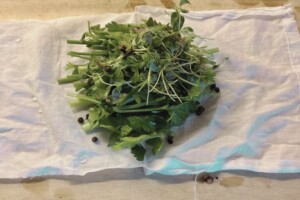
- Prepare the Bouquet garni by wrapping fresh thyme sprigs, parsley stems, bay leaf, black peppercorns, and cloves in a piece of cheesecloth. Secure the bundle by tying it with kitchen twine or by hand, creating a pouch.If you don't have cheesecloth, you can simply add the fresh thyme sprigs, parsley stems, bay leaf, black peppercorns, and cloves directly into the stock pot. You can strain them out later using a fine mesh strainer before serving.

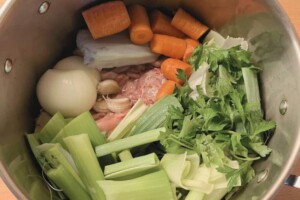
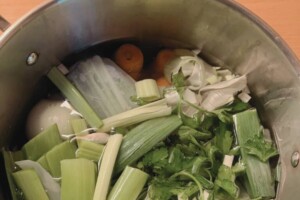
- Roughly chop the carrot, leek, celery, and onion, and gently crush the unpeeled garlic cloves before placing them in a large stock pot or Dutch oven. Add the chicken carcass and bouquet garni (or all the ingredients for the bouquet garni directly) to the pot.
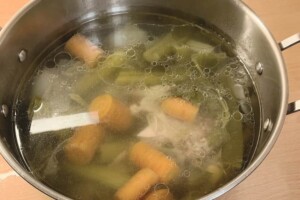
- Add 10 cups of cold water into the pot and place it on the stove over medium heat. Once it's at the point of boiling, lower the heat to medium-low and simmer for 3 hours.
- During the simmering process, use a fine mesh skimming tool to remove any impurities that form on the surface of the stock. This may need to be done multiple times, particularly at the beginning of the cooking process.
- Ensure the ingredients remain submerged in water at all times by monitoring the water level during the cooking process.
- After the simmering process is complete, use a colander or sieve lined with cheesecloth to strain the stock into a large container. Discard the remaining solid ingredients.If you do not have a cheesecloth for straining, you can use a fine mesh strainer or a slotted spoon to remove the solid ingredients from the stock. Be cautious to preserve as much of the liquid as possible during the straining process.
- Allow the stock to cool completely, taking care not to let it sit out for more than 2 hours to prevent contamination. For faster cooling, place the container in your sink, elevating it by putting it on top of something, and fill the sink with ice cubes and cold water.
- Refrigerate the stock immediately once it has cooled. After a few hours or overnight, remove the layer of fat that has formed on the top.
- You can store the stock in an airtight container in the refrigerator for up to 2 days, or transfer it into freezer bags and keep it in the freezer for up to 6 months.
Nutrition Per Serving Serving Size 1 cup / Calories 12 / Protein 1 g / Carbohydrate 1 g / Dietary Fiber 0.9 g / Total Sugars 0.9 g / Total Fat 1 g / Saturated Fat 0.3 g / Cholesterol 0 mg / Sodium 0 mg
*Please note that nutritional values are estimated using USDA database to calculate approximate values and should be considered approximate.
Sharples, Lisa. “Chicken Broth: Important Facts, Health Benefits, and Recipes.” Relish,6 December 2023, https://www.relish.com/food-wiki/153796/chicken-broth-important-facts-health-benefits-and-recipes. Accessed 3 November 2023.

Malin, the co-founder of Courier Wellness, is well-informed in nutrition and health and brings her own unique perspective to the world of holistic wellness. With a passion for writing and a deep interest in wellbeing, she wants to create content that fosters balance and nourishment for the mind and body.