
Sauerkraut
This sauerkraut recipe guides you through the process of fermenting cabbage with salt to create a tangy, probiotic-rich condiment. With just a few ingredients and some patience, you can enjoy homemade sauerkraut that's both delicious and great for gut health.
Equipment
- A large mixing bowl
- A knife, a mandoline slicer, or a cabbage slicer
- A wooden pounder, a tamper, or potato masher
- A quart-sized, wide-mouth glass jar with a lid
- A weight (small glass or plastic jar filled with water or a purpose-made fermentation weight)
- A clean cloth or paper towel
- A rubber band or string
Ingredients
- 3 pounds cabbage
- 2 tbsp salt (non-iodized, such as sea salt, kosher salt, and Himalayan pink salt)
- 1-2 tbsp caraway seeds (optional)
- 1-2 tsp juniper berries (optional)
- 2-4 cloves garlic (optional)
- 1/2-1 tsp red pepper flakes (optional)
Instructions
- Discard any outer cabbage leaves that appear wilted or damaged. Keep a few of these leaves aside for later use.
- Quarter the cabbage and eliminate the core.
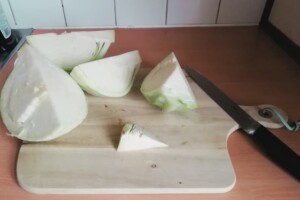
- Using a knife, mandoline slicer, or cabbage slicer, finely shred the cabbage to your desired thickness, whether you prefer thin or thick shreds.
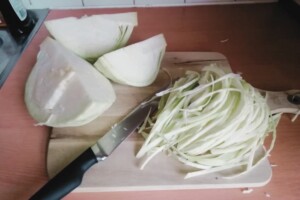
- In a large mixing bowl, place the shredded pre-washed cabbage.
- Sprinkle 2 tablespoons of non-iodized salt over the cabbage.
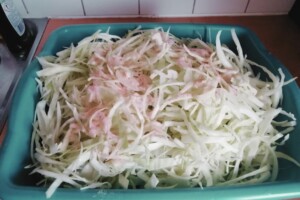
- Optional: Add flavorings like caraway seeds, juniper berries, garlic, or red pepper flakes to the cabbage for added depth of flavor.
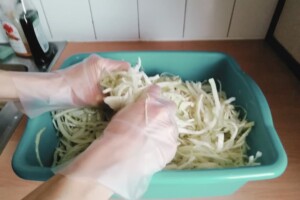
- After you put salt in the cabbage, mix it through with your hands so the whole cabbage has been mixed in with the salt. Then cover it with a lid and let it sit for at least 15 – 20 minutes to allow the salt to draw out some of the cabbage juice naturally. As the cabbage sweats, it becomes softer and more pliable, which makes it easier to massage and knead.
- Using clean hands, massage and knead the cabbage and salt together for about 5-10 minutes. The cabbage will start to release its natural juices and become softer.
- Transfer the cabbage mixture to a quart-sized, wide-mouth glass jar, a little at a time, pressing it down with a wooden pounder or a tamper after each addition. I like to use a clean potato masher to gently press down on the cabbage as I fill the jar. This helps compact the cabbage and release any remaining air bubbles.
- Fill the jar up to approximately two-thirds of its capacity, as the cabbage may produce bubbles during fermentation, potentially causing overflow if the jar is too full.
- Place a clean, intact cabbage leaf over the cabbage in the jar to help keep it submerged.
- Place a weight (a small glass or plastic jar filled with water or a purpose-made fermentation weight) on top of the cabbage leaf.
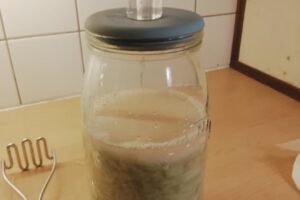
- Cover the jar with a clean cloth or paper towel and secure it with a rubber band or string. This allows gas to escape during fermentation while keeping out contaminants.
- Store the jar in a cool, dark place for fermentation. The ideal temperature range is around 65-75°F (18-24°C).
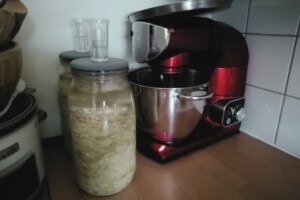
- Allow the sauerkraut to ferment for 1-4 weeks, depending on your taste preference. Taste it periodically until it reaches the desired level of tanginess. The longer it ferments, the tangier it will become.
- Once your sauerkraut has reached your preferred level of fermentation, remove the weight and the cabbage leaf.
- Seal the jar with a lid and transfer it to the refrigerator for long-term storage. The cold temperature will slow down the fermentation process.
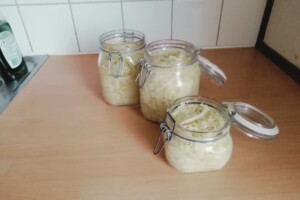
- Homemade sauerkraut can last for several months in the refrigerator.
Notes
This sauerkraut recipe provides step-by-step instructions for fermenting cabbage with salt, resulting in a tangy, probiotic-rich condiment. Be sure to use fresh cabbage and non-iodized salt for best results.
Additionally, keep in mind that the fermentation process may take anywhere from one to four weeks, depending on your desired level of tanginess. Patience is key for achieving the perfect homemade sauerkraut that's not only delicious but also excellent for gut health.