How to Read Food Labels and Avoid Ultra-Processed Foods

This post contains affiliate links, which means we may earn a commission if you purchase through our links—at no extra cost to you. As an Amazon Associate we earn from qualifying purchases. We only recommend products we use or trust. Learn more about affiliate marketing or read our full disclosure.
Let’s be honest—reading food labels can be downright confusing. Between the tiny print, weird ingredient names, and flashy marketing claims, it’s easy to feel overwhelmed.
But once you know what to look for, those labels become a powerful tool.
You’ll spot hidden sugars, steer clear of additives, and make choices that help you stay away from the ultra-processed stuff your body doesn’t need.
In this guide, I’ll break down the basics of reading food labels—so you can shop smarter, eat better, and avoid the worst offenders hiding in plain sight.
Ready to crack the code on your food? Let’s get into it.
The Shocking Truth: Ultra-Processed Foods Are Practically Everywhere
Have you ever stopped to think about how much ultra-processed food winds up in your cart—or on your plate?
Brace yourself: a 2023 study in Nature Communications found that over 73% of the U.S. food supply is ultra-processed.
And fresh, whole foods? Just 7%.
No wonder so many people are dealing with chronic conditions like obesity, heart disease, and type 2 diabetes.
When ultra-processed foods take over your diet, they don’t just push out nutrients—they actively work against your health.
The good news?
Reading food labels can change everything. With just a little know-how, you can:
- Spot hidden sugars, additives, and preservatives
- See through those sneaky “health halo” claims
- Understand what’s really in your food
- Cut back on ultra-processed stuff—without second-guessing every choice
Awareness is power. And once you know what to look for, your grocery cart starts to look a whole lot healthier.
How to Decode Food Labels and Ingredient Lists
Let’s be real—reading food labels can feel like trying to decode a foreign language. But once you know what to look for, they go from confusing to empowering.
That little label?
It can help you make smarter choices, avoid ultra-processed junk, and take charge of what you’re putting in your body.
So let’s break it down together—step by step.
We’ll use a frozen lasagna as our example. (Sure, it’s not the healthiest thing on the shelf, but it’s packed with lessons on what to watch for.)
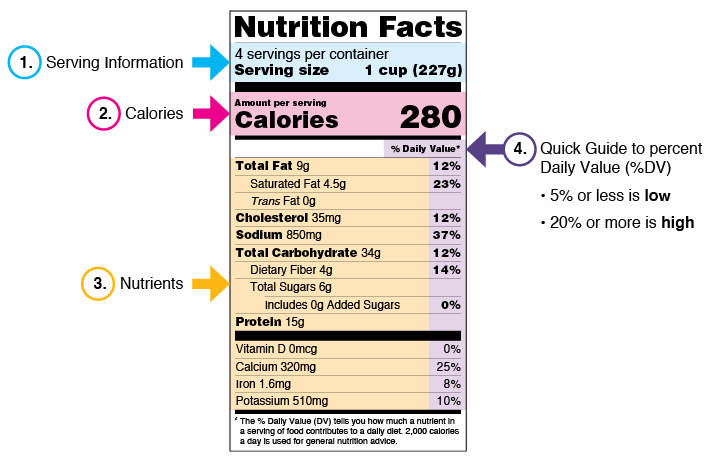
Sample Nutrition Facts Label for frozen lasagna
Source: U.S. Food and Drug Administration
When you start reading food labels and ingredient lists, here’s what to focus on:
1. Understand the Serving Information
Think of the serving info as your roadmap—it shows you how much you’re actually eating.
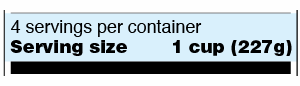
On every Nutrition Facts label, you’ll find two key numbers:
- Servings per container – This tells you how many servings are in the whole package.
- Serving size – This is what one serving looks like.
Frozen lasagna example:
- One serving: 1 cup (227g)
- Two servings: 2 cups (454g)
- Three servings: 3 cups (681g)
- Four servings (whole thing): 4 cups (908g)
Why it matters:
- Serving sizes aren’t one-size fit-all. Serving sizes are based on what’s typical, not necessarily what you should eat. Your portion might be more or less depending on your age, activity level, or personal health goals.
- They’re designed for comparison. Standardized serving sizes (like 1 cup of cereal or 2 tbsp of peanut butter) make it easier to compare products side by side—even if the packages are totally different.
- You’re the boss of your portions. That serving size on the label? Just a suggestion. If you’re really hungry, eat more. If you’re full, save the rest. Use it as a guide—not a rule.
Being mindful of serving sizes is the first step in making smarter food choices—and a big help in avoiding ultra-processed foods that sneak in more than you bargained for.
2. Adjust Calories to Match What You Actually Eat
Calories on a food label are for one serving—not the whole package. So if you eat double the serving size, yep… you’re doubling the calories too.
Calories come from:
- Carbohydrates
- Fats
- Proteins
- Alcohol
So, how many calories should you be eating in a day?
Here’s a quick look at the Dietary Guidelines for Americans (for moderately active adults):
|
Age Group |
Daily Calories for Women |
|
19-30 |
2,000-2,200 |
|
31-50 |
2,000 |
|
51+ |
1,800 |
Note: These are just general guidelines. Your needs might be higher or lower based on your lifestyle, activity level, health goals, or even your metabolism.
Once you have a ballpark idea of your daily needs, reading food labels becomes a lot more meaningful.
Here’s what to keep in mind:
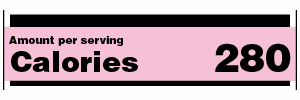
- Don’t just glance at calories per serving. One serving of lasagna might be 280 calories—but if you eat two servings, you’re at 560. Always do the math based on how much you actually eat.
- Think about your full-day intake. If your daily target is 2,000 calories, a single 1,600-calorie meal leaves very little room for the rest of the day. Aim to spread calories across meals so you stay fueled and balanced.
- Not all calories are created equal. A 300-calorie bag of chips and a 300-calorie salad with avocado might have the same number of calories, but one is ultra-processed with mostly empty calories, while the other is full of fiber, healthy fats, and essential nutrients that actually support your health.
So, don’t just focus on the number of calories in a food—focus on the quality of those calories. This will help you avoid ultra-processed foods in your diet.
RELATED POST: How to Create a Healthy Relationship with Food
3. Know Your Fats
Fat often gets a bad reputation, but the truth is that your body needs it!
Fats provide energy, support your nervous and immune systems, and help your body absorb vital vitamins like A, D, E, and K.
But not all fats are created equal. The key is knowing which fats to welcome—and which to steer clear of.
Here are types of fats listed on food labels:
- Trans Fat (avoid!): Found in packaged snacks, margarine, friend foods. It raises bad (LDL) cholesterol, increases heart disease risk—even in small amounts.
- Saturated Fat (limit): Found in butter, cheese, red meat, coconut oil. Can raise LDL cholesterol and increase risk of heart disease.
- Monounsaturated Fat (good): Found in olive oil, avocados, nuts, seeds. Helps lower LDL (“bad”) cholesterol and supports heart and brain health.
- Polyunsaturated Fat (good): Found in fatty fish, flaxseed, walnuts, sunflower seeds. Contains omega-3s, reduces inflammation, supports overall health.
Sometimes, figuring out the fat numbers on food labels can feel a little confusing. But don’t worry—we’ll break it down together using our frozen lasagna example.
What if the numbers don’t add up?
The frozen lasagna contains:
- Total fat: 9g
- Saturated fat: 4.5g
- Trans fat: 0g
So…what happened to the other 4.5g?
Those are likely monounsaturated and polyunsaturated fats—the healthy ones! They’re included in the total fat but not always listed separately.
What about % Daily Value?
You might also notice that total fat is 12% DV for frozen lasagna while saturated fat is 23%.
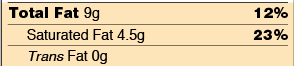
Why does saturated fat have higher %DV when it’s lower than total fat?
Here’s why:
You’re encouraged to get up to 78g of total fat per day (on a 2,000-calorie diet), but only about 20g of that should come from saturated fat.
That means even a small amount—like 4.5g—can quickly eat up a big chunk of your daily saturated fat limit. That’s why the %DV looks so much higher.
Smarter Fat Choices: Olive Oils we Recommend
- Oro Bailen Reserva Familiar Picual (award-winning): Made in Andalusia from 100% Picual olives, this extra virgin olive oil is mild and balanced with soft fruitiness and a hint of almond. Great for everyday use — salads, veggies, soups, and pasta. Kosher-certified and beautifully made.

Oro Bailen Reserva Familiar Picual
- Quattrociocchi Superbo Organic (healthiest): A high-quality organic olive oil from Lazio, Italy. Artisan-pressed with a smooth, fruity flavor and gentle peppery finish. Perfect for finishing dishes like salads, grilled vegetables, seafood, pasta, or fresh bread.

Quattrociocchi Superbo Organic
- Entelia Extra Virgin Olive Oil from Crete (best everyday value): Versatile, balanced, and easy to use for both cooking and drizzling. This PGI-certified olive oil from Crete has medium intensity, fruity notes, and a gentle peppery finish. Great for sautéing, roasting, salads, or dipping bread.

Entelia 5L Tin
Choosing the right fats (mono and poly) doesn’t just support your health—it helps you avoid ultra-processed foods, which are packed with the wrong kinds of fat.
RELATED POST: The Amazing Health Benefits of Olive Oil
4. Keep Track of Your Cholesterol Intake
Cholesterol often gets a bad rap—but it plays an important role in your body. It helps build cells and produce hormones.
That said, too much cholesterol, especially from food, can raise your risk of heart disease.
Your liver already makes all the cholesterol your body needs. The rest comes from dietary cholesterol, which is found only in animal products—things like meat, eggs, full-fat dairy, and butter.
Eating too much of these foods too often can raise blood cholesterol levels, especially when combined with a diet high in saturated and trans fats.
Key tips:
- Stick to the Recommended Limit. The general recommendation is to stay under 300mg of cholesterol per day—even less if you have heart concerns or high cholesterol levels.
- Make smart swaps. Choose lean meats, plant-based proteins, and low-fat dairy to cut back on cholesterol and avoid ultra-processed foods loaded with unhealthy fats.

Frozen lasagna example:
- One serving: 35mg of cholesterol
- %DV: 12% (on a 2,000-calorie diet)
Not terrible on its own, but it adds up fast when other meals include similar amounts.
5. Take Note of the Sodium Content
Many people think salt and sodium are the same thing—but they’re not.
Table salt (sodium chloride) is a crystal-like compound made up of two elements: sodium and chloride. Sodium, on its own, is a mineral—and one that plays a crucial role in how our bodies function.
But here’s the catch: while sodium is essential, too much of it can be harmful.
The Dietary Guidelines for Americans recommend that adults consume less than 2,300 milligrams of sodium per day. That’s about one teaspoon of table salt—and it adds up quickly.

Frozen lasagna example:
- One serving: 850mg of sodium
- %DV: 37% in just one portion!
If you eat two servings, you’re already at 74% of your daily limit!
Here are some key points to keep in mind:
- Too much sodium = serious health risks. High sodium intake is linked to high blood pressure, heart disease, and stroke.
- Ultra-processed foods are sodium bombs. Food companies use sodium for flavor and as a preservative—so packaged and processed foods tend to be loaded with it.
- Home-cooked = more control. When you cook at home, you decide how much salt goes in. It’s one of the best ways to cut back without sacrificing flavor.
- Don’t ditch sodium completely. Sodium is an essential nutrient. Your body still needs it—just be mindful about where it’s coming from and how much you’re getting.
6. Look for Healthy Carbs
Let’s be honest—life without carbs sounds pretty bleak.
But here’s the thing: not all carbs are created equal. Some give you energy, keep you full, and support digestion. Others spike your blood sugar and leave you crashing soon after.
So, what type of carbs are included in Total Carbohydrate?
Let’s break it down:
Dietary Fat:
- What it does: Keeps you full, supports digestion, lowers cholesterol.
- Found in: Whole grains, fruits, vegetables, legumes, seeds
- Daily goal: 28g (for a 2,000-calorie diet)
Total sugars:
- What it does: Gives you nutrients, fiber, and protein.
- Found in: Fruit, veggies, dairy
- Daily goal: No set limit—but choose natural over added
Added Sugars:
- What it does: Provide empty calories, spike blood sugar
- Found in: Candy, soda, processed snacks
- Daily goal: Under 50g per day (preferably lower)
Sugar alcohols:
- What it does: Lower-calorie sugar substitutes; may cause bloating
- Found in: Sugar-free gum, protein bars
- Daily goal: No set limit—consume in moderation
how to make sense of total carbohydrate:
When it comes to carbs, the numbers on the label don’t always add up in an obvious way.
- Starches aren’t listed separately. Total carbohydrate is often higher than the sum of sugars and fiber. That’s because it also includes starches, which are complex carbs found in things like potatoes, pasta, and grains.
Note: The FDA doesn’t require starches to be listed on nutrition labels.
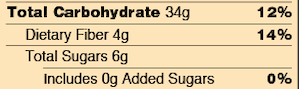
Frozen lasagna example:
- One serving: 4 grams of dietary fiber, 6 grams of total sugars, and 0 grams of added sugars (total: 10 grams).
- Total carbohydrate (on frozen lasagna food label): 34 grams
The remaining 24 grams likely comes from starches, even though they’re not listed on the food label.
Tips:
- Focus on high-fiber foods. They keep you full and support gut health. Watch out for added sugars, especially in ultra-processed foods.
- Be cautious with sugar alcohols. They’re usually in “low-carb” or “sugar-free” products and can upset your stomach.
Once you know what to look for, reading food labels helps you spot hidden sugars and choose carbs that truly fuel your body.
7. Take Note of Sugars in the Ingredients List
Sugar hides in more places than you might think—and it’s not always labeled clearly.
That’s why checking the ingredients list is just as important as reading the nutrition label.
Even if a food says “0 grams added sugar,” it might still contain sugar alcohols or artificial sweeteners. To truly understand what you’re eating, scan the label for all types of sweeteners.
Here’s a quick guide to the common ones:
- Added Sugars. Often found in ultra-processed foods. These spike your blood sugar and add empty calories.
|
Added Sugars |
|
Agave nectar |
|
Barley malt syrup, beet sugar, brown sugar |
|
Caramel, coconut sugar, corn syrup |
|
Dextrin |
|
Evaporated cane juice |
|
Fructose, fruit juice concentrate |
|
Glucose, golden syrup |
|
High-fructose corn syrup, honey |
|
Invert sugar |
|
Maple syrup, Maltodextrin, Maltose, molasses |
|
Rice syrup |
|
Sucrose |
|
Treacle |
RELATED POST: How to Lose Weight by Removing Hidden Sugar
- Sugar Alcohols. Lower in calories than sugar but can cause bloating or digestive issues in some people.
|
Sugar Alcohols |
|
Erythritol |
|
Hydrogenated Starch Hydrolysates (HSH) |
|
Isomalt |
|
Lactitol |
|
Maltitol, Mannitol |
|
Sorbitol |
|
Xylitol |
- Artificial sweeteners. Zero-calorie and intensely sweet—often found in “sugar-free” or “diet” foods.
|
Artificial Sweeteners |
Also Known As |
|
Acesulfame Potassium (Ace-K) |
Sunett, Sweet One |
|
Advantame |
|
|
Aspartame |
Nutrasweet, Equal, Sugar Twin |
|
Monk Fruit Extract |
|
|
Neotame |
Newtame |
|
Saccharin |
Sweet and Low, Sweet Twin, Sweet’N Low, Necta Sweet |
|
Stevia |
|
|
Sucralose |
Splenda |
|
Thaumatin |
8. Pay Attention to Protein Amount and Quality
Protein has become a nutritional buzzword—and for good reason.
It’s essential for building and maintaining muscle, supporting immune function, and helping your body repair tissues.
The recommended intake for protein is modest (46g/day for women and 56g/day for men). However, your needs may be higher if you’re active, pregnant, or recovering from illness.
So, what is protein?
Protein is a complex molecule made up of amino acids, the building blocks of the body. There are 20 amino acids, and 9 of them are essential—meaning your body can’t produce them, so you must get them from food.
Not all protein sources are equal, however.
Here’s a breakdown:
Complete Proteins:
- What it means: Contain all 9 essential amino acids in adequate amounts.
- Examples: Meat, poultry, dairy, eggs, fish, soy
inComplete Proteins:
- What it means: Lack one or more essential amino acids.
- Examples: Most plant foods like beans, nuts, grains.
Complementary Proteins:
- What it means: Two or more incomplete proteins that together provide all essential amino acids.
- Examples: Beans and rice, hummus and pita, peanut butter and whole grain bread.
Source: U.S. Food and Drug Administration

Frozen lasagna example:
- One serving: 15g of protein. Since it includes meat and cheese, it qualifies as a complete protein source.
Keep in mind:
- Watch out for low-quality or incomplete proteins. You can often find them in ultra-processed foods and they may be paired with excess fat, sodium, and additives.
- All proteins are not equal. Just because a food lists “protein” doesn’t mean it’s nourishing.
When possible, choose whole, minimally processed protein sources to make sure you’re getting both quantity and quality.
9. Make Sure the Food Contains Vitamins and Minerals
Healthy foods naturally provide vitamins and minerals. Ultra-processed foods, on the other hand, are often stripped of nutrients—and then “fortified” to appear healthier.
But here’s the thing: if a food has to be “enriched” or “fortified” with nutrients, we should ask—why were those nutrients missing in the first place?
It’s like adding vitamin D to cigarettes and calling them healthy. This won’t change the fact that the product itself is harmful.
The same is true for ultra-processed foods.
Even if the label shows added nutrients, the food lacks the natural nutritional quality of whole foods like fruits, vegetables, legumes, and whole grains.
So, what are vitamins and minerals?
- Vitamins: Organic substances found naturally in foods like fruits, vegetables, nuts, dairy, eggs, and meats.
- Minerals: Inorganic elements found in soil and water. Plants absorb them—and we get them by eating plants and the animals that eat plants.
Why Aren’t All Vitamins and Minerals on the Label?
Nutrition labels are only required to show:
- Vitamin D
- Calcium
- Iron
- Potassium
Other vitamins and minerals can be included—but it’s optional. That means we have to make sure we’re getting the rest through balanced, nutrient-rich foods.
Here are some key vitamins and minerals—and their recommended % Daily Values (based on a 2,000-calorie diet):
Vitamins
|
Vitamins |
%DV |
|---|---|
|
Biotin |
30 mcg |
|
Choline |
550 mg |
|
Folate/Folic Acid |
400 mg DFE |
|
Niacin |
16 mg |
|
Pantothenic Acid |
5 mg |
|
Riboflavin |
1.3 mg |
|
Thiamin |
1.2 mg |
|
Vitamin A |
900 mcg |
|
Vitamin B6 |
1.7 mg |
|
Vitamin B12 |
2.4 mcg |
|
Vitamin C |
90 mg |
|
Vitamin E |
15 mg |
|
Vitamin K |
120 mcg |
Minerals
|
Minerals |
%DV |
|
Chloride |
2,300 mg |
|
Chronium |
35 mcg |
|
Copper |
0.9 mg |
|
Iodine |
150 mcg |
|
Magnesium |
420 mg |
|
Manganese |
2.3 mg |
|
Molybdenum |
45 mcg |
|
Selenium |
55 mcg |
|
Sodium |
2,300 mg |
|
Zinc |
11 mg |
Choose real, whole foods to get your vitamins and minerals—not synthetic additives in ultra-processed products.
10. Understand the % Daily Value
The % Daily Value (% DV) on food labels shows how much a single serving contributes to your total daily diet.
This percentage is based on a 2,000-calorie diet, so if you consume more or less, you’ll need to adjust accordingly.
Here are the recommended Daily Values for key nutrients, based on a 2,000-calorie diet:
|
Nutrient |
%Daily Value |
|---|---|
|
Total Fat |
78 g/day |
|
Saturated Fat |
Less than 20 g/day |
|
Trans Fat |
No daily value (avoid as much as possible) |
|
Sodium |
Less than 2,300 mg/day |
|
Total Carbohydrate |
275 g/day |
|
Dietary Fiber |
28 g/day |
|
Total Sugars |
No daily value |
|
Added Sugars |
Less than 50 g/day |
|
Protein |
50 g/day |
|
Vitamin D |
20 mcg/day |
|
Calcium |
1,300 mg/day |
|
Iron |
18 mg/day |
|
Potassium |
4,700 mg/day |
As a general guide:
- 5% DV or less is considered low for any nutrient.
- 20% DV or more is considered high for any nutrient.
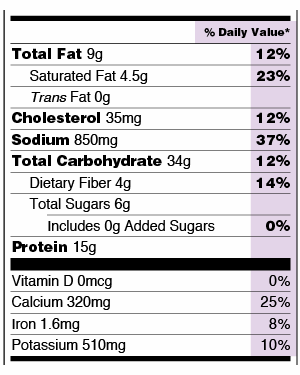
Frozen lasagna example:
- Saturated fat and sodium: High, which means we should limit these.
- Cholesterol: Moderate but may be a concern for those with heart health issues.
- Calcium: High, which is good because we need it.
- Vitamins and minerals: Too low, so if our other meals don’t make up for it, we risk not getting enough essential nutrients.
This is why it’s essential to choose foods that are higher in fiber, vitamins, and minerals and lower in saturated fat, cholesterol, and sodium.
Avoid trans fats and added sugars as much as possible for better long-term health.
11. Carefully Read the Ingredients List
When it comes to choosing healthier foods, the ingredients list is just as important as the nutrition facts.
Ingredients are listed in descending order by weight, so the first few items make up most of what you’re eating.
If you’re aiming to eat well, watch out for added sugars, sodium, unhealthy fats, and food additives—especially if they appear near the top.
Many ultra-processed foods rely on additives like emulsifiers, flavor enhancers, and bulking agents to improve texture, taste, or shelf life—not health.
Here’s a breakdown of common food additives and how they might appear on a label:
|
Food Additives |
Common names on labels |
|---|---|
|
Flavours |
Artificial Flavor, Natural Flavor, Vanilla Extract, Fruit Flavor, Smoke Flavor |
|
Flavour Enhancers |
Monosodium Glutamate (MSG), Disodium Inosinate, Disodium Guanylate, Yeast Extract |
|
Colours |
Tartrazine, Allura Red, Sunset Yellow, Caramel Color, Titanium Dioxide |
|
Emulsifiers |
Soy Lecithin, Mono- and Diglycerides, Polysorbates (e.g., Polysorbate 80), Sorbitan Monostearate |
|
Emulsifying Salts |
Sodium Citrate, Potassium Citrate, Sodium Phosphates, Sodium Aluminum Phosphate |
|
Artificial Sweeteners |
Aspartame, Sucralose, Saccharin, Acesulfame Potassium, Steviol Glycosides |
|
Thickeners |
Xanthan Gum, Guar Gum, Carrageenan, Pectin, Gelatin |
|
Foaming Agents |
Propylene Glycol Alginate, Soy Lecithin, Egg Whites |
|
Anti-Foaming Agents |
Dimethylpolysiloxane, Polydimethylsiloxane |
|
Bulking Agents |
Maltodextrin, Polydextrose, Cellulose, Modified Starch |
|
Carbonating Agents |
Carbon Dioxide, Sodium Bicarbonate |
|
Gelling Agents |
Agar-Agar, Pectin, Gelatin, Carrageenan |
|
Glazing Agents |
Shellac, Beeswax, Carnauba Wax, Polyvinyl Alcohol |
How to spot ultra-processed foods:
- Long ingredient list? It’s likely ultra-processed.
- Unfamiliar names? Another red flag.
- Wouldn’t use those ingredients at home? Skip it.
A simple rule: If you wouldn’t cook with it yourself, it probably doesn’t belong in your food.
12. Understand Food Label Claims
Food labels are filled with claims designed to grab your attention—terms like “organic,” “low fat,” or “sugar-free” can sound healthy, but they don’t always mean what you think.
Many of these terms are regulated by government agencies like the FDA or USDA, and each has specific criteria that must be met.
Understanding what these claims actually mean can help you avoid being misled and make better choices for your health.
Let’s break down some common food claims:
Gluten-free
- What does it mean? The product contains little to no gluten, a protein found in wheat, barley, and rye.
- What are the standards? The product can’t contain gluten-containing grains like wheat or barley. And if the product is processed, it must have less than 20 parts per million of gluten.
Many whole, unprocessed foods—like raw fruits, vegetables, and juices—naturally fit into the gluten-free category.
Pro Tip: Don’t just rely on the gluten-free label. Always read the ingredient list to ensure the food is still a nutritious choice. Gluten-free doesn’t mean it’s free of other potential junk ingredients!
Organic
When you see “organic” on a food label, it means that the product has been grown or produced without the use of synthetic pesticides, fertilizers, or genetically modified organisms (GMOs).
Organic farming practices aim to foster ecological balance and maintain soil health.
Here’s what each organic label really means:
- 100% Organic: The product contains only organic ingredients, excluding water and salt.
- Organic: At least 95% of the ingredients are organic, with up to 5% allowed from non-organic sources that meet strict guidelines.
- Made with Organic: At least 70% of the ingredients are organic.
- Specific Organic Ingredient Listing: If the product contains less than 70% organic ingredients, it may list them in the ingredient list but cannot use the “organic” label on the packaging.
Pro tip: Keep in mind that while organic foods tend to be less harmful to the environment and your health, that doesn’t mean they’re automatically better for you. Always check the full ingredient list!
Calorie-Free, Low Calorie, and reduced calorie
We’ve all seen “calorie-free” or “low-calorie” claims on food packaging, but how accurate are they?
Here’s what these claims really mean:
- Calorie-Free: The product contains fewer than 5 calories per serving.
- Low Calorie: The product contains no more than 40 calories per serving.
- Reduced Calorie: The product has at least 25% fewer calories compared to a reference food.
Pro tip: “Low-calorie” foods often contain artificial sweeteners or excess salt to make them more palatable. So, just because a product has fewer calories doesn’t necessarily mean it’s the healthiest option.
sugar-free, no added sugar, and reduced sugar
Many products boast that they are “sugar-free” or “no added sugar,” but these claims don’t necessarily make them healthier options.
Here’s what they mean:
- Sugar-Free: The product contains less than 0.5g of sugar per serving.
- No Added Sugar: No sugar or sugar substitutes are added during the manufacturing process (some naturally occurring sugars might still be present).
- Reduced Sugar: The product has at least 25% less sugar compared to a similar reference food.
Pro tip: Keep in mind that sugar alternatives like artificial sweeteners or sugar alcohols may be used in these products. While they may reduce calories, their long-term health effects are still debated. Always read the ingredients to understand exactly what you’re consuming.
Fat FREE, LOW FAT, AND REDUCED FAT
Fat claims can be tricky, and just because a product says it’s “low-fat” doesn’t mean it’s healthy.
Here’s the breakdown:
- Fat-Free: The product contains less than 0.5g of fat per serving.
- Low Fat: The product contains no more than 3g of fat per serving.
- Reduced Fat: The product has at least 25% less fat than the reference food.
Pro tip: Just like with calorie claims, be cautious. Products labeled as low-fat often compensate by adding more sugar or salt to maintain flavor. Always consider the overall nutrition, not just the fat content.
health claims
The term “healthy” is often used on food labels, but it doesn’t always mean what you think.
In fact, the FDA is revising the definition of “healthy” to better align with current nutritional science.
Once the new rule goes into effect:
- Whole fruits and vegetables will automatically qualify as “healthy.”
- Foods like avocados, fatty fish, and certain oils will also be eligible to use the “healthy” label.
- Highly processed products like white bread and sugary cereals will no longer be able to use the term “healthy.”
Pro tip: When you see a food labeled “healthy,” be sure to check the ingredients and consider whether it meets your personal health needs.
13. Be Aware of Potential Food Allergens
For some people, reading a food label isn’t just about choosing healthier options—it’s about staying safe.
If you or someone you care about has a food allergy, even a tiny amount of the wrong ingredient can lead to a serious reaction.
That’s why it’s so important to know what to look for on food labels.
The good news?
The FDA requires food companies to clearly identify the most common allergens. Once you know how to spot them, it becomes second nature.
There are 9 major food allergens. They include:
- Milk
- Eggs
- Fish
- Crustacean shellfish
- Tree nuts
- Peanuts
- Wheat
- Sesame
- Soybeans
These allergens are usually highlighted in one of two ways:
- Right next to an ingredient in parentheses – lecithin (soy) or whey (milk)
- Or in a clear “Contains” statement under the ingredient list – Contains: milk, soy, and wheat
Not all food reactions come from the usual suspects.
Some additives and colorings can cause sensitivities too, and they’re also required to be labeled when present.
They include:
FD&C Yellow No. 5
- Where you might find it: Sodas, candies, desserts, even some medications.
- Why it matters: Can cause itching or hives in sensitive individuals.
Cochineal Extract and Carmine
- Where you might find it: Red coloring made from insects, found in yogurts, juices, cosmetics.
- Why it matters: May cause allergic reactions in some people. Must be declared on the label.
Sulfiting Agents
- Where you might find it: Used in dried fruits, wine, some packaged potatoes.
- Why it matters: Can trigger asthma or respiratory issues in sensitive individuals. Must be labeled if over 10 ppm.
Understanding allergen labels isn’t just helpful—it could be life-saving. Even if you don’t have allergies yourself, it’s a good habit to check labels if you’re cooking for others or simply want to stay informed.
Final Thoughts
Reading food labels might seem overwhelming at first—but trust me, it gets easier. Once you start paying attention, you’ll be amazed at how much more control you have over what goes into your body.
Remember, food marketing is designed to sell, not to protect your health.
That’s why learning to decode the fine print—like ingredient lists, % Daily Values, and food claims—is such a powerful tool. The shorter the ingredient list, the better. The fewer additives, the better.
And the more real, whole, recognizable ingredients?
Absolutely the best.
The more you practice, the quicker you’ll spot ultra-processed foods and steer toward choices that fuel your body, not fight it.
So slow down at the grocery store, turn a few packages over, and read the label. Every small step adds up to a healthier, more empowered you.
*This article is for informational purposes only and is not intended as medical advice. It should not be used to diagnose, treat, or prevent any health condition. Always consult a qualified healthcare professional before making any changes to your diet, exercise, or health routine.
A.D.A.M. Medical Encyclopedia. Johns Creek (GA): Ebix, Inc., A.D.A.M.; c1997-2020. "Facts about saturated fats." MedlinePlus, reviewed 22 June 2022, https://medlineplus.gov/ency/article/003247.htm. Accessed 10 June 2024.
A.D.A.M. Medical Encyclopedia. Johns Creek (GA): Ebix, Inc., A.D.A.M.; c1997-2020. "Facts about trans fats." MedlinePlus, reviewed 22 June 2022, https://medlineplus.gov/ency/patientinstructions/000786.htm. Accessed 10 June 2024.
"Aspartame and Other Sweeteners in Food." U.S. Food and Drug Administration, current as of 14 July 2023, https://www.fda.gov/food/food-additives-petitions/aspartame-and-other-sweeteners-food. Accessed 10 June 2024.
Bethesda (MD): National Library of Medicine (US). “What are proteins and what do they do?” MedlinePlus, updated 26 March 2021, https://medlineplus.gov/genetics/understanding/howgeneswork/protein/. Accessed 10 June 2024.
"Code of Federal Regulations Title 21: Food Labeling." U.S. Food and Drug Administration, current as of 22 December 2022, www.accessdata.fda.gov/scripts/cdrh/cfdocs/cfcfr/cfrsearch.cfm?fr=101.60. Accessed 11 June 2024.
"Code of Federal Regulations Title 21: Food Labeling." U.S. Food and Drug Administration, current as of 22 December 2022, https://www.accessdata.fda.gov/scripts/cdrh/cfdocs/cfcfr/cfrsearch.cfm?fr=101.62. Accessed 11 June 2024.
“Dietary Guidelines for Americans, 2020-2025.” U.S. Department of Agriculture and U.S. Department of Health and Human Services, 9th Edition, December 2020, https://www.dietaryguidelines.gov/sites/default/files/2020-12/Dietary_Guidelines_for_Americans_2020-2025.pdf. Accessed 10 June 2024.
"Food Allergies." U.S. Food and Drug Administration, current as of 12 April 2024, https://www.fda.gov/food/food-labeling-nutrition/food-allergies. Accessed 10 June 2024.
"Hidden in Plain Sight." SugarScience, University of California, San Francisco, https://sugarscience.ucsf.edu/hidden-in-plain-sight/. Accessed 10 June 2024.
“How to Understand and Use the Nutrition Facts Label.” U.S. Food and Drug Administration, current as of 5 March 2024, https://www.fda.gov/food/nutrition-facts-label/how-understand-and-use-nutrition-facts-label. Accessed 10 June 2024.
"Interactive Nutrition Facts Label." U.S. Food and Drug Administration, www.accessdata.fda.gov/scripts/InteractiveNutritionFactsLabel/default.cfm. Accessed 10 June 2024.
Menichetti, G. et al. “Machine learning prediction of the degree of food processing.” Nat Commun 14, 2312 (2023). https://doi.org/10.1038/s41467-023-37457-1. Adapted and used under the terms of the Creative Commons Attribution 4.0 International License.
Monteiro CA et al. "NOVA. The star shines bright." World Nutrition, Volume 7, Number 1-3, January-March 2016, 1-3, 28-38. [Food classification. Public health], https://archive.wphna.org/wp-content/uploads/2016/01/WN-2016-7-1-3-28-38-Monteiro-Cannon-Levy-et-al-NOVA.pdf. Accessed 7June 2024.
Sellem, Laury et al. "Food additive emulsifiers and risk of cardiovascular disease in the NutriNet-Santé cohort: prospective cohort study." BMJ, 2023;382:e076058, 6 September 2023, https://www.bmj.com/content/382/bmj-2023-076058. Adapted and used under the terms of the Creative Commons Attribution-Non-Commercial 4.0 License.
Touvier, M. et al. "Ultra-processed foods and cardiometabolic health: public health policies to reduce consumption cannot wait." BMJ, 2023; 383 :e075294, doi:10.1136/bmj-2023-075294. Adapted and used under the terms of the Creative Commons Attribution-NonCommercial 4.0 International License.
"Types of Food Ingredients." U.S. Food and Drug Administration, current as of 6 June 2023, https://www.fda.gov/food/food-additives-and-gras-ingredients-information-consumers/types-food-ingredients. Accessed 10 June 2024.
"Use of the Term Healthy on Food Labeling." U.S. Food and Drug Administration, current as of 28 March 2024, https://www.fda.gov/food/food-labeling-nutrition/use-term-healthy-food-labeling. Accessed 10 June 2024.

Malin, the co-founder of Courier Wellness, is well-informed in nutrition and health and brings her own unique perspective to the world of holistic wellness. With a passion for writing and a deep interest in wellbeing, she wants to create content that fosters balance and nourishment for the mind and body.